Systematic Stress Management Program
Step 6: Time Management
Step 6: Time Management Section
Introduction
Does Time Get the Best of You?
Defining Your Life Goals
Activity Worksheet
Activity Log
Time Management Techniques
Action Plan for Improving Time Usage
Procrastination Quiz
How Do I Procrastinate?
One Dozen Ways to Overcome Procrastination
Should You Delegate?
Delegation Caddy
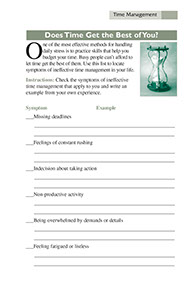
One of the most effective methods for handling daily stress is to practice skills that help you budget your time. Busy people can’t afford to let time get the best of them. Use this list to locate symptoms of ineffective time management in your life.
Instructions: Check the symptoms of ineffective time management that apply to you and write an example from your own experience.
* Missing deadlines
* Feelings of constant rushing
* Indecision about taking action
* Non-productive activity
* Being overwhelmed by demands or details
* Feeling fatigued or listless
* Not enough time for things you’d like to do
* Over-involvement in other’s problems
* Taking work home nightly
* Constant interruptions during the day
* Lack of delegation to others
* Procrastinating on tasks
* Facing the day without a plan or goals
* Feeling that you are neglecting family or friends
© American Institute for Preventive Medicine
Step 1: Understanding Stress
Step 3: Type A & B Behavior Patterns
Step 5: Thinking Differently
Step 7: Communication & Stress
Step 2: Stress Management at Work
Step 4: Biofeedback Training & Relaxation
Step 6: Time Management
Steps to Systematic Stress Management™
RELATED ARTICLES
© American Institute for Preventive Medicine – All Rights Reserved.Disclaimer|www.HealthyLife.com