SELF-CARE CORNER
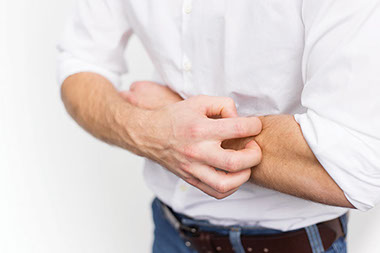
Most people have itchy skin at one time or another. A bug bite, dryness or another everyday irritation can make skin itchy. Usually, you apply some lotion or an anti-itch cream and it goes away.
But, it’s different for people who have eczema. Eczema, also known as atopic dermatitis, can be so itchy that it affects daily life. It can also make it difficult for you to sleep at night. Other signs of eczema include:
* Very dry skin that doesn’t get better, even after applying lotion
* Red or brown patches of skin
* Itchy raised bumps
* Cracked skin
* Scaly patches
Common locations for eczema are the hands, feet, face, inside the elbows, and behind the knees. Sometimes, eczema gets worse and then better. When it gets worse, this is known as an eczema flare.
Many people with eczema find that using just a lotion is not enough. They may need to talk with their doctor about special or prescription-strength products. Eczema can affect babies and young children, too. Ask a pediatrician before you put any creams or other products on a baby or child.
Eczema can’t be cured, but you can manage it. Talk to a doctor or dermatologist about your options.
Eczema do’s
People with eczema may find relief when they do the following:
* Keep a journal to find out what triggers your eczema. Young children may get eczema flares after eating certain foods. Older children and adults may get flares from high stress levels, sweating, soaps, detergents, pollen and dust.
* Use products that are eczema-friendly. Soaps and lotions without fragrance, dyes or common irritants are best. Products with the National Eczema Association seal on them are a good place to start.
* Use a thick moisturizer such as petroleum jelly (Vaseline) twice a day. The best time to apply moisturizer is right after bathing, before skin has completely dried.
Eczema don’ts
If you or your child has eczema, these are some “don’ts” to keep in mind:
* Don’t use harsh soaps and body washes, especially those that are antibacterial or highly scented.
* Don’t take long, hot showers or baths. Taking a bath with an oatmeal soak may be soothing, but keep the temperature warm, not hot. It’s best to take short, warm showers.
* Don’t use laundry detergent or fabric softener with dyes or perfumes.
* Don’t scrub the skin with washcloths, scrubbing sponges or products with scrubbers or “beads.”
* Don’t rub your skin with a towel after bathing. Instead, gently pat it dry and begin applying your moisturizer.
© American Institute for Preventive Medicine