Healthylife® QuitWell™
Part 1

Electronic cigarettes, or e-cigarettes, are battery-powered nicotine delivery systems. They have a cartridge that contains a liquid, an atomizer to heat the liquid, a power source, and a mouthpiece. The liquid contains a chemical mix of nicotine, propylene glycol, glycerin, and flavorings. The heat source and atomizer turn the liquid into a vapor, and the mouthpiece delivers the vapor to your lungs. That’s why it’s also called vaping.
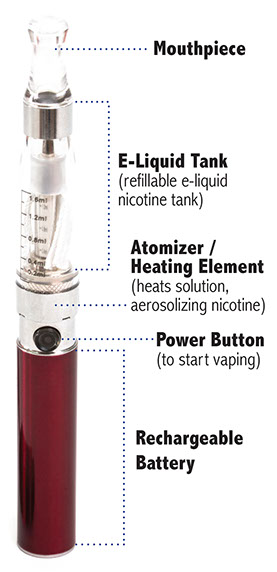
E-cigarettes go by lots of other names: vapes, vape pens, mods, hookah pens, e-hookahs, e-cigs, e-juice, e-liquid, smoke juice, juuls, and more. While some are made to look like regular cigarettes, others look more like pens or flash drives. Some larger devices look very different and bear little resemblance to cigarettes at all. There are hundreds of different e-cigarettes on the market.
E-cigarettes don’t contain tobacco and don’t produce smoke. Those are the only good things you can say about e-cigs! Most still contain nicotine, and all have toxic chemicals. Like cigarettes, e-cigarettes are harmful to your lungs and addictive. Nobody has invented a healthy e-cigarette yet!
The FDA regulates the production of e-cigarettes by licensed manufacturers, but there are many unlicensed cartridges being sold from pop-up shops or on the street. These black-market cartridges can contain additional dangerous additives like solvents or pesticides. These products should be avoided at all times.
Can they hurt if they’re not “real” cigarettes?
It may seem like e-cigarettes are a safer option because they don’t contain tobacco or because they are available with different amounts of nicotine. Even though they do not have tobacco, e-cigarettes still contain addictive nicotine and toxic chemicals just like “real” cigarettes. Heating these chemicals and inhaling the vapor brings dangerous substances into your body. Some of these can cause cancer. Some of these may cause serious lung injury.
In the summer of 2019, the rapid rise of hospitalizations and deaths among e-cigarette users prompted emergency action by the Centers for Disease Control & Prevention (CDC) and many state governments. While many health issues from smoking cigarettes do not show up until many years of use, serious lung illness and death has occurred in relatively young, short-term users of e-cigarettes. Long-term problems are still unknown, as e-cigarettes are new and researchers do not know what will happen to the body after 20 or 30 years of usage.
If you use e-cigarettes and have any of the following symptoms, ask your healthcare provider to check for lung injury. Vaping-associated pulmonary illness is very serious and can be deadly.
* Cough, shortness of breath, or chest pain
* Nausea, vomiting, or diarrhea
* Fatigue, fever, or abdominal pain
“Fun-flavored” Danger: E-Cigarettes and Teens
E-cigarettes have quickly become popular with teenagers, partly due to e-juice that comes in “fun” flavors like cinnamon roll and bubble gum. These flavors, the myth that vaping is harmless, and the lack of lasting odors, create the perfect storm for teens who want to experiment or “fit in” without the stigma of smoking cigarettes. What they don’t realize is the danger of addiction and health problems.
Can E-Cigarettes Help You Quit Regular Cigarettes?
Some people have used e-cigarettes to cut back on the amount of nicotine they smoke until they are ready to quit entirely. The FDA has not approved this method of quitting, as there is no evidence that it leads to long-term cessation. Some studies have shown that adults who used vaping to quit cigarettes were more likely to relapse.
Nicotine is a highly addictive substance that can damage the cardiovascular system. The narrowing of coronary arteries and breakdown of heart tissue can increase the risk for hypertension, increase inflammation in the body, and complicate existing heart conditions. If you previously smoked cigarettes, the heart is already damaged and additional use of nicotine could worsen this damage. Continued nicotine use also complicates diabetes management and associated conditions, such as eye health, risk for stroke, weight management and circulation problems.
If you are using an e-cigarette to quit smoking, it is important to reduce the amount of nicotine you are consuming and plan to quit using the device completely. Continuing to use an e-cigarette will increase your risk of returning to regular cigarettes, along with all the problems that come with the e-cigarette itself.
Relying on the e-cigarette as a way to cope with stress, as entertainment when bored, or to mimic smoking while driving in the car, does not change much about your smoking habit. Without making changes to your routines or learning to cope with challenges, it may make it easy to have a cigarette when the e-cigarette is unavailable, needs a re-fill, or a cigarette is offered.
If you are looking for a way to step down nicotine safely and feel a little better when quitting, the QuitWell™ program recommends FDA-approved options in addition to support:
*Nicotine Replacement Therapy (NRT):FDA approved, can safely be used by most people, available in a patch, gum, lozenge, nasal spray, or inhaler
*Pharmaceutical Aid (e.g. Chantix, Zyban):Requires a prescription from your doctor, does not contain nicotine

© American Institute for Preventive Medicine