First Aid
Keep basic tools handy for those little emergencies.
Mom’s kisses are great, but some boo-boos need a little more care to keep infections away. A well-stocked first-aid kit may be all you need for life’s little emergencies. Keep one at home, but out of the reach of children. Store a second one in the car. And if you hike, camp, or bike, take a kit with you.
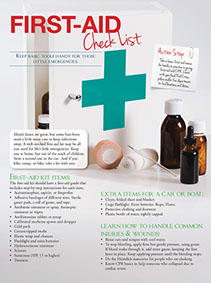
First-aid kit items:
The first-aid kit should have a first-aid guide that includes step-by-step instructions for each item.
* Acetaminophen, aspirin, or ibuprofen
* Adhesive bandages of different sizes. Sterile gauze pads, a roll of gauze, and tape.
* Antibiotic ointment or spray. Antiseptic ointment or wipes.
* Antihistamine tablets or syrup
* Calibrated medicine spoon and dropper
* Cold pack
* Cotton-tipped swabs
* Elastic wrap and closures
* Flashlight and extra batteries
* Hydrocortisone ointment
* Scissors
* Sunscreen (SPF 15 or higher)
* Tweezers
Extra items for a car or boat:
* Clean, folded sheet and blanket
* Large flashlight. Extra batteries. Rope. Flares.
* Protective clothing and footwear
* Plastic bottle of water, tightly capped
Learn how to handle common injuries & wounds:
* Rinse cuts and scrapes with cool water.
* To stop bleeding, apply firm but gentle pressure, using gauze. If blood soaks through it, add more gauze, keeping the first layer in place. Keep applying pressure until the bleeding stops.
* Do the Heimlich maneuver for people who are choking.
* Know CPR basics to help someone who collapsed due to cardiac arrest.
Action Step
Take a basic first-aid course for hands-on practice in giving first aid and CPR. Check with your local Red Cross, police and/or fire department to find locations and dates.
© American Institute for Preventive Medicine