Healthylife® Weigh
Menus & Recipes
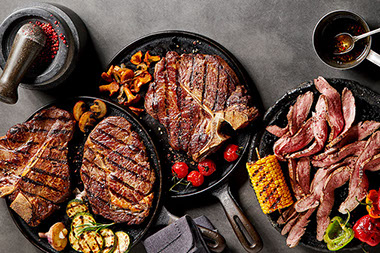
Protein helps build and repair muscle tissue, fight disease, manage hunger, and perform other essential tasks. This food group includes seafood, meats, poultry, eggs, nuts, seeds, and soy foods and beverages. Try to include at least one non-meat source of protein every day. Plant proteins are very nutrient dense.
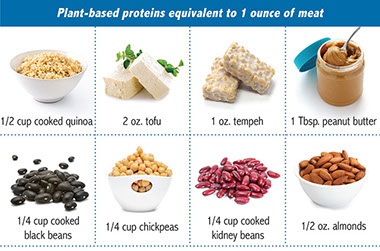
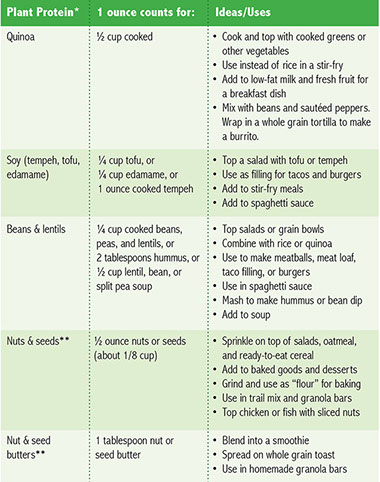
* These complete proteins contain all 9 essential amino acids. Other plant proteins contain some, but not all, of these protein building blocks. Consume a variety of sources to form a “team” of complete proteins.
** Choose unsalted nuts and no-sugar added butters to reduce sodium and added sugars.
Make animal protein choices lean
Choose lean animal proteins most of the time. Poultry (chicken and turkey) is leaner than red meat (beef) or processed meats (e.g., sausage). Consider using a food scale to weigh animal protein, at least until you are more familiar with recommended portion sizes by sight. Another option is to use a deck of cards to estimate 3 ounces of meat.
© American Institute for Preventive Medicine