Tag: accuracy

  • Do Genetic Tests Really Work?

    MEDICAL NEWS

    Women holding a swab near her mouth.

    You may have seen ads for genetic tests. These tests claim to tell you about your health. They might tell you if you’re at risk for a certain disease or if you should eat a certain diet.

    Big promises from companies

    At-home genetic tests may sound exciting, and companies advertise them as “the answer” to many health issues. But the Food and Drug Administration (FDA) and the Centers for Disease Control and Prevention (CDC) say you should be careful about using these tests.

    Before you spend a lot of money on one, keep in mind that the test may not have any science to back up its claims. Others may give you some good information, but the information is only useful if you also have a complete medical exam.

    The FDA and CDC say that genetic tests are complex. They say that the results can be hard to understand without having appropriate medical knowledge.

    Just a snapshot

    Many genetic tests look at a few of your body’s genes. But you have more than 20,000 genes in your body. If you get a “positive result” for certain genes, it could mean:

    *  You have a certain disease.

    *  You have a higher risk of getting certain diseases.

    *  You are a carrier for a certain disease.

    But even a positive result doesn’t tell the whole story. You may never get the disease that comes back “positive.” Or if you do, it may not be severe enough to cause any serious health problems.

    A negative result means the lab didn’t find any unusual changes in your genes. While this can be good news for certain diseases, it’s not foolproof. It doesn’t mean you’ll never get a disease or have health problems. It’s also possible that the test didn’t look at other genes that could be important.

    Many factors at play

    Genes are only one piece of each person’s health story. Your environment and your lifestyle also play huge parts in your physical and mental health. Don’t rely on genetic tests to make any health promises. Instead, see your doctor regularly and follow a healthy lifestyle. That can mean more than a few genes.

    When genetic tests are part of a medical exam, they can be helpful. Your doctor can help you decide if you need genetic tests. If you do need them, make sure a medical professional reads your results.

    Source: Federal Trade Commission
    © American Institute for Preventive Medicine

  • Review Your Patient Chart

    Medical Care

    Guess what every patient in a hospital has? No, we’re not speaking of those less-than-attractive hospital gowns or the plastic ID bracelets. The answer is a patient chart. Although the chart is legally the property of the hospital and generally kept at a nursing station, the patient should be aware of its content. Ask your doctor for an explanation. The chart may contain the following:

    *  Your medical history.

    *  Hospital laboratory results.

    *  Lists of medications (doses and schedules).

    *  Special treatments or therapy.

    *  Dietary restrictions or recommendations (low-sodium diet, for example).

    *  Scheduled diagnostic procedures (such as X-rays).

    *  Surgical notes (length of operation, assisting medical staff, type of anesthesia administered, recovery notes).

    If you suspect a problem or error-in how often you are being given medication, for instance-ask a nurse or your doctor to show you your chart and explain what is written there.

    Page from A Year of Health Hints book by the American Institute for Preventive Medicine. www.HealthyLife.com. All rights reserved.

    © American Institute for Preventive Medicine
  • Pregnancy Tests

    Pregnancy & Prenatal Care

    How can you find out for sure if you are pregnant? Do a home pregnancy urine test. You can do one yourself. Facts about these tests:

    *  They test for a hormone called HCG. HCG is present in the urine only during pregnancy.

    *  You can buy them over-the-counter. Look for them at the drug store or supermarket.

    *  They are 95 to 100% error-free. But you have to do what the label says.

    *  They come in many brands. Some brands include a second test in the package.

    *  They are not all used the same way. Read the label to find out what to do. Some can be used the day after you miss a period. That’s about 14 days after conception. Some have you wait 3 to 5 days after you miss a period. Some have you use your first morning urine sample.

    {Note: If your test is positive, call your health care provider. Make a date to be seen. Ask what prenatal vitamins (vitamin pills) you should take. Do this if you are not already taking them. It is a good idea to start taking prenatal vitamins before you get pregnant and right at the start of pregnancy. Doing this, especially getting enough folic acid, may prevent some birth defects. Prenatal vitamins will supply the minerals you need, too.}

    *  Get a lab or in-office urine test. Ask your health care provider to order one. Facts about these tests:

    – They test for HCG in the urine.

    – They are nearly 100% error-free.

    – They can confirm pregnancy 7 to 10 days after conception.

    *  Get a blood test. Ask your health care provider to order it. Facts about these tests:

    – They test for HCG in the blood.

    – They are 100% error-free.

    – They can confirm pregnancy 7 days after conception. That’s even before you miss a period.

    Always follow up your pregnancy test with a medical exam. Your health care provider can see signs of pregnancy by or even before the 6th week!

    Prenatal Self-Care book by the American Institute for Preventive Medicine. www.HealthyLife.com. All rights reserved.

    © American Institute for Preventive Medicine
  • Are Fitness Trackers Worth The Hype?

    BE FIT

    Image of women with a fitness tracker.

    Fitness bands, also called wearable health trackers, have become a popular trend in the last few years. Millions of these devices have been sold, but can they help you get healthy?

    What they do

    Most fitness trackers have features that act like a pedometer, counting your steps and other physical activity. Their features vary widely, however. Some trackers simply tell you how many steps you take in a day. Others are designed to be worn during exercise, such as running, and may track your distance and show your route. Other trackers are waterproof and designed to be worn when swimming.

    Many trackers also record quality and length of sleep. Because they have a movement sensor, they can determine how many times you woke and when you were in deep sleep.

    Most of them are designed to be used with an app on your smartphone, where you can see how you’re doing and make improvements where needed.

    Improving health with a tracker

    It can be helpful to know how many steps you take and how well you’ve slept. But keep in mind that these devices aren’t perfect. For instance, if you walk while pushing a stroller, a tracker worn on your wrist may not count your steps because your arms aren’t swinging.

    Sleep tracking can also be helpful, but won’t be a magic fix. Some trackers assume you’re in a deep sleep because you don’t move around. But, some people just naturally move less during the night, even if their sleep quality isn’t great. This may lead to incorrect information that makes you think you’re sleeping better than you actually are.

    Your body may be the best gauge when it comes to your health. When you don’t sleep well, you’ll feel sluggish. And you can easily keep track of any exercise you do with a fitness diary or a simple notebook. As for step counting, these devices are helpful, but an old-fashioned pedometer can work just as well.

    Alternatives to fitness trackers

    If you don’t have – or want – one of these devices, there are still ways you can get healthy with technology. Many apps that work with a smartphone can help you track movements and sleep, and others help you manually record things like mood, stress levels, and menstrual cycles. These require you to carry your smartphone with you, but don’t use any wearable devices.

    © American Institute for Preventive Medicine

  • How To Make Fewer Mistakes At Work

    WORK LIFE

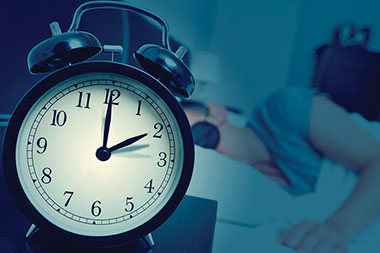
    Image of clock with person sleeping.

    Do you want to be your best at your job and avoid mistakes? There’s a healthy and simple way to do this: GET ENOUGH SLEEP.

    The National Sleep Foundation (NSF) says almost half of Americans said poor quality sleep affected their lives in the past seven days. And, many people report getting poor sleep on a regular basis.

    This poor sleep adds up to poor job performance, says the NSF. In one poll, up to a third of people admitted to falling asleep or feeling very sleepy at work in the last month. This can lead to minor errors, such as a typo in a letter to major mistakes that affect your career.

    When your body isn’t rested, it affects your brain and thinking in ways that could hurt your job performance and even hurt others. One study showed that when on-call resident doctors work overnight, they report 300 percent more medical errors that led to death than those who worked a 16-hour shift.

    Experts at the NSF say you should get at least seven to eight hours of sleep a night. Try to go to bed and get up at the same time each day, and create a relaxing bedroom environment for sleep. If you have chronic sleep problems, see your doctor for help.

    © American Institute for Preventive Medicine