
Tag: adapt

  • Be More Tech-Savvy

    WORK LIFE

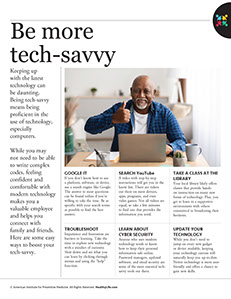
    Man on laptop with thumbs up.

    Keeping up with the latest technology can be daunting. Being tech-savvy means being proficient in the use of technology, especially computers.

    While you may not need to be able to write complex codes, feeling confident and comfortable with modern technology makes you a valuable employee and helps you connect with family and friends. Here are some easy ways to boost your tech-savvy.

    Google it

    If you don’t know how to use a platform, software, or device, use a search engine like Google. The answer to most questions can be found online if you’re willing to take the time. Be as specific with your search terms as possible to find the best answer.

    Search YouTube

    A video with step-by-step instructions will get you in the know fast. There are videos out there on most devices, apps, programs, and even video games. Not all videos are equal, so take a few minutes to find one that provides the information you need.

    Take a class at the library

    Your local library likely offers classes that provide hands-on instruction on many new forms of technology. Plus, you get to learn in a supportive environment with others committed to broadening their horizons.

    Troubleshoot

    Impatience and frustration are barriers to learning. Take the time to explore new technology with a mindset of curiosity. Slow down and see what you can learn by clicking through menus and using the “help” function.

    Learn about cyber security

    Anyone who uses modern technology needs to know how to keep their personal information safe online. Password managers, updated software, and email security are some of the most essential tech-savvy tools out there.

    Update your technology

    While you don’t need to jump on every new gadget or device available, keeping your technology current will naturally keep you up-to-date. Newer technology is more user-friendly and offers a chance to gain new skills.
    © American Institute for Preventive Medicine

  • Face Unsupportive Situations

    Healthylife® Weigh

    Part 4

    Couple using laptop computer at home on sofa.

    Apply the suggestions in the table below to your challenges. Not all strategies will be right for all scenarios. You can turn a negative situation into a positive one for everyone.

    *  Let others know what your goals are and why you are working to achieve them.

    *  Model trying new foods and being open to new tastes.

    *  Reduce the amount of time spent with negative people, if possible.

    *  Describe your efforts as a lifestyle change rather than a diet.

    *  Share how you are doing things differently this time if you have struggled in the past.

    *  Let supportive people know how much their support means to you. Send a sincere thank you card, email, or share a kind word in person. They will likely help you again.

    *  Enjoy treats every now and then. Plan to have a small amount. Don’t let guilt rob you of enjoying the treat!

    © American Institute for Preventive Medicine

  • Picky Eaters

    Healthylife® Weigh

    Part 3

    Women having lunch.

    Perhaps you buy food or cook for a picky eater. Perhaps that picky eater is you! Vegetables tend to be one of the biggest sticking points with picky eaters, though picky eating can apply to all food groups. Don’t give up!

    Here are some tips for managing picky eating:

    *  Set an example by trying it yourself and using positive language. Even if you don’t like the taste, you can express gratitude or pat yourself on the back for trying a new food.

    *  Add the new food to a food you already like. For example, if peanut butter and jelly is a favorite, swap white bread for whole grain bread. This will add extra nutrients while keeping the preferred peanut butter & jelly filling!

    *  Stock up on healthy choices. Limit junk food and unhealthy options.

    *  Try new foods. Serve a variety of foods at meals to provide a choice. Encourage kids to pick out a new vegetable when grocery shopping. To make it fun, have a child pick a color first. Then, have the child pick out a vegetable that matches that color.

    *  Don’t force a food that is disliked. Part of managing weight is developing a healthy relationship with food.

    *  If it has been more than 6 months since you tried it, try it again! Tastes can change.

    Appreciate your own willingness and effort to try something new! If you have children, they are watching and learning the value of openness.

    © American Institute for Preventive Medicine