Tag: aging

  • Find Your Balance

    SELF-CARE CORNER

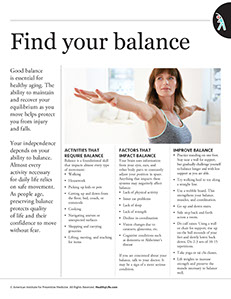
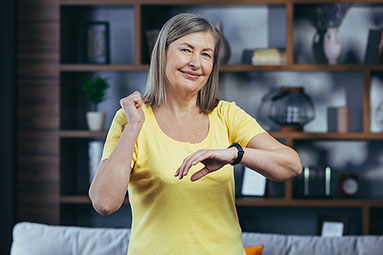
    Women with arms streched out, balancing.

    Good balance is essential for healthy aging. The ability to maintain and recover your equilibrium as you move helps protect you from injury and falls.

    Your independence depends on your ability to balance. Almost every activity necessary for daily life relies on safe movement. As people age, preserving balance protects quality of life and their confidence to move without fear.

    Activities that require balance

    Balance is a foundational skill that impacts almost every type of movement:

    *  Walking

    *  Housework

    *  Picking up kids or pets

    *  Getting up and down from the floor, bed, couch, or commode

    *  Cooking

    *  Navigating uneven or unexpected surfaces

    *  Shopping and carrying groceries

    *  Lifting, moving, and reaching for items

    Factors that impact balance

    Your brain uses information from your eyes, ears, and other body parts to constantly adjust your position in space. Anything that impacts these systems may negatively affect balance:

    *  Lack of physical activity

    *  Inner ear problems

    *  Lack of sleep

    *  Lack of strength

    *  Decline in coordination

    *  Vision changes due to cataracts, glaucoma, etc.

    *  Cognitive conditions such as dementia or Alzheimer’s disease

    If you are concerned about your balance, talk to your doctor. It may be a sign of a more serious condition.

    Improve balance

    *  Practice standing on one foot. Stay near a wall for support, but gradually challenge yourself to balance longer and with less support as you are able.

    *  Try walking heel to toe along a straight line.

    *  Use a wobble board. This strengthens your balance, muscles, and coordination.

    *  Go up and down stairs.

    *  Side step back and forth across a room.

    *  Do calf raises. Using a wall or chair for support, rise up on the ball mounds of your feet and slowly lower back down. Do 2-3 sets of 10-15 repetitions.

    *  Take yoga or tai chi classes.

    *  Lift weights to increase strength and preserve the muscle necessary to balance well.
    © American Institute for Preventive Medicine
  • Keeping An Eye Out For Cataracts

    SELF-CARE CORNER

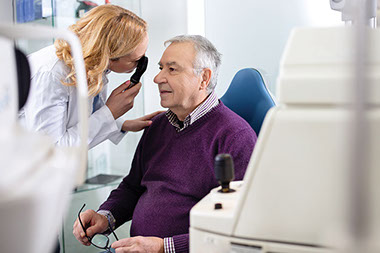
    Eye doctor examining patients eye.

    Most people will have cataracts by the age of 80. But they don’t have to mean loss of vision. They are treatable.

    What is a cataract?

    A normal lens inside the eye is clear. Cataracts happen when the proteins in the eye’s lens start to break down. Then they clump together. This causes cloudiness and problems with your vision.

    Cataracts may occur with normal aging. But they can also happen after an eye injury or if you had eye surgery.

    Signs of cataracts

    People often notice changes in vision when cataracts start to form. These changes include:

    *  Blurry or distorted vision

    *  Being sensitive to light

    *  Seeing a “halo” around lights

    *  Seeing double

    *  Trouble seeing at night or in dimly lit rooms

    *  Seeing colors as dull or yellow-tinted

    Prevention

    The best way to help prevent cataracts is with eye sun protection. Wear sunglasses that block out 100 percent of UV rays when you’re outside during the day. Not all sunglasses offer 100 percent UV protection. Check the packaging to be sure. Wear a wide-brimmed hat to keep sun off your face.

    Smoking increases the risk for cataracts, so quit smoking. Get help quitting if you need it.

    Finally, get a dilated eye exam regularly. Ask your eye care specialist or doctor how often you need one.

    Seeing a doctor

    If you think you might have cataracts, talk to a doctor. You may need an eye exam from an optometrist or ophthalmologist. During the exam, your eye care specialist can perform tests to look for cataracts.

    Treatment options

    If your doctor finds cataracts, don’t panic. There are ways to treat them.

    First, your doctor may recommend new glasses or contacts for mild symptoms. You may also find that using brighter lights or a magnifying lens is helpful for reading or working.

    If your cataracts are interfering with life, you may need surgery. Cataracts surgery involves putting a new artificial lens in the eye. It is a safe surgical procedure and works well for most people.

    Sources: American Academy of Ophthalmology, National Eye Institute

    © American Institute for Preventive Medicine
  • Be Healthy At Each Cycle Of Life. Recycle Along The Way.

    Home Safety

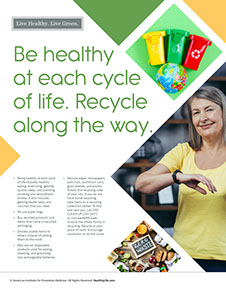
    Women with smart watch and fist up in the air.

    *  Being healthy at each cycle of life includes healthy eating, exercising, getting quality sleep, and avoiding smoking and secondhand smoke. It also includes getting health tests and vaccines that you need.

    *  Re-use paper bags.

    *  Buy recycled products and items that come in recycled packaging.

    *  Donate usable items to others instead of adding them to the trash.

    *  Rely less on disposable products used for eating, cleaning, and grooming. Use rechargeable batteries.

    *  Recycle paper, newspapers, junk mail, aluminum cans, glass bottles, and plastic. Follow the recycling rules of your city. If you do not have home recycling, take items to a recycling collection center. To find one near you, call 800.CLEAN.UP (253.2687) or visitearth911.com. Involve the whole family in recycling. Recycle at your place of work. Encourage coworkers to do the same.

    A Year of Health Hints book by the American Institute for Preventive Medicine. www.HealthyLife.com. All rights reserved.

    © American Institute for Preventive Medicine
  • Long-Term Care Insurance

    Medical Care

    Image of couple talking to an insurance agent.

    Long-term care insurance is meant to cover the cost of nursing home care and long-term  home health care. Medicare and private health insurances do not cover these costs. This kind of insurance is not government regulated. You may want to purchase this for yourself. Your children may want to purchase it for you to protect themselves from having to pay for your long-term care or to protect their future inheritance.

    Find out more about long-term care insurance from:

    *  LongTermCare.gov athttp://longtermcare.gov. Learn the basics of long-term care and ways to pay for it. Use the LTC PathFinder tool to get information on long-term care insurance that is most relevant and useful to you now.

    *  National Advisory Center for Long-Term Care Insurance atwww.longtermcareinsurance.org. Get help from an unbiased long-term care insurance advisor. Ask for multi-company comparative quotes  for long-term care insurance.

    *  Consider a policy that starts paying on the 90th day instead of day 1. The difference in price can be 30%. Do this only if you can afford the long-term care center’s cost for the first 3 months on your own.

    *  Check Moody’s and Standard & Poors at your local library. Look for insurers rated “A” or better.

    *  Read the complete policy coverage. Consult an attorney or knowledgeable person to review it with you.

    *  Pay premiums, by check, directly to the insurance company. Never pay in cash.

    *  Fill out the policy application yourself or with a friend or relative. Don’t allow someone to do it for you.

    *  Be cautious of companies advertised by celebrities.

    *  Insist on coverage that does not require a hospital stay before going to a nursing home.

    *  Resist high pressure insurance agents or claims that their long-term care insurance is endorsed by the government.

    Be cautious before you purchase a policy. Ask the following questions:

    *  Will the policy cover home health care? Does this include “aides” or housekeeping coverage or just “skilled” care?

    *  Does the policy cover Alzheimer’s disease, specifically?

    *  Must you be medically ill to receive benefits? What about custodial care?

    *  Does the coverage include nursing home custodial care, adult day care, or other community-based services?

    *  Does the policy require a prior hospital stay before entering a nursing home?

    *  Are there exclusions for “pre-existing” illnesses? Are there waiting periods?

    *  How long is a stay in a nursing home covered? (The average stay is just under 4 years.)

    *  How much will the nursing home be paid on a daily basis from this policy? What is the daily charge of the nursing home? You will have to pay the difference between the insurance coverage and what the nursing home charges.

    *  If premiums are being paid, is there a guarantee that the policy can be renewed?

    *  Is the policy one that can’t be canceled?

    *  Will your coverage keep up with inflation?

    *  Are premiums waived while getting benefits?

    Page from the Health at Home Lifetime book by the American Institute for Preventive Medicine. www.HealthyLife.com. All rights reserved.

    © American Institute for Preventive Medicine
  • Stay In The Game

    SELF-CARE CORNER

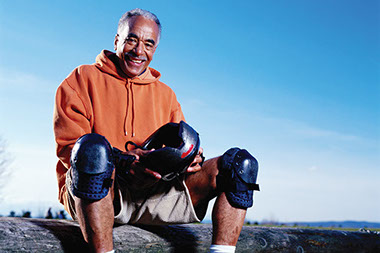
    Image of older man wearing knee pads while holding a helmet.

    Although many athletes understand the importance of keeping their muscles and bones healthy, it’s also important for them to take care of their skin. Sports equipment, especially protective helmets and pads, creates a warm, moist and dark environment for the germs that can cause skin infections to grow.

    “Athletes are at an increased risk of skin infection, which can have serious consequences and may take them-and their teammates-out of the game for days, weeks or months,” said dermatologist Jeffrey V. Benabio. “If athletes notice anything on their skin that itches, burns or may be infected, they should see a board-certified dermatologist or sports medicine doctor.”

    To help prevent skin infections, Dr. Benabio recommends that coaches, athletes, and athletic trainers follow these tips:

    *  Keep cuts and scrapes clean and covered with a bandage until healed. A cut or scrape weakens the skin’s defense and allows germs that cause infections to enter.

    *  Prevent blisters to reduce infections. Apply a pad, gel or spray to areas that routinely blister. To help prevent blisters on the feet, ankles and hands, consider using specialized gloves and socks or wearing two pairs of socks. Athletes should also make sure that their footwear fits properly.

    *  Wear moisture-wicking clothes. This helps keep the athlete’s skin dry and prevents germs from growing.

    *  Wear sandals in the locker room. Wearing sandals or other shoes helps reduce infections on the feet.

    *  Shower after every practice and game. In addition, athletes should use an antimicrobial soap and wash their entire body.

    *  Do not share personal care items. Athletes should always use a clean towel after showering and use their own towels, soaps, razors and other personal care items.

    *  Wash clothes and towels after each use. Sports bags should also be washed, as germs that cause infections can remain in the bags and grow.

    *  Disinfect equipment, including protective gear, daily. For proper disinfection, follow the manufacturers’ instructions.

    *  Perform regular skin checks. Athletes should check their skin daily, especially those in high-risk sports, such as wrestling. Look for any changes, such as cuts, sores, redness, swelling and pus, and report any changes to an athletic trainer or doctor.

    © American Institute for Preventive Medicine
  • What Our Aging Parents Fear Most

    FAMILY LIFE

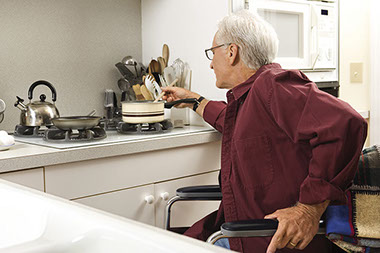
    Image of eldery man in wheel chair cooking at his stove.

    Seniors fear moving into a nursing home and losing their independence more than death, according to a new research study, Aging in Place in America, commissioned by Clarity and  The EAR Foundation.

    The study looked at the attitudes and anxieties of the nation’s elderly. The children of seniors also fear for their parents, with particular concern about their emotional and physical well-being should they have to enter a nursing home.

    One of the most significant findings of the study is that, when asked what they fear most, seniors rated loss of independence (26%) and moving out of their homes into a nursing home (13%) as their greatest fears. These two possibilities are a much higher concern than death, which was the greatest fear for only 3% of seniors surveyed.

    Other key findings include these:

    *  Most seniors want to age in place. That means they want to grow older without having to move from their homes. More than half are concerned about their ability to do so.

    *  Seniors cited three primary concerns that could jeopardize their ability to live independently: health problems, memory problems and inability to drive or get around.

    *  Many seniors said they are open to or would like to use new technologies that enable independence. More than half would consider the use of technology in their homes-specifically, sensors-to monitor their health and safety.

    *  Most Baby Boomers fear their parents will be mistreated in a nursing home and fear they will be sad. Almost two-thirds of Boomers provide some kind of help or support for their aging parents.

    “These findings tell us that, above all else, older Americans value their ability to live independently,” said Peter Bell, president of National Aging in Place Council. “As a society, we must find ways to help our parents and grandparents live their latter years at home.”

    © American Institute for Preventive Medicine

  • Why Memories Change

    MEDICAL NEWS

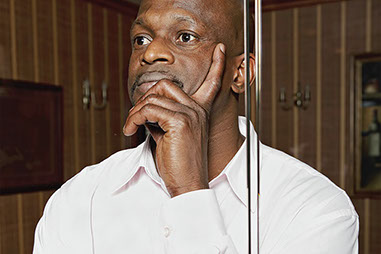
    Image of older man looking out a window thinking.

    Memory is like the old telephone game, according to researchers at Northwestern University School of Medicine. You remember when kids took turns whispering a message into the ear of the next person in line? By the time the last person spoke it out loud, the message had radically changed. It’s been altered with each retelling.

    Every time you remember an event from the past, your brain networks change in ways that can alter the later recall of the event. Thus, the next time you remember it, you might recall not the original event but what you remembered the previous time. The Northwestern study is the first to show this.

    “A memory is not simply an image produced by time traveling back to the original event-it can be an image that is somewhat distorted because of the prior times you remembered it,” said Donna Bridge, lead author of the study published in the Journal of Neuroscience. “Your memory of an event can grow less precise even to the point of being totally false with each retrieval.”

    The reason for the distortion, Bridge said, is the fact that human memories are always adapting. Take note, lawyers and eyewitnesses.

    © American Institute for Preventive Medicine
  • How Aging Affects Memory

    Brain & Nervous System

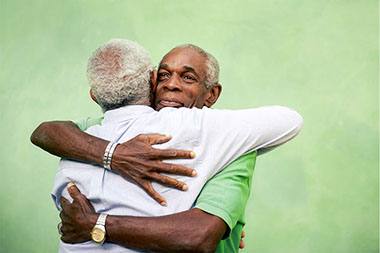
    Image of 2 elderly male friends hugging.

    Many people are afraid that growing old means losing the ability to think, reason, or remember.

    Some short-term memory loss does come with aging. You may, for example, forget where you put your keys or not remember the name of a person you just met. This is normal. Memory lapses that interfere with your normal activities, though, are not a normal part of aging. Nor is confusion.

    People who have changes in personality, behavior, or skills may have a brain or nervous system condition. These problems could also be a side effect of certain medicines, too much alcohol, or depression. This chapter gives information on common brain and nervous conditions in older persons.

    Health at Home Lifetime book by the American Institute for Preventive Medicine. www.HealthyLife.com. All rights reserved.

    © American Institute for Preventive Medicine
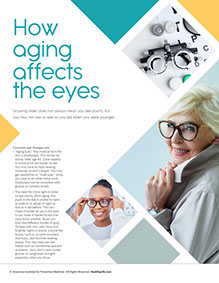
  • How Aging Affects The Eyes

    Eye Conditions

    Growing older does not always mean you see poorly. But you may not see as well as you did before. Common changes that affect your eyes are:

    *  “Aging Eyes.” The medical term for this is presbyopia (prez-bee-OH-pea-ah). This comes on slowly after age 40. Close objects or small print are harder to see. You may have to hold reading materials at arm’s length. You may get headaches or “tired eyes” while you read or do other close work. Presbyopia can be corrected with glasses or contact lenses.

    *  The need for more light in order to see clearly. With aging, the pupil in the eye is unable to open as wide or to adapt to light as fast as it did before. This can make it harder to see in the dark. It can make it harder to tell one color from another. Blues can look like different shades of gray. To help with this, add more and brighter lights in places around the house, such as at work counters, stairways, and favorite reading places. This may help you see better and can sometimes prevent accidents. Also, don’t wear tinted glasses or sunglasses at night, especially when you drive.

    Signs & Symptoms and What It Could Be

    Signs & Symptoms: Sudden loss of all or part of vision, especially in one eye with sudden weakness or numbness on one side.

    What It Could Be: Stroke

    What to Do: Get immediate care. Call 9-1-1.

    Signs & Symptoms: Vision loss after head or eye injury. Sudden vision loss or blurred vision, and seeing dark spots, or flashes of light all of a sudden.

    What It Could Be: Detached or torn retina.

    What to Do: Get immediate care.

    Signs & Symptoms: Severe pain in and above the eye. Eye redness, swollen upper eyelid. Dilated and fixed pupil. Very blurred vision, halos around lights.

    What It Could Be: Angle-closure glaucoma.

    What to Do: Get immediate care.

    Signs & Symptoms: Object or chemical in the eye.

    What It Could Be: Eye irritation or injury.

    See “Eye Irritations & Injuries” for more information.

    Signs & Symptoms: Gradual loss of side vision. Blurred vision. Halos around lights. Poor night vision.

    What It Could Be: Open-angle or chronic glaucoma.

    See “Glaucoma” for more information.

    Signs & Symptoms: Dark or blind spot in center of vision. Blurred or cloudy vision. Straight lines look wavy.

    What It Could Be: Macular degeneration.

    See “Macular Degeneration” for more information.

    Signs & Symptoms: Cloudy, fuzzy, foggy, or filmy vision. Halos around lights. Problems with glare from lamps or the sun.

    What It Could Be: Cataract.

    See “Cataracts” for more information.

    Signs & Symptoms: Pus discharge from the eye; the white of the eye and eyelid are red; crusting of the eyelid in the morning; feeling of sand in the eye

    What It Could Be: Conjunctivitis (“Pink Eye”).

    See “Conjunctivitis (Pink Eye)” for more information.

    Signs & Symptoms: Firm lump on eyelid or tender pimple on the edge of the eyelid.

    What It Could Be: Stye.

    See “Stye” for more information.

    Signs & Symptoms: Seeing spots, specks, wavy lines, or streaks of light.

    What It Could Be: Floaters and/or flashes.

    See “Floaters and/or flashes” for more information.

    Signs & Symptoms: Blurred vision when you look at close objects; headaches; eyestrain.

    What It Could Be: “Aging Eyes” or presbyopia.

    What to Do: Call eye doctor for an appointment and advice.

    Health at Home Lifetime book by the American Institute for Preventive Medicine. www.HealthyLife.com. All rights reserved.

    © American Institute for Preventive Medicine