Tag: alarms

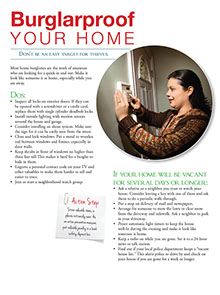
  • Burglarproof Your Home

    Home Safety

    Don’t be an easy target for thieves.

    Most home burglaries are the work of amateurs who are looking for a quick in and out. Make it look like someone is at home, especially while you are away.

    Dos:

    *  Inspect all locks on exterior doors. If they can be opened with a screwdriver or a credit card, replace them with single cylinder deadbolt locks.

    *  Install outside lighting with motion sensors around the house and garage.

    *  Consider installing an alarm system. Make sure the sign for it can be easily seen from the street.

    *  Close and lock windows. Put a metal or wooden rod between windows and frames, especially in door walls.

    *  Keep shrubs in front of windows no higher than three feet tall. This makes it hard for a burglar to hide in them.

    *  Engrave a personal contact code on your TV and other valuables to make them harder to sell and easier to trace.

    *  Join or start a neighborhood watch group.

    If your home will be vacant for several days or longer:

    *  Ask a relative or a neighbor you trust to watch your house. Consider leaving a key with one of them and ask them to do a periodic walk-through.

    *  Put a stop on delivery of mail and newspapers.

    *  Arrange for someone to mow the lawn or clear snow from the driveway and sidewalk. Ask a neighbor to park in your driveway.

    *  Preset automatic light timers to keep the house   well-lit during the evening and make it look like someone is home.

    *  Keep a radio on while you are gone. Set it to a 24-hour news or talk station.

    *  Find out if your local police department keeps a “vacant house list.” This alerts police to drive by and check on your house if you are gone for a week or longer.

    Action Step

    Store valuable items in places not easily seen. As an extra preventive measure, put valuable jewelry in a bank safety deposit box.
    Ways to Well-Being book by the American Institute for Preventive Medicine. www.HealthyLife.com. All rights reserved.

    © American Institute for Preventive Medicine
  • Home Security

    Home Safety

    Do This, Not That

    According to the FBI:

    *  13% of homes are burglarized a year.

    *  A home is invaded every 12 seconds.

    *  Most home burglaries occur between 9 a.m. and 5 p.m.

    *  85% of all break-ins occur through the door.

    *  67% of all burglaries involved forcible entry. Door frame failure is usually the cause.

    Most home burglaries are the work of amateurs who are looking for a quick way in and out. Follow tips in this section to keep your home as secure as possible. Also, keep others from finding out when you will be on vacation. For example, do not post your whereabouts on social networks. It is best to not leave a spare key under the doormat, in a fake rock, or in a flower pot next to the door. Instead, give a spare key to a trusted neighbor or nearby friend.

    General Guidelines

    Safe at Home - Do This, Not That Book. Published by the American Institute for Preventive Medicine. www.HealthyLife.com. All rights reserved.

    © American Institute for Preventive Medicine
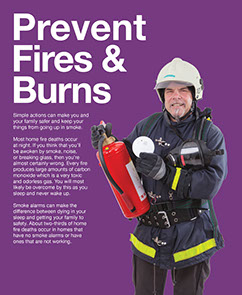
  • Prevent Fires & Burns

    Home Safety

    Do This, Not That

    Simple actions can make you and your family safer and keep your things from going up in smoke.

    Most home fire deaths occur at night. If you think that you’ll be awoken by smoke, noise, or breaking glass, then you’re almost certainly wrong. Every fire produces large amounts of carbon monoxide which is a very toxic and odorless gas. You will most likely be overcome by this as you sleep and never wake up.

    Smoke alarms can make the difference between dying in your sleep and getting your family to safety. About two-thirds of home fire deaths occur in homes that have no smoke alarms or have ones that are not working.

    General Guidelines

    Cooking Safety

    Electrical Safety

    Safe at Home - Do This, Not That Book. Published by the American Institute for Preventive Medicine.

    © American Institute for Preventive Medicine