Tag: alcohol

  • Driving Yourself To Drink

    Substance Use & Abuse

    Take this test to see if you are out of control.

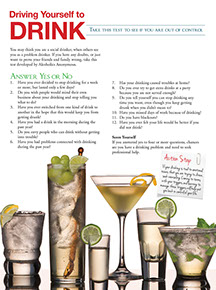
    You may think you are a social drinker, when others see you as a problem drinker. If you have any doubts, or just want to prove your friends and family wrong, take this test developed by Alcoholics Anonymous.

    Answer Yes or No:

    1.  Have you ever decided to stop drinking for a week or more, but lasted only a few days?

    2.  Do you wish people would mind their own business about your drinking and stop telling you what to do?

    3.  Have you ever switched from one kind of drink to another in the hope that this would keep you from getting drunk?

    4.  Have you had a drink in the morning during the past year?

    5.  Do you envy people who can drink without getting into trouble?

    6.  Have you had problems connected with drinking during the past year?

    7.  Has your drinking caused troubles at home?

    8.  Do you ever try to get extra drinks at a party because you are not served enough?

    9.  Do you tell yourself you can stop drinking any time you want, even though you keep getting drunk when you didn’t mean to?

    10. Have you missed days of work because of drinking?

    11. Do you have blackouts?

    12. Have you ever felt your life would be better if you did not drink?

    Score Yourself: If you answered yes to four or more questions, chances are you have a drinking problem and need to seek professional help.

    Action Step

    If your drinking is tied to emotional issues that you are trying to drown, seek counseling. Coming to terms with your triggers and learning to manage those triggers will help put you back in control of your life.

    Page from Ways to Well-Being book by the American Institute for Preventive Medicine. www.HealthyLife.com. All rights reserved.

    © American Institute for Preventive Medicine

  • Smart Tips For Business Drinking

    Substance Use & Abuse

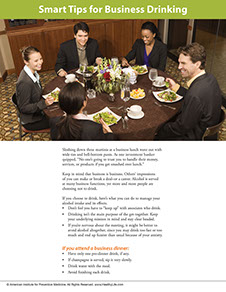
    Image of co-workers cheering with glasses of wine.

    Sloshing down three martinis at a business lunch went out with wide ties and bell-bottom pants. As one investment banker quipped, “No one’s going to trust you to handle their money, services, or products if you get smashed over lunch.”

    Keep in mind that business is business. Others’ impressions of you can make or break a deal-or a career. Alcohol is served at many business functions, yet more and more people are choosing not to drink.

    If you choose to drink, here’s what you can do to manage your alcohol intake and its effects.

    *  Don’t feel you have to “keep up” with associates who drink.

    *  Drinking isn’t the main purpose of the get-together. Keep your underlying mission in mind and stay clear headed.

    *  If you’re nervous about the meeting, it might be better to avoid alcohol altogether, since you may drink too fast or too much and end up fuzzier than usual because of your anxiety.

    If you attend a business dinner:

    *  Have only one pre-dinner drink, if any.

    *  If champagne is served, sip it very slowly.

    *  Drink water with the meal.

    *  Avoid finishing each drink.

    Page from A Year of Health Hints book by the American Institute for Preventive Medicine. www.HealthyLife.com. All rights reserved.

    © American Institute for Preventive Medicine

  • 5 Reasons To Limit Alcohol

    Substance Use & Abuse

    Cocktail drink with slices of grapefruit and lime.

    Limit alcohol to lower your risk for:

    1.  Injuries from falling and operating machines

    2.  Liver and heart diseases, stroke, and high blood pressure

    3.  Cancers of the breast, mouth, throat, colon, and liver

    4.  Depression, sleep disorders, unsafe sex, alcohol abuse, and harmful alcohol and drug interactions

    5.  Motor vehicle crashes. As little as 2 drinks can impair some people’s ability to drive safely.

    Take Action: Be Social Without Alcohol

    *  Focus more on the people you are with than alcoholic drinks.

    *  Keep drinks without alcohol in your house to offer guests.

    *  Plan activities with others that do not include alcohol.

    *  Drink water. This helps you save money, too.

    Page from HealthyLife Weigh book by the American Institute for Preventive Medicine. www.HealthyLife.com. All rights reserved.

    © American Institute for Preventive Medicine

  • Drink Responsibly

    Substance Use & Abuse

    Limit alcohol to one to two drinks a day.

    Alcohol is a depressant and the most widely used legal drug in the United States. About one in 13 adults are alcoholics or alcohol abusers. Alcohol is a leading cause of traffic-related deaths for 15 to 24 year olds and a trigger for one in four suicides and about 50 percent of spousal abuse.

    Enough is enough.

    Two drinks per day for men and one drink per day for women and persons age 65 and older is enough to release tension. Drinking too much can slur your speech, decrease your ability to think clearly, and put you at greater risk of having a traffic accident, if driving.

    One drink equals 1-1/2 ounces of 80-proof hard liquor, 12 ounces of beer, or 4-5 ounces of wine.

    Use alcohol wisely:

    *  Alcohol and some prescribed drugs don’t mix and can sometimes be fatal. Read labels and ask your doctor before combining the two.

    *  Know your drinking limit and stick to it.

    *  Drink slowly.

    *  After you have one to two drinks with alcohol, drink something alcohol-free.

    *  Don’t drink and drive.

    *  Always designate a driver who will not be drinking.

    Don’t drink alcohol if:

    *  You are pregnant.

    *  You are under the legal drinking age.

    *  You are driving a car, a boat, a plane or operating machines.

    *  You are alcohol or drug dependent.

    *  You have hepatitis.

    Action Step

    If you order alcohol when you eat out, ask to have it served with, not before, the meal. Alternate sips of alcohol and water. Designate a sober driver. Buzzed driving is drunk driving.

    Page from Ways to Well-Being book by the American Institute for Preventive Medicine. www.HealthyLife.com. All rights reserved.

    © American Institute for Preventive Medicine

  • Alcohol & Alcohol Safety

    Student Health

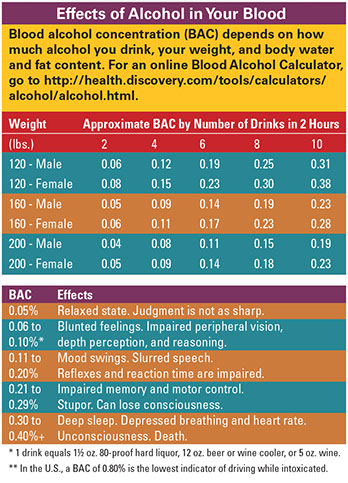
    Before drinking, think about its possible consequences (e.g., academic and health problems, unsafe sex, assault, injury, and even death). These consequences affect the person who drinks as well as other students (whether they choose to drink or not) and the community as a whole.

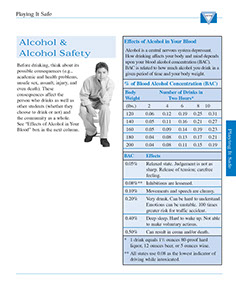
    Chart of effects of alcohol in your blood.

    Alcohol Poisoning

    Call 9-1-1 for one or more of the following signs of alcohol poisoning or combining alcohol and other drugs, such as sedatives or tranquilizers. Act quickly. Alcohol poisoning can be fatal.

    *  Unconsciousness. This means the person is hard to rouse and can’t be made aware of his or her surroundings. This can be brief, such as with fainting or blacking out. It can put a person into a coma.

    *  No breathing or slow and shallow breathing. This means 10 or fewer breaths per minute or time lapses of more than 8 seconds between breaths.

    *  Slow pulse rate (40 or fewer beats per minute).

    *  Skin that is cold, clammy, and/or pale or blue in color.

    {Note: Before emergency care arrives, place the person on his or her side with the knees bent, to prevent choking if he or she vomits. Loosen the person’s clothing around the neck and check the mouth and back of the throat to see that nothing obstructs the person’s breathing. Stay with the person.}

    Alcohol Poisoning

    *  Choose substance-free housing, if available and desired.

    *  Be aware and think about the risks and consequences of drinking, including getting arrested, getting sick, contracting an STI, etc. One incident of alcohol use could cause you to do something you will regret for the rest of your life. Alcohol plays a part in most sexual assaults.

    *  Mixing drinking with driving, drugs, or operating machines can be fatal. Designate a sober driver.

    *  Not everyone drinks. Be with people who drink non-alcoholic beverages or ones that look like “drinks,” such as non-alcoholic beer in a glass.

    *  It is better to get medical help for a person who needs it instead of worrying about getting a friend in trouble.

    *  Drink alcohol only if you want to, and if you do:

    – Know your limit and stick to it or don’t drink any alcohol.

    – Drink slowly. You are apt to drink less. Have one drink during a party. Take fake sips, if necessary. In reality, anything over two drinks does not increase the feeling of pleasure. Drinking too much leads to being unable to enjoy yourself.

    – Eat when you drink. Food helps to slow alcohol absorption.

    – Alternate an alcoholic beverage with a non-alcoholic one. Use non-alcohol or reduced alcohol beverages. Dilute distilled beverages. Use more and more mixer and less and less alcohol. After two drinks, your taste buds are dulled and you won’t be able to notice much difference.

    – Avoid drinking contests and games.

    Resources

    Emergency Medical Service (Call 9-1-1) if you suspect alcohol poisoning or a drug overdose

    Your school’s Student Health Service, Student Counseling Service, or Alcohol and other Drug Program

    Al-Anon/Alateen World Service Office

    888.4AL.ANON (425.2666)

    www.al-anon.org

    Alcoholics Anonymous (AA) World Services

    www.aa.org

    Center for Substance Abuse Treatment (CSAT) National Drug Treatment Referral Routing Service

    800.662.HELP (4357)

    www.findtreatment.samhsa.gov

    Narcotics Anonymous (NA)

    818.773.9999

    www.na.org

    National Institute on Alcohol Abuse & Alcoholism (NIAAA)

    www.niaaa.nih.gov

    www.thecoolspot.gov
    Student Self-Care book by the American Institute for Preventive Medicine. www.HealthyLife.com. All rights reserved.

    © American Institute for Preventive Medicine

  • Cirrhosis: Be Kind To Your Liver

    Abdominal & Urinary Conditions

    The liver is probably the most versatile organ you’ve got. It performs many tasks, including:

    *  Producing bile (a substance that aids digestion of fats).

    *  Producing blood proteins.

    *  Helping blood clot.

    *  Metabolizing cholesterol.

    *  Maintaining normal blood sugar levels.

    *  Forming and storing glycogen (the body’s short-term energy source).

    *  Manufacturing more than 1,000 enzymes necessary for various bodily functions.

    *  Detoxifying substances such as alcohol and many drugs.

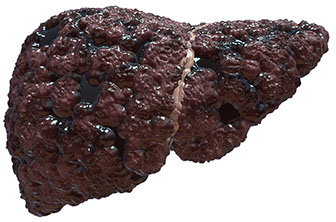
    Image of liver with cirrhosis.

    Liver with Cirrhosis

    The liver is equipped to handle a certain amount of alcohol without much difficulty. But drink too much alcohol, too often, for too long, and the vital tissues in the liver break down. Fatty deposits accumulate and scarring occurs. This is known as cirrhosis. It’s most commonly found in men over 45, yet the number of women developing cirrhosis is steadily increasing.

    To make matters worse, people who drink too much generally have poor nutritional habits. Since alcohol replaces food, essential vitamins and minerals are missing from the diet. Malnutrition aggravates cirrhosis.

    While alcohol abuse is the most common cause of cirrhosis, hepatitis, taking certain drugs, or exposure to certain chemicals can also produce this condition.

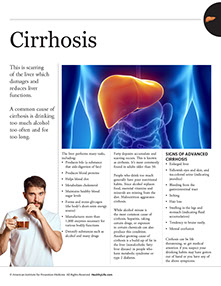
    Doctors recognize the following as signs of advanced cirrhosis.

    *  Enlarged liver.

    *  Yellowish eyes and skin, and tea-colored urine (indicating jaundice). Bleeding from the gastrointestinal tract.

    *  Itching.

    *  Hair loss.

    *  Swelling in the legs and stomach (indicating fluid accumulation).

    *  Tendency to bruise easily.

    *  Mental confusion.

    Cirrhosis can be life threatening, so get medical attention if you suspect your drinking habits may have gotten out of hand or you have any of the above symptoms. And needless to say, you (or anyone you suspect of having cirrhosis) should abstain from alcohol.

    A Year of Health Hints book by the American Institute for Preventive Medicine. www.HealthyLife.com. All rights reserved.

    © American Institute for Preventive Medicine

  • Limit Alcohol

    Healthylife® Weigh

    Part 3

    Glass of wine for 2 at dinner.

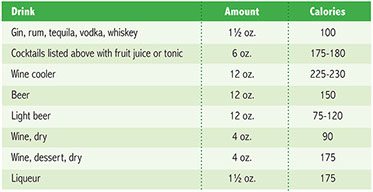
    Alcoholic beverages provide calories with little or no nutrients. Alcohol can damage your heart, liver, brain, and other body systems. It can cause high blood pressure and increases your risk for some cancers. Drinking can also decrease your immunity, making it harder for your body to fight disease.

    Chart showing alcoholic drink, calories per amount.

    Effects of Alcohol on Weight Management

    *  It stimulates the appetite.

    *  It can make it harder to keep track of how much you’ve eaten.

    *  It can cause a drop in blood sugar. This can make you tired and less able to concentrate. It can also cause you to crave something sweet.

    If you drink alcohol, do so wisely.

    *  Don’t drink and drive. Designate a driver who will not be drinking. Volunteer to stay sober.

    *  Drink slowly. You will probably drink less.

    *  Drink alcohol with a meal. Food slows alcohol absorption.

    *  Drink a full glass of water between each alcoholic drink.

    © American Institute for Preventive Medicine

  • Alcohol Increases Risk For Breast Cancer

    SELF-CARE CORNER

    Image of middle-aged women smiling wearing a pink blazer.

    Breast cancer is the second leading cause of cancer death for women in the United States, after lung cancer. Dr. Erica Mayer, a breast cancer expert at Dana-Farber Cancer Institute, says there are at least 5 simple ways women can reduce their risk of getting the disease:

    1.Limit alcohol.Research has shown having too much alcohol can increase your risk of breast cancer. If you choose to drink alcohol-including beer, wine, or liquor-limit yourself to no more than one half to one drink a day on average.

    2.Get a mammogram.Many health organizations advise women to get regular mammograms starting at age 40. “Mammography screening does not prevent or cure breast cancer, but it may detect the disease before symptoms occur,” said Dr. Mayer.

    3.Eat a healthy diet and keep your weight under control.The American Cancer Society recommends a diet rich in vegetables, fruits, whole grains, and fiber. “High-fat diets can lead to being overweight or obese, which is a risk factor for breast cancer,” said Dr. Mayer.

    4.Exercise.There’s growing evidence that physical activity reduces a woman’s breast cancer risk.

    5.Determine if you have family history of breast cancer and be vigilant to early detection.Twenty to 30% of people who develop breast cancer have a family history of the disease. About 5 to 10% of women carry a BRCA1 or BRCA 2 mutation, the so called “breast cancer genes.”

    © American Institute for Preventive Medicine

  • Poor Behavior At Office Parties May Hurt Your Career

    WORK LIFE

    Image of a group of co-workers drinking after hours.

    Too many drinks combined with poor behavior at an office holiday party could signal the demise of employment for some employees, warned Lynne Richardson, dean of the Ball State University Miller College of Business. She said employees should be on their best behavior and treat the annual holiday office party as an extension of work. Supervisors can and will hold employees accountable for inappropriate actions at such events. Avoid excessive alcohol consumption, dress appropriately, abstain from discussing sensitive work-related issues and bring a date only if told it is proper.

    © American Institute for Preventive Medicine

  • Race Drinking

    BE FIT

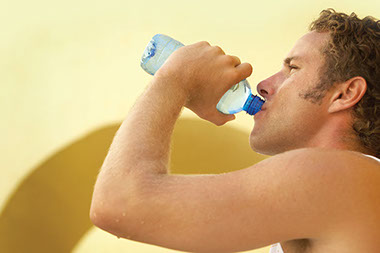
    Image of man drinking from a water bottle.

    Nearly half of recreational runners may be drinking too much fluid during races, according to a survey of runners by Loyola University Health System researchers. Expert guidelines recommend runners drink only when thirsty. But the Loyola survey found that 36.5% of runners drink according to a preset schedule or to maintain a certain body weight and 8.9% drink as much as possible.

    Drinking too much fluid while running can cause a potentially fatal condition called exercise-associated hyponatremia. It occurs when runners drink even when they are not thirsty. Drinking too much during exercise can dilute the sodium content of blood to abnormally low levels.

    Drinking only when thirsty will prevent overconsumption of fluids. “It’s the safest known way to hydrate during endurance exercise,” said Loyola sports medicine physician Dr. James Winger. The study is in the British Journal of Sports Medicine.

    Symptoms of hyponatremia can include nausea, vomiting, headache, confusion, loss of energy, muscle weakness, spasms or cramps. In extreme cases, the condition can lead to seizures, unconsciousness, and coma.

    © American Institute for Preventive Medicine