Tag: Allergies

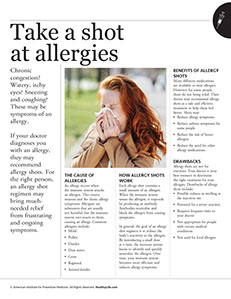
  • Take A Shot At Allergies

    SELF-CARE CORNER

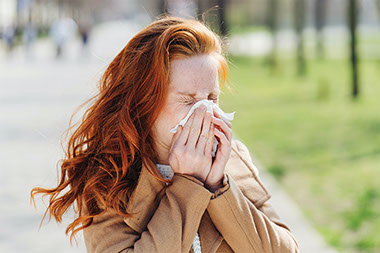
    Women outside using a tissue while sneezing.

    Chronic congestion? Watery, itchy eyes? Sneezing and coughing? These may be symptoms of an allergy.

    If your doctor diagnoses you with an allergy, they may recommend allergy shots. For the right person, an allergy shot regimen may bring much-needed relief from frustrating and ongoing symptoms.

    The cause of allergies

    An allergy occurs when the immune system attacks an allergen. This creates mucous and the classic allergy symptoms. Allergens are substances that are usually not harmful, but the immune system over-reacts to them, causing an allergy. Common allergens include:

    *  Mold

    *  Pollen

    *  Dander

    *  Dust mites

    *  Grass

    *  Ragweed

    *  Animal dander

    How allergy shots work

    Each allergy shot contains a small amount of an allergen. When the immune system senses the allergen, it responds by producing an antibody. Antibodies neutralize and block the allergen from causing symptoms.

    In general, the goal of an allergy shot regimen is to reduce the body’s reactivity to the allergen. By introducing a small dose at a time, the immune system learns to identify and quickly neutralize the allergen. Over time, your immune system becomes more efficient and reduces allergy symptoms.

    Benefits of allergy shots

    Many different medications are available to treat allergies. However, for some people, those do not bring relief. Their doctor may recommend allergy shots as a safe and effective treatment to help them feel better. Shots may:

    *  Reduce allergy symptoms

    *  Reduce asthma symptoms for some people

    *  Reduce the risk of future allergies

    *  Reduce the need for other allergy medications

    Drawbacks

    Allergy shots are not for everyone. Your doctor is your best resource to determine the right treatment for your allergies. Drawbacks of allergy shots include:

    *  Possible redness or swelling at the injection site

    *  Potential for a severe reaction

    *  Requires frequent visits to your doctor

    *  Not appropriate for people with certain medical conditions

    *  Not used for food allergies
    © American Institute for Preventive Medicine
  • Allergy Or Asthma? Know The Difference

    SELF-CARE CORNER

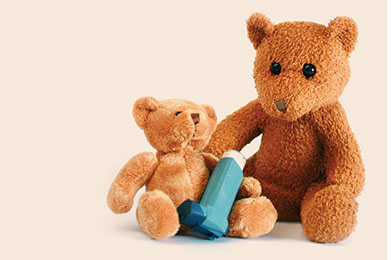
    Image of 2 teddy bears next to an asthma inhaler.

    Allergies are caused by an over-reaction of the immune system to certain substances (called allergens) in the air (pollen, dust mites, for example), eaten (such as peanuts or shrimp), injected (like a bee sting or certain medicines), or touched (poison ivy or latex are good examples), according to the Asthma and Allergy Foundation of America.

    Symptoms of an allergy may be some or all of these:

    *  Sneezing

    *  Runny nose (clear discharge)

    *  Itchy nose or throat

    *  Coughing

    *  Skin rashes or hives

    Asthma occurs when airways become temporarily blocked or narrowed because of exposure to allergens, irritants, strenuous exercise, anxiety, or other triggers. If an asthma attack is severe, a person may need emergency treatment.

    Asthma symptoms can include some or all of these:

    *  Sudden shortness of breath

    *  Difficulty breathing

    *  Tight chest

    *  Wheezing or coughing

    © American Institute for Preventive Medicine

  • Backpacks. Crayons. Glue Sticks. Epipen?

    FAMILY LIFE

    Image of 2 school kids in the classroom.

    For more and more school-age children the Epipen is becoming a necessity for completing the back-to-school supply list. In fact, allergic conditions are one of the most common medical conditions affecting children in the U.S.

    “Accidental exposure to allergens at school is a major concern for kids with severe allergies since any exposure could be fatal,” said Dr. Joyce Rabbat, pediatric allergist at Loyola University Health System.

    Food allergies are the most concerning for school-age children since allergens can be hidden in food or utensils and pots and pans could be contaminated without the child’s knowledge. Dr. Rabbat said that parents of children with food allergies should ensure an Allergy Action Plan is in place for the child at his or her school.

    This really could mean life or death to the child,” she said in suggesting that parents should make sure the school reviews the child’s health records that they provide from the doctor. She also suggests asking what the school does to prevent accidental exposure and that staff are trained to deal with an emergency situation.

    If the child is older and knows how to self-administer medications, Dr. Rabbat suggests talking to the school about allowing the child to carry the medication with them. If that is not allowed at the school, make sure the following medications are available:

    *  Epinephrine autoinjectors

    *  Antihistamines

    *  Albuterol rescue inhalers

    Also make sure a staff member, who is available at all times, is properly trained on to how to administer these medications and that your child is familiar with this person.

    © American Institute for Preventive Medicine

  • Bad Air Day

    MEDICAL NEWS

    Image of women sneezing.

    Ozone. It’s an invisible gas but it pollutes the air and may make it harder for you to breathe.

    Ozone is created when sunlight triggers a chemical reaction between oxygen-containing molecules and pollution that comes from cars, power plants, factories, and other sources, says the NIH News in Health. Hot weather is one of the triggers for the creation of ozone. It’s not as much of a problem in winter, say the NIH scientists.

    High levels of ozone might cause you to cough or have throat irritation. Your eyes might water, and you may have trouble breathing. The ozone irritates the lining of your airways and lungs. If you have a lung condition such as asthma, the damage can be greater.

    Adjust your activities on a bad air day to reduce your exposure to air pollution and stay indoors. Limit outdoor activities. Even if you’re in good health, mow the lawn or take a run or walk later in the evening or first thing in the morning. Ozone levels tend to peak between mid-afternoon and early evening. You can track air quality atwww.airnow.gov.

    © American Institute for Preventive Medicine

  • Choosing A Family Pet

    FAMILY LIFE

    Image of Hispanic family with a pet dog.

    Pets aren’t just for kids. Owning a pet can improve your family’s health in many ways, according to the Centers for Disease and Prevention (CDC). Pets can lower blood pressure and cholesterol, and offer companionship to all members of your household. Before you choose one, think about these factors.

    All pets need daily care.They need attention, food, and a place to sleep. Dogs need to be walked and taken outside daily. Cats need a clean litter box. Veterinary visits and vaccines are important. Look into the pet you want, and make sure you’re ready to do everything it takes to keep the pet healthy. It’s a daily commitment that you’ll need to stick with for many years.

    Make sure everyone in the family is ready.Caring for a pet is best done with everyone’s help. Are your kids ready to help feed a dog and walk it? Are the parents ready for veterinary costs, cleaning up after the pet, and arranging for pet care during vacations?

    With certain reptiles, small animals and birds, proper hygiene is very important.Some pets, such as birds, reptiles and amphibians, can spread illness to humans. Visitwww.cdc.gov/healthypetsfor information about preventing illness.

    As long as you carefully consider all the care your pet will need, you can make an informed choice about your next furry friend.

    Source: American Humane Association

    A heart for dogs

    One study looked at 421 adults who’d had heart attacks. A year later, dog owners were much more likely to still be alive than were those who did not own dogs, regardless of the severity of the heart attack.

    Source: National Institutes of Health

    © American Institute for Preventive Medicine

  • Ragweed

    WELL-BEING

    Image of ragweed.

    Maybe you’ve never been allergic to ragweed. You may not be miserable at the end of summer during ragweed season like a lot of other people.

    But even if you’ve never had a problem with seasonal hay fever caused by ragweed, don’t assume that runny nose and itchy eyes are caused by a cold.

    The truth, according to the American College of Allergy, Asthma and Immunology, is that anyone can develop an allergy-including an allergy to ragweed-later in life.

    Scientists think it may be you’ve always had the allergy, but it might have taken exposure to another allergen to trigger your symptoms. If symptoms won’t go away, lasting more than 2 weeks, you probably have allergies.

    Common allergy symptoms include itchy eyes and nose, as well as sneezing, but the mucus is typically clear.

    You’ll want to talk with your doctor first about over-the-counter medications to try to relieve those annoying symptoms.

    © American Institute for Preventive Medicine

  • The Rise Of Food Allergies

    HEALTHY EATING

    Image of an older Asian couple stretching.

    The body’s immune system is designed to fight off unwanted invaders, such as viruses, bacteria and fungi. But when the immune system reacts to something that isn’t usually harmful, such as pollen, dust, or certain foods, it’s considered an allergy.

    The Centers for Disease Control and Prevention (CDC) says 5 out of every 100 children in the U.S. have a food allergy today. About 4 percent of all adults also have food allergies.

    While some reactions may be mild, such as hives or tingling, other food allergies can cause a life-threatening allergic reaction known as anaphylaxis.

    Increase in allergies – and questions

    The Centers for Disease Control and Prevention reports that food allergies increased 18 percent among children from 1997 to 2007.

    Researchers are still trying to find out why food allergies continue to increase. However, they do know a few key facts about food allergies:

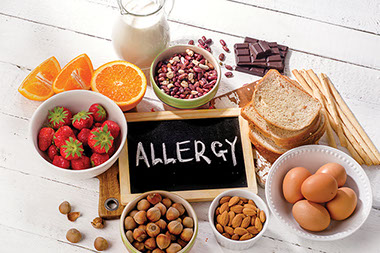
    *  Up to 90 percent of all food allergies involve eggs, dairy, peanuts, tree nuts, fish, shellfish, wheat and soy.

    *  Food allergies can occur at any age, not just during childhood. Even if you’ve eaten a food before without problems, you can become allergic to it later.

    *  If you have a parent with allergies, asthma, or eczema, you are more likely to have food allergies.

    *  Kids with food allergies are up to 4 times more likely to have asthma and other allergies, such as hay fever.

    *  Allergies to fish, shellfish, peanuts, and tree nuts tend to last a person’s entire life. Dairy, egg, and soy allergies are sometimes outgrown.

    *  There is no cure for allergies: the allergic food must be avoided.

    A recent analysis in the Journal of the American Medical Association shows that introducing some allergenic foods to a baby earlier in life could lower the risk of food allergies. Talk to your pediatrician before giving your child new foods, especially if allergies run in the family.

    Severe allergic reactions: WHAT TO DO

    Anaphylaxis is a severe allergic reaction that can be deadly. Symptoms include facial or lip swelling, paleness, weakness, difficulty breathing, vomiting and fainting. If someone is having anaphylaxis, it’s important to:

    *  Ask if the person has epinephrine (EpiPen or another injector) and see if they need help injecting it. It is usually injected into a person’s thigh. This should be done quickly.

    *  Call 911 immediately.

    *  Even if the person starts to feel better, he or she should still go to the hospital and seek medical care. The epinephrine delays the reaction, but the allergy must still be treated by a doctor right away.

    © American Institute for Preventive Medicine

  • When Allergies Get Real Serious

    MEDICAL NEWS

    Image of candy bar with warning "Not suitable for Nut allergy sufferers."

    A severe allergic reaction can be life threatening. It’s called anaphylaxis. The symptoms begin within minutes of eating a trigger food or after a bee sting or touching poison ivy. Some drugs can cause these serious reactions too. The Asthma and Allergy Foundation of America offers this safety advice:

    *  Know the symptoms: flushed skin, rash, tissue swelling, stuffy nose, sweating, panting, nausea, stomach cramps, rapid pulse, wheezing, convulsions, or fainting.

    *  Know what you’re allergic to: check food labels and ingredients. Ask at restaurants if you’re unsure if a menu item contains something you’re allergic to. Skin or blood tests done by a specialist can confirm that you’re sensitive to certain substances that can cause a severe reaction.

    *  Carry an auto-injectable epinephrine device that allows you to use a rescue medication until emergency help arrives.

    *  Wear a medical alert bracelet to let others know of your allergy.

    *  Anaphylaxis is a 9-1-1 medical emergency.

    © American Institute for Preventive Medicine

  • Allergies Annoying You?

    SELF-CARE CORNER

    Women outside blowing her nose.

    A runny nose, sneezing, itchy eyes… allergy symptoms can be miserable and common. More than 50 million Americans have allergies.

    People can get allergies at different times of the year. This is because different allergy triggers come and go as the seasons change:

    *  If you have allergies in the spring, you may be allergic to tree pollen.

    *  People who notice allergy symptoms in the summer are usually allergic to grass or weed pollen.

    *  Those who notice their allergies getting worse in late summer to fall are probably reacting to ragweed pollen.

    *  Allergy symptoms related to wet, rainy weather are often due to mold.

    *  If you have allergies year-round, you may be allergic to something indoors like dust mites or pet dander.

    What does allergy medicine do?

    There are many medicines available today that treat allergies. Each one works in a different way and can help people with different types of allergies. With the help of your doctor, you can find a solution that helps control your allergy symptoms. This can include:

    *  Antihistamines. They stop histamine, which is a chemical that the body releases when it is exposed to an allergen. These can help tackle all types of allergy symptoms, from runny nose to itching. Some antihistamines are pills, and others are nose sprays.

    *  Nasal (nose) sprays. Some allergy nose sprays contain an antihistamine ingredient. Others may contain a steroid to help stop swelling and inflammation, which causes a runny nose and sneezing. Nose sprays can help shut down the allergic reaction that starts in the nose.

    *  Eye drops. Eye drops for allergies are helpful for people who notice itchy or watery eyes. They don’t usually help with sneezing or other allergy symptoms.

    *  Immunotherapy. Includes allergy shots or small tablets placed under the tongue. These treatments expose the body to a small amount of the allergen over time. Your healthcare provider will have to give these to you.

    With all the treatments available today, you don’t have to live with miserable allergy symptoms. But talk with your healthcare provider before you try any new medicines.

    Sources: American Academy of Family Physicians, Asthma and Allergy Foundation of America

    © American Institute for Preventive Medicine