Tag: antibiotics

  • Cellulitis

    Skin Conditions

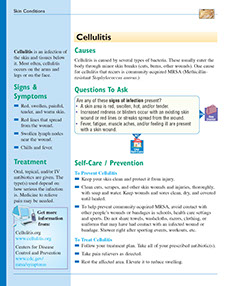
    Cellulitis is an infection of the skin and tissues below it. Most often, cellulitis occurs on the arms and legs or on the face.

    Signs & Symptoms

    *  Red, swollen, painful, tender, and warm skin.

    *  Red lines that spread from the wound.

    *  Swollen lymph nodes near the wound.

    *  Chills and fever.

    Causes

    Cellulitis is caused by several types of bacteria. These usually enter the body through minor skin breaks (cuts, burns, other wounds). One cause for cellulitis that recurs is community-acquired MRSA (Methicillin- resistant Staphylococcus aureus.)

    Treatment

    Oral, topical, and/or IV antibiotics are given. The type(s) used depend on how serious the infection is. Medicine to relieve pain may be needed.

    Questions to Ask

    Self-Care / Prevention

    To Prevent Cellulitis

    *  Keep your skin clean and protect it from injury.

    *  Clean cuts, scrapes, and other skin wounds and injuries, thoroughly, with soap and water. Keep wounds and sores clean, dry, and covered until healed.

    *  To help prevent community-acquired MRSA, avoid contact with other people’s wounds or bandages in schools, health care settings and sports. Do not share towels, washcloths, razors, clothing, or uniforms that may have had contact with an infected wound or bandage. Shower right after sporting events, workouts, etc.

    To Treat Cellulitis

    *  Follow your treatment plan. Take all of your prescribed antibiotic(s).

    *  Take pain relievers as directed.

    *  Rest the affected area. Elevate it to reduce swelling.
    Healthier at Home book by the American Institute for Preventive Medicine. www.HealthyLife.com. All rights reserved.

    © American Institute for Preventive Medicine
  • Pneumonia

    Respiratory conditions

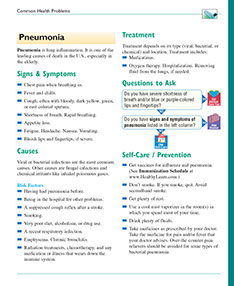
    Pneumonia is lung inflammation. It is one of the leading causes of death in the U.S., especially in the elderly.

    Signs & Symptoms

    *  Chest pain when breathing in.

    *  Fever and chills.

    *  Cough, often with bloody, dark yellow, green, or rust-colored sputum.

    *  Shortness of breath. Rapid breathing.

    *  Appetite loss.

    *  Fatigue. Headache. Nausea. Vomiting.

    *  Bluish lips and fingertips, if severe.

    Causes

    Viral or bacterial infections are the most common causes. Other causes are fungal infections and chemical irritants like inhaled poisonous gases.

    Risk Factors

    *  Having had pneumonia before.

    *  Being in the hospital for other problems.

    *  A suppressed cough reflex after a stroke.

    *  Smoking.

    *  Very poor diet, alcoholism, or drug use.

    *  A recent respiratory infection.

    *  Emphysema. Chronic bronchitis.

    *  Radiation treatments, chemotherapy, and any medication or illness that wears down the immune system.

    Treatment

    Treatment depends on its type (viral, bacterial, or chemical) and location. Treatment includes:

    *  Medications.

    *  Oxygen therapy. Hospitalization. Removing fluid from the lungs, if needed.

    Questions to Ask

    Self-Care / Prevention

    *  Get vaccines for influenza and pneumonia.

    *  Don’t smoke. If you smoke, quit. Avoid secondhand smoke.

    *  Get plenty of rest.

    *  Use a cool-mist vaporizer in the room(s) in which you spend most of your time.

    *  Drink plenty of fluids.

    *  Take medicines as prescribed by your doctor. Take the medicine for pain and/or fever that your doctor advises. Over-the-counter pain relievers should be avoided for some types of bacterial pneumonia.

    Healthier at Home book by the American Institute for Preventive Medicine. www.HealthyLife.com. All rights reserved.

    © American Institute for Preventive Medicine

  • Use Antibiotics Wisely

    MEDICAL NEWS

    Image of mother with sick child in bed.

    Antibiotics do not fight infections caused by viruses such as colds, flu, most sore throats, bronchitis, and many sinus and ear infections. Instead, symptom relief might be the best treatment option for viral infections, advises the CDC.

    Get smart about when antibiotics are needed-to fight bacterial infections. When you use antibiotics appropriately, you do the best for your health, your family’s health, and the health of those around you.

    Know that antibiotics

    *  Will not cure a viral infection

    *  Will not keep other people from getting sick

    *  Will not help you or your child feel better

    *  May cause unnecessary and harmful side effects

    *  May contribute to antibiotic resistance, which is when bacteria are able to resist the effects of an antibiotic and continue to cause harm

    Rest, fluids, and over-the-counter products may be your or your child’s best treatment option against viral infections.

    © American Institute for Preventive Medicine

  • What Is Antibiotic Resistance?

    MEDICAL NEWS

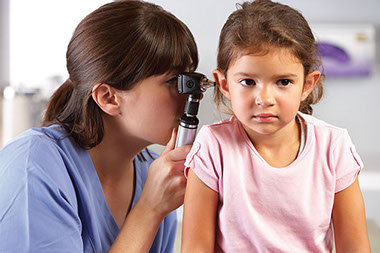
    Image of doctor with child patient.

    Antibiotic resistance happens when bacteria change in a way that the antibiotics that used to treat them are less effective or not effective at all. As a result, stronger, more expensive antibiotics are needed to kill the same bacteria. People who develop antibiotic-resistant infections are more likely to need treatment in a hospital and are at increased risk for death. Using antibiotics the wrong way contributes to the rise in antibiotic-resistant infections.

    How do I use antibiotics the right way?

    Antibiotics treat infections caused by bacteria, not viruses. Do not ask for antibiotics for symptoms of colds and flu. These illnesses are caused by viruses. Often, antibiotics are not needed for ear infections, sore throats, and sinus infections because these can be viral infections, too.

    If your doctor does prescribe an antibiotic, take it as prescribed. Do not skip doses. Take the entire course to make sure that no pesky bacteria linger because this can lead to a more serious infection.

    Source: Association for Professionals in Infection Control and Epidemiology. Read more at www.cdc.gov/getsmart.

    © American Institute for Preventive Medicine