Tag: awareness

  • The Truth About Fast Food

    HEALTHY EATING

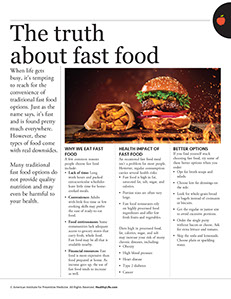
    Burger with french fries and fire.

    When life gets busy, it’s tempting to reach for the convenience of traditional fast food options. Just as the name says, it’s fast and is found pretty much everywhere. However, these types of food come with real downsides.

    Many traditional fast food options do not provide quality nutrition and may even be harmful to your health.

    Why we eat fast food

    A few common reasons people choose fast food include:

    *Lack of time:Long work hours and packed extracurricular schedules leave little time for home-cooked meals.

    *Convenience:Adults with little free time or few cooking skills may prefer the ease of ready-to-eat food.

    *Food environment:Some communities lack adequate access to grocery stores that carry fresh, whole food. Fast food may be all that is available nearby.

    *Financial resources:Fast food is more expensive than food prepared at home. As income goes up, the use of fast food tends to increase as well.

    Health impact of fast food

    An occasional fast food meal isn’t a problem for most people. However, regular consumption carries several health risks:

    *  Fast food is high in fat, saturated fat, salt, sugar, and calories.

    *  Portion sizes are often very large.

    *  Fast food restaurants rely on highly processed food ingredients and offer few fresh fruits and vegetables.

    Diets high in processed food, fat, calories, sugar, and salt may increase your risk of many chronic diseases, including:

    *  Obesity

    *  High blood pressure

    *  Heart disease

    *  Type 2 diabetes

    *  Cancer

    Better options

    If you find yourself stuck choosing fast food, try some of these better options when you order:

    *  Opt for broth soups and salads.

    *  Choose low-fat dressings on the side.

    *  Look for whole-grain bread or bagels instead of croissants or biscuits.

    *  Get the regular or junior size to avoid excessive portions.

    *  Order the single patty without bacon or cheese. Ask for extra lettuce and tomato.

    *  Skip the soda and lemonade. Choose plain or sparkling water.
    © American Institute for Preventive Medicine
  • Understanding Epilepsy

    MEDICAL NEWS

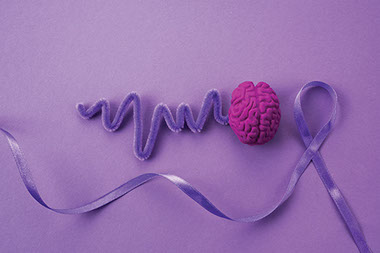
    Purple ribbon and brain to represent epilepsy awareness.

    Epilepsy is a broad term that encompasses a variety of brain disorders that cause seizures. It is one of the most common brain conditions and can affect people of any age.

    Signs & symptoms

    The primary symptom of epilepsy is seizures. A seizure is a brief change in brain activity. It can last anywhere from a few seconds to several minutes.

    Someone may be diagnosed with epilepsy if they have two or more seizures unrelated to another cause, such as a fever or low blood sugar.

    Seizures can look different in different people. Signs may include:

    *  Confusion

    *  Staring

    *  Rapid blinking

    *  Twitching or shaking

    *  Falling to the ground

    *  Loss of consciousness

    *  Body stiffening

    Causes

    While the cause of epilepsy is unknown for many people, certain conditions impact the brain and may lead to the development of epilepsy:

    *  Brain tumor

    *  Traumatic brain injury

    *  Infection in the brain from a virus, bacteria, or parasite

    *  Stroke

    *  Oxygen deprivation of the brain

    *  Certain genetic disorders

    *  Certain neurological diseases

    Treatment

    If left untreated, recurring seizures impact quality of life, increase the risk of injury, and may shorten life expectancy.

    Common treatments include:

    *  Medicine: Anti-seizure medication works by controlling improper brain signals.

    *  Surgery: This can remove the affected area if seizure activity occurs in only one part of the brain.

    *  Diet: A specialized ketogenic diet may be effective for some types of epilepsy, especially in children.

    *  Nerve stimulation: An implanted device stimulates the vagus nerve to reduce seizures.

    Self-care

    Successful epilepsy treatment takes the combined efforts of healthcare professionals and the person with epilepsy. Many self-care practices aid in reducing seizure triggers and keeping the body healthy:

    *  Take all medications as prescribed.

    *  Keep a record of seizures and any potential triggers.

    *  Get plenty of sleep every night.

    *  Eat a healthy, well-balanced diet.

    *  Get regular physical activity and movement.

    © American Institute for Preventive Medicine
  • Mind Your Mindless Munching

    Weight Control

    Women in kitchen, writing in a journal.

    *  Calories from snacking throughout the day add up quickly.

    *  To find out how many calories you get from snacks, keep a food journal.

    *  Use a tracking tool, such as smartphone apps like MyFitness Pal.

    *  Once you see where excess calories come from, eat less and move more.

    *  Instead of snacking while watching TV, do some seated exercises, walk in place, or ride a stationary bike. Or turn off the TV and go for a walk.

    *  Do stretching exercises at your desk.

    *  Walk the perimeter of the mall.

    *  Have the coffee. Skip the doughnut. Calories Saved: 300+.

    *  Omit the large soft-pretzel and 16-ounce soda while you shop. Calories Saved: 640+.

    Page from HealthyLife Weigh book by the American Institute for Preventive Medicine. www.HealthyLife.com. All rights reserved.

    © American Institute for Preventive Medicine

  • Choose An Exercise That Suits Your Body Type

    Fitness

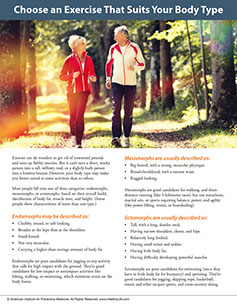
    Image of women doing water aerobics.

    Exercise can do wonders to get rid of unwanted pounds and tone up flabby muscles. But it can’t turn a short, stocky person into a tall, willowy reed, or a slightly built person into a brawny bruiser. However, your body type may make you better suited to some activities than to others. Most people fall into one of three categories: endomorphs, mesomorphs, or ectomorphs, based on their overall build, distribution of body fat, muscle tone, and height. (Some people show characteristics of more than one type.)

    Endomorphs may be described as:

    *  Chubby, round, or soft looking.

    *  Broader at the hips than at the shoulders.

    *  Small-boned.

    *  Not very muscular.

    *  Carrying a higher-than-average amount of body fat.

    Endomorphs are poor candidates for jogging or any activity that calls for high impact with the ground. They’re good candidates for low-impact or nonimpact activities like biking, walking, or swimming, which minimize strain on the body frame.

    Mesomorphs are usually described as:

    *  Big-boned, with a strong, muscular physique.

    *  Broad-shouldered, with a narrow waist.

    *  Rugged looking.

    Mesomorphs are good candidates for walking, and short-distance running (like 5-kilometer races) but not marathons, martial arts, or sports requiring balance, power, and agility (like power lifting, tennis, or boardsailing).

    Ectomorphs are usually described as:

    *  Tall, with a long, slender neck.

    *  Having narrow shoulders, chests, and hips.

    *  Relatively long limbed.

    *  Having small wrists and ankles.

    *  Having little body fat.

    *  Having difficulty developing powerful muscles.

    Ectomorphs are poor candidates for swimming (since they have so little body fat for buoyancy) and sprinting. They’re good candidates for jogging, skipping rope, basketball, tennis and other racquet sports, and cross-country skiing.

    Page image from A Year of Health Hints book by the American Institute for Preventive Medicine. www.HealthyLife.com. All rights reserved.

    © American Institute for Preventive Medicine

  • Be Smart About Seizures

    MEDICAL NEWS

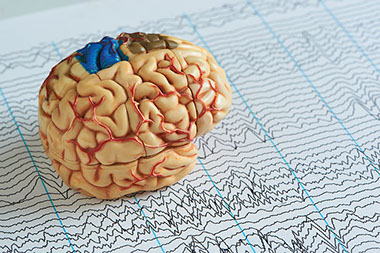
    A brain model.

    A seizure is a sudden surge of electrical activity in the brain. It can cause a person to have uncontrolled movements. A grand mal seizure or tonic-clonic seizure is the most serious. It usually involves jerking movements, shaking and the inability to talk or communicate.

    When it comes to seizures, there are plenty of myths. Knowing the truth about seizures could save someone’s life.

    Myth:A person having a seizure could swallow their tongue.

    Truth:This is not possible. Never put something in a person’s mouth if they are having a seizure.

    Myth:You should hold the person down.

    Truth:Do not try to hold or move the person unless they are in immediate danger of getting hurt. You can help get them on the floor and turn on their side. This keeps the person from injuring themselves or falling.

    Myth:You should always give mouth-to-mouth or CPR during a seizure.

    Truth:People usually start breathing normally after the seizure is over. But if the patient stops breathing for more than 30 seconds, call 911 and begin CPR.

    Should you call 911?

    Call 911 if:

    *  The person has never had a seizure before.

    *  The person stops breathing for more than 30 seconds, or has trouble breathing after the seizure.

    *  The seizure happened in the water.

    *  The person is pregnant.

    *  The person doesn’t wake up after the seizure.

    *  The person has a health condition like heart disease or diabetes.

    *  The seizure lasts longer than five minutes.

    *  The person is hurt.

    Source: Centers for Disease Control and Prevention

    © American Institute for Preventive Medicine

  • Mind Your Mindless Munching 2

    Weight Control

    Eating when you are distracted can pack on pounds.

    To lose weight, you need to make a conscious effort to watch what you eat. No more of that “it doesn’t count because it’s not on my plate” logic. Calories from mindless munching in front of the TV, at your desk, or in the car add up quickly.

    Lower the need for munching & snack attacks.

    Image of teenage boys eating out of big bag of chips.

    *  Eat meals at regular times. Have breakfast every day.

    *  Eat when you feel hungry.

    *  Set a timer for 20 minutes and make your meal last that long.

    *  Chew foods slowly. Sip; don’t gulp.

    *  Savor a food’s flavor.

    *  Put your fork or spoon down between bites.

    *  If your stomach feels satisfied, stop eating.

    Identify what, where, and why you eat between meals.

    When you keep your daily activity diary, highlight all the extras – the mindless munchies – and add up just those calories. Note the places and activities you are doing and how you are feeling.

    Substitute a healthier activity for munching.

    *  Instead of eating when you watch TV, exercise or work on a craft to keep your hands busy.

    *  Do you eat when you are nervous, on a deadline, or upset? Go for a short walk instead.

    *  Do you treat yourself every time you pass the jar of candy or nuts at work? Walk around it or look the other way.

    *  Do you order the large popcorn at the movies and munch for 90 minutes straight? Take a couple of hard candies in your pocket. Pop these into your mouth instead.

    *  Lunch at your desk again? Stop multi-tasking and focus on your food.

    *  TV dinners common in your house? Clear the clutter off the dining room table and enjoy an easily prepared home cooked meal.

    *  Are you an appetizer addict? Learn to say “No” to tortilla chips or any other pre-meal snacks. Drink a glass of water or chew sugarless gum while you are waiting for your meal.

    Action Step

    Fill your time with activities you like to do that do not involve eating. Go for a walk. Do a home improvement project. Volunteer to help others. Take up a new hobby or renew an old one.

    Page from Ways to Well-Being book by the American Institute for Preventive Medicine. www.HealthyLife.com. All rights reserved.

    © American Institute for Preventive Medicine
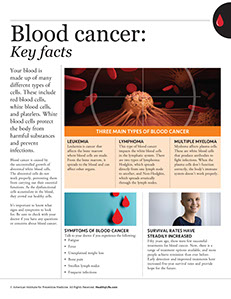
  • Blood Cancer: Key Facts

    MEDICAL NEWS

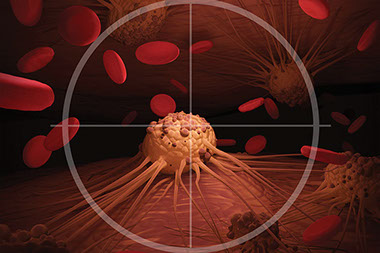
    Illustration of cancer attacking blood cells.

    Your blood is made up of many different types of cells. These include red blood cells, white blood cells, and platelets. White blood cells protect the body from harmful substances and prevent infections.

    Blood cancer is caused by the uncontrolled growth of abnormal white blood cells. The abnormal cells do not work properly, preventing them from carrying out their essential functions. As the dysfunctional cells accumulate in the blood, they crowd out healthy cells.

    It’s important to know what signs and symptoms to look for. Be sure to check with your doctor if you have any questions or concerns about blood cancer.

    Three main types of blood cancer

    Leukemia

    Leukemia is cancer that affects the bone marrow where blood cells are made. From the bone marrow, it spreads to the blood and can affect other organs.

    Lymphoma

    This type of blood cancer impacts the white blood cells in the lymphatic system. There are two types of lymphoma: Hodgkin, which spreads directly from one lymph node to another, and Non-Hodgkin, which spreads erratically through the lymph nodes.

    Multiple myeloma

    Myeloma affects plasma cells. These are white blood cells that produce antibodies to fight infections. When the plasma cells don’t function correctly, the body’s immune system doesn’t work properly.

    Symptoms of blood cancer

    Talk to your doctor if you experience the following:

    *  Fatigue

    *  Fever

    *  Unexplained weight loss

    *  Bone pain

    *  Swollen lymph nodes

    *  Frequent infections

    Survival rates have steadily increased

    Fifty years ago, there were few successful treatments for blood cancer. Now, there is a range of treatment options available, and more people achieve remission than ever before. Early detection and improved treatments have increased five-year survival rates and provide hope for the future.

    © American Institute for Preventive Medicine
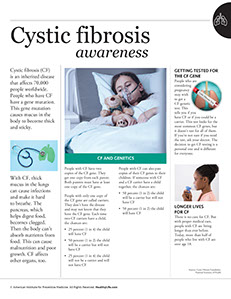
  • Cystic Fibrosis Awareness

    MEDICAL NEWS

    Girl in bed with breathing mask on while holding a teddy bear.

    Cystic fibrosis (CF) is an inherited disease that affects 70,000 people worldwide. People who have CF have a gene mutation. This gene mutation causes mucus in the body to become thick and sticky.

    With CF, thick mucus in the lungs can cause infections and make it hard to breathe. The pancreas, which helps digest food, becomes clogged. Then the body can’t absorb nutrients from food. This can cause malnutrition and poor growth. CF affects other organs, too.

    CF and genetics

    People with CF have two copies of the CF gene. They get one copy from each parent. Both parents must have at least one copy of the CF gene.

    People with only one copy of the CF gene are called carriers. They don’t have the disease and may not know that they have the CF gene. Each time two CF carriers have a child, the chances are:

    *  25 percent (1 in 4) the child will have CF

    *  50 percent (1 in 2) the child will be a carrier but will not have CF

    *  25 percent (1 in 4) the child will not be a carrier and will not have CF

    People with CF can also pass copies of their CF genes to their children. If someone with CF and a CF carrier have a child together, the chances are:

    *  50 percent (1 in 2) the child will be a carrier but will not have CF

    *  50 percent (1 in 2) the child will have CF

    Getting tested for the CF gene

    People who are considering pregnancy may wish to get a CF genetic test. This tells you if you have CF or if you could be a carrier. This test looks for the most common CF genes, but it doesn’t test for all of them. If you’re not sure if you need the test, ask your doctor. The decision to get CF testing is a personal one and is different for everyone.

    Longer lives  for CF

    There is no cure for CF. But with proper medical care, people with CF are living longer than ever before. Today, more than half of people who live with CF are over age 18.

    Sources: Cystic Fibrosis Foundation, National Institutes of Health

    © American Institute for Preventive Medicine

  • Teach Your Kids Not To Drink

    Substance Use & Abuse

    Underage drinking is a growing problem. All too often, teenage drinking leads to:

    *  Traffic accidents (many of them fatal).

    *  Destruction of property.

    *  Violent or antisocial behavior.

    *  Poor academic performance.

    *  Disciplinary problems.

    *  Withdrawal from social activities.

    *  Problems coping with stress.

    If you suspect (or know) your teenager drinks, don’t ignore it. To discourage or prevent underage drinking:

    *  Be a good role model. The best example you can set is to not drink. But if you choose to drink, drink responsibly. Children of alcoholics are four times as likely to develop a drinking problem as children of nonalcoholic parents.

    *  Show your children that you love them. Be affectionate, and show them you care and are interested in them.

    *  Make an effort to organize family activities. It may be hard to compete with your son’s or daughter’s peers for their attention at times, but make the effort anyway. Shared hobbies and sports can create bonds and strengthen a teen’s resistance to outside influences.

    *  Discuss the potential risks and consequences of alcohol use before it becomes a problem. Answer questions honestly and let your children know how you feel about them drinking before the situation arises.

    *  Tell your children to never get into a car with a drunk driver. Promise you’ll pick them up anytime, anywhere, no questions asked, if they call you instead of putting themselves at risk.

    Page from A Year of Health Hints book by the American Institute for Preventive Medicine. www.HealthyLife.com. All rights reserved.

    © American Institute for Preventive Medicine