Healthylife® Weigh
Part 7
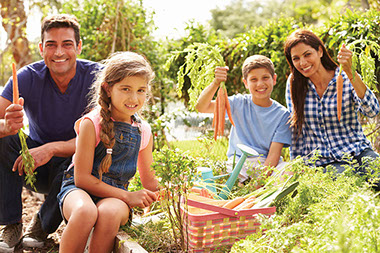
Growing your own food is a great way to know where your food comes from. Garden-fresh vegetables and fruits can have more flavor and nutrients than what is at the supermarket. You can also skip the drive to a store and get some sunshine and fresh air!
Tips for Growing a Garden:
1.Keep It Small.Keep the size of your garden small and choose a few vegetables to grow. You’ll need fewer supplies to get started. It’ll also take less time to maintain and you’ll have fewer issues to troubleshoot. Pick foods you like. Buy small seed packets at a grocery or gardening store.
2.Use Containers.Containers can be moved around as needed. Containers can be flower pots, buckets, wooden boxes, or leftover food containers. Cut off the top of a gallon milk jug and use the bottom for a planter. If you are starting from seeds, start plants indoors and move the containers outside when they have started to sprout. Many plants can also be planted directly in the ground outside.
3.Allow Drainage.Make sure water can drain from the containers. Poke holes in the bottom of containers that don’t already have holes. If plants are indoors or on a patio, put a dish under the pot to catch the water.
4.Use Quality Soil.Fill the pots with dirt. Use organic potting soil to avoid chemical add-ins. Mix in peat moss to help the soil drain. Go to a store that carries garden supplies. Ask for advice. Or, talk to neighbors who have gardens to learn what works well for them.
5.Season + Sunlight.Read the label on the back of a seed packet. It will tell you the right time of year to start your seeds. It will also tell you how much sunshine is needed. Some plants may grow best in hot, direct sunlight. Others may prefer shade and cooler temperatures. Most vegetables, on average, need about 6 hours of sunlight per day.
6.Give Plants Space.Read the back of your seed packet. Plant your seeds according to package directions. Be sure to leave enough space between seeds. This will give plants enough room to develop strong root systems and produce healthy, tasty crops. If you are planting more than one vegetable in a container, look at tips on the seed packet for companion planting. Companion planting is putting plants next to each other that grow well together. Some vegetables, like tomatoes and kale, don’t like sharing pots but tomatoes and spinach are quite happy sharing space.
7.Water Regularly.Give your plants the right amount of water. Check by sticking your finger in the dirt about an inch. If it feels wet or damp, the plant is probably getting enough water. If it feels dry, add some water. Don’t leave your plants in standing water. If water came out the bottom into another container you’re using to catch the water, empty this out. If the leaves are wilting or drooping, water may perk them up!
8.Harvest When Ready.Keep up the care of your seeds and plants and before you know it, you’ll be eating what you grow!
Visit these websites for more information:
National Agricultural Library (USDA)
www.nal.usda.gov/topics/home-gardening
Centers for Disease Control and Prevention (CDC)
© American Institute for Preventive Medicine