Tag: balance

  • 5 Things To Know About Yoga

    BE FIT

    Image of women in yoga position.

    Yoga typically combines physical postures, breathing exercises, and meditation or relaxation. Researchers are studying how yoga may be used to help improve health and to learn more about its safe use. If you’re thinking about practicing yoga, here are 5 things you should know from the National Center for Complementary and Alternative Medicine:

    1. Studies suggest that yoga may be beneficial for a number of conditions. Recent studies in people with chronic low-back pain suggest that a carefully adapted set of yoga poses can help reduce pain and improve function. Other studies also suggest that practicing yoga (as well as other forms of regular exercise) might have other health benefits such as reducing heart rate and blood pressure, and may also help relieve anxiety and depression.

    2. Research suggests that yoga is not helpful for asthma, and studies looking at yoga and arthritis have had mixed results.

    3. Yoga is generally considered to be safe in healthy people when practiced appropriately. However, people with high blood pressure, glaucoma, or sciatica, and women who are pregnant should modify or avoid some yoga poses.

    4. Practice safely and mindfully. Everyone’s body is different, and yoga postures should be modified based on individual abilities. Inform your instructor about any medical issues you have, and ask about the physical demands of yoga.

    5. Talk to your doctor about any complementary health practices you use, including yoga. Give them a full picture of what you do to manage your health. This will help ensure coordinated and safe care.

    © American Institute for Preventive Medicine

  • Dizziness & Vertigo

    Brain & Nervous System

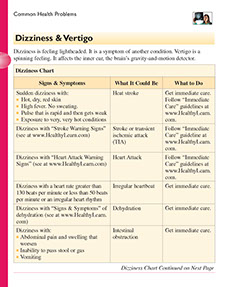
    Dizziness is feeling lightheaded. It is a symptom of another condition. Vertigo is a spinning feeling. It affects the inner ear, the brain’s gravity-and-motion detector.

    Dizziness Conditions

    Heat Stroke

    Signs & Symptoms

    Sudden dizziness with:

    *  Hot, dry, red skin

    *  High fever. No sweating.

    *  Pulse that is rapid and then gets weak

    *  Exposure to very, very hot conditions

    What to Do

    Get immediate care.

    Stroke or Transient Ischemic Attack

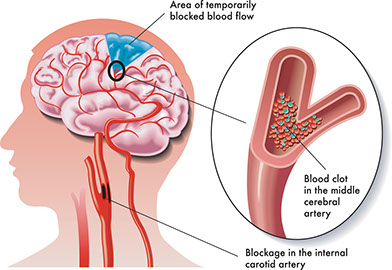
    Illustration on how a stroke is caused.

    Signs & Symptoms

    Dizziness with “Stroke Warning Signs

    What to Do

    Follow “Immediate Care” guideline.

    Heart Attack

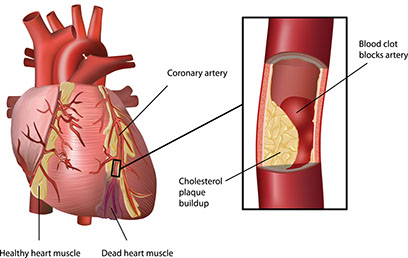
    Illustration of how a heart attack is caused.

    Signs & Symptoms

    Dizziness with “Heart Attack Warning Signs

    What to Do

    Follow “Immediate Care” guidelines

    Irregular Heartbeat

    Signs & Symptoms

    Dizziness with a heart rate greater than 130 beats per minute or less than 50 beats per minute or an irregular heart rhythm

    What to Do

    Get immediate care.

    Dehydration

    Signs & Symptoms

    Dizziness with “Signs & Symptoms” of dehydration

    What to Do

    Get immediate care.

    Intestinal Obstruction

    Signs & Symptoms

    Dizziness with:

    *  Abdominal pain and swelling that worsen

    *  Inability to pass stool or gas

    *  Vomiting

    What to Do

    Get immediate care.

    Dissecting Aortic Aneurysm

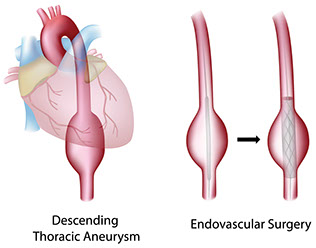
    Illstration of a descending thoracic aneurysm.

    This is a tear in the main artery from the heart.

    Signs & Symptoms

    Dizziness and fainting. Severe chest pain with extreme pain felt across the upper back (not just on one side) that came on within 15 minutes for no apparent reason, such as an injury or back strain. The pain can spread to the abdomen.

    What to Do

    Get immediate care. (Do not take aspirin.)

    Ear Infection

    Signs & Symptoms

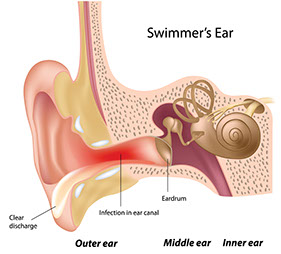
    Dizziness with ear pain, ringing in the ear, pus or other ear discharge, fever

    What to Do

    Contact doctor.

    Illustration of swimmer's ear.

    Labyrnthitis

    This is an inflammation in the ear that usually results from an upper respiratory infection.

    Signs & Symptoms

    Dizziness with:

    *  True spinning sensation

    *  Loss of balance

    *  Nausea and vomiting

    *  Ringing in the ears

    *  Jerky movements of the eye

    What to Do

    Contact doctor.

    Low Blood Sugar

    This can occur in persons taking insulin or oral pills for diabetes and/or after not eating for 4 or more hours.

    Signs & Symptoms

    Dizziness with hunger, sweating, trembling, anxiety, and confusion

    What to Do

    Use self-care.

    Temporary Drop in Blood Pressure (Orthostatic Hypotension)

    This could be a side effect of taking medicines, such as ones for high blood pressure and depression.

    Signs & Symptoms

    Dizziness when getting up too quickly from a seated or lying position

    What to Do

    Use self-care.

    Other Causes of Dizziness:

    *  Alcohol

    *  New medications, antibiotics, or high doses of aspirin

    *  A change in altitude or motion sickness

    *  Sudden movement, such as with turning the head quickly

    *  Seeing fast moving objects Treatment for dizziness depends on the cause.

    Vertigo

    Signs & Symptoms

    *  Wooziness

    *  Sense that the room is spinning

    *  Nausea

    *  Blurred vision

    *  Floating, rocking, and/or rolling feeling

    *  Sense of walking on an uneven surface

    *  Loss of balance

    Causes, Risk Factors & Care

    Vertigo is caused by a problem with the inner ear. Causes of vertigo are:

    *  Benign Positional Vertigo (BPV). This is the most common type. It may happen when you turn over in bed, get up, sit down, bend over, or just tilt your head. The sensations start within seconds of changing positions and last less than a minute. As bothersome as BPV is, it rarely signals more serious disease. Risk factors for BPV are aging, viral infections, and a prior head injury.

    *  Ménière’s disease. This condition may be due to spasms of blood vessels in the inner ear, fluid retention in the inner ear, or allergic reactions. Ménière’s disease is linked with a decrease in hearing and tinnitus. It sometimes leads to permanent hearing loss.

    *  Multiple sclerosis. With this, the covering that protects nerves (myelin) is destroyed. Over time, scar tissue (sclerosis) forms where the myelin used to be in the brain and spinal cord. Scar tissue or inflammation in the brain may cause vertigo symptoms.

    After proper diagnosis, most cases of vertigo are easily treated in the doctor’s office or at home with self-care.

    While attacks of Ménière’s disease can continue for many years, some symptoms can be controlled with medication.

    Self-Care

    For Orthostatic Hypotension:

    *  Don’t jump out of bed. Go from a lying position to a sitting position slowly. Sit on the edge of the bed a few minutes. Stand up slowly.

    *  From a sitting position, stand up slowly. Hold onto the arms of the chair or the head of the bed for support.

    *  If you feel lightheaded, sit back down for a few minutes. Take a few deep breaths. Get up again, slowly.

    For Benign Positional Vertigo (BPV):

    *  Sit on the side of the bed and lean to your right, resting the right ear on the bed. This might make you dizzy and nauseous at first.

    *  Wait 20 seconds until the dizziness stops and sit up straight.

    *  Wait another 20 seconds and repeat steps 1 and 2 on your left side.

    *  Do this exercise 10 to 15 times, 3 times a day.

    For Ménière’s Disease:

    *  Lie still in bed until the dizziness and nausea are gone.

    *  Walk with assistance.

    *  Don’t change positions too fast.

    *  Do not drive, climb ladders, or work around dangerous machinery.

    *  Decrease the amount of salt and fluids in your diet.

    *  Avoid bright lights. Do not read when you have a spinning feeling.

    *  Resume your normal activities when symptoms go away.

    *  Avoid alcohol, caffeine, and tobacco.

    Health at Home Lifetime book by the American Institute for Preventive Medicine. www.HealthyLife.com. All rights reserved.

    © American Institute for Preventive Medicine

  • 8 Commandments For Living Long And Living Well

    WELL-BEING

    Image of a group of people with exercise balls.

    You won’t live forever, but you can’t live like there’s no tomorrow, because tomorrow is coming. You can prepare for tomorrow today by making smart lifestyle choices or changing poor health habits-it’s never too late to do that, says Dr. Edward Creagan in his book How Not to Be My Patient: A Physician’s Secrets for Staying Healthy and Surviving Any Diagnosis. Here are Dr. Ed’s eight commandments:

    1. Form stable long-term relationships.

    2. Maintain ideal body weight.

    3. Eat a plant-based diet.

    4. Be active.

    5. No smoking.

    6. Use alcohol in moderation, if at all.

    7. Foster a sense of spirituality and a sense of connectedness to nature or your higher power or force.

    8. Find meaning and purpose in life.

    © American Institute for Preventive Medicine

  • New Guidelines On How To Eat Right

    HEALTHY EATING

    Image of family sitting at the kitchen table eating dinner.

    When it comes to eating right, it’s easy to get frustrated. It seems there’s always a new diet in the news, telling you to avoid certain foods or only eat certain things. How do you know what works and what’s just a fad?

    Every five years, the U.S. Department of Agriculture issues new eating tips for Americans to help them make healthy food choices. These guidelines aim to help you eat a wide variety of healthy foods and minimize unhealthy choices. The latest guidelines were recently released, and they recommend that you eat the following:

    *  Vegetables in a variety of colors – dark green, yellow, red, and orange

    *  Legumes (beans and peas), starchy foods like potatoes, and other fresh produce

    *  Plenty of whole fruits

    *  A variety of grains like bread and pasta, making sure at least half of them are whole grains

    *  Fat-free or low-fat dairy, including milk, yogurt, cheese, and/or fortified non-dairy beverages

    *  Protein foods, including seafood, lean meats and poultry, eggs, nuts, seeds, and soy products

    *  Healthy oils, such as olive and canola

    What not to eat

    The guidelines say you should limit saturated fats to less than 10 percent of your daily calories. Do the same for added sugars – no more than 10 percent of total calories. Avoid trans fats altogether. Limit daily sodium intake to 2,300 mg. You can find all of these nutrients on the nutrition facts panel.

    Activity and your health

    Finally, the USDA recommends adults get at least 30 minutes of exercise, five days a week. Walking is a great choice for most people. This can be broken up into smaller, 10-minute increments if needed. The main point is to avoid being inactive. Exercise has numerous benefits for your health, including reduced risks of heart disease, obesity, type 2 diabetes, and even some types of cancers.

    The guidelines are meant to be a helpful resource. If you’re not meeting all of them now, don’t give up. Each day that you work toward these healthy guidelines is a step in the right direction.

    © American Institute for Preventive Medicine

  • Banish Black & White Thoughts

    Healthylife® Weigh

    Part 4

    Three friends enjoying lunch at rooftop restaurant.

    Consider a thought that you tend to see as black and white. Consider some alternative thoughts or ideas you could have instead. Or, when one comes to mind, return to this page and complete the following chart to practice banishing black and white thinking.

    Black & White Thought

    Example: I can’t go to restaurants because I always overeat and ignore my healthy goals.

    Alternative Thoughts

    I can choose restaurants that have healthy choices that I find tasty. I can have a healthy snack before I go out to eat to help prevent overeating at the restaurant.

    As you make changes to your way of thinking, be self-kind, not self-critical. Thinking rationally is like putting on a new, clear pair of glasses. What looked blurry or confusing before may seem more clear. New solutions to a challenge may appear once you look at it differently.

    © American Institute for Preventive Medicine

  • A Matter Of Balance

    WELL-BEING

    Illustration of 3 people figures with one of them falling.

    A fall for a senior is not simply a matter of shaking it off and standing back up. A fall could mean a broken hip or a bruise, and some seniors really “can’t get up.” Falls are a major threat to the health and independence of older adults.

    The best solution is preventing falls in the first place. And a recent study in the British Medical Journal pointed to the success of exercise programs in reducing falls that cause injuries and broken bones.

    Risk factors for falls include muscle weakness, especially in the legs, and poor balance-all linked to lack of exercise or certain medical conditions. Poor vision and confusion can also lead to falls. Even some medications can cause dizziness. To lower your risk for falls, CDC recommends you do four things:

    1. Exercise to improve balance and strength.

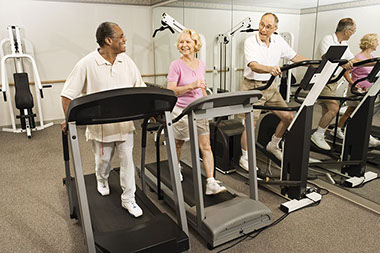
    Walking, using a stretch band and lifting weights increase muscle strength. Yoga and tai chi improve balance. Follow your doctor’s advice for exercise.

    2. Have your doctor or pharmacist review all prescribed and over-the-counter medications you take.

    Some, when taken alone or with other medications or alcohol can make you dizzy or sleepy and raise your risk for falls. Also, let your doctor know if you feel lightheaded when you get up from sitting in a chair or out of bed. Before you get out of bed, sit on the edge of it for a minute or two and get up slowly.

    3. Get an eye exam from an eye doctor at least once a year.

    Follow his or her advice for wearing corrective lenses and/or using low-vision aids. Get treatment for cataract, glaucoma, macular degeneration and other eye conditions as needed.

    4. Make your house safer.

    *  Keep the inside of your house well lit. Use night lights.

    *  Have secure handrails on both sides of  all stairs.

    *  Keep stairs and walk paths clear from clutter and tripping hazards.

    *  Install grab bars in the tub/shower and next to the toilet. If needed, use a shower chair that has rubber tips on the legs and a hand-held shower.

    *  If you use throw rugs, use ones with nonskid backs. Or, put nonslip rug pads or carpet tape underneath rugs.

    *  Wear sturdy shoes with thin, nonslip soles. Avoid going barefoot.

    *  Avoid using a step ladder or a chair to stand on. Keep items you use often in easy-to-reach places.

    *  Be mindful of where your pet and his or her toys are to avoid tripping over them.

    © American Institute for Preventive Medicine