Tag: balance

  • Choose A Variety Of Foods

    Healthylife® Weigh

    Part 2

    Group of happy friends preparing food.

    No one food has all the nutrients needed to sustain life and promote well-being. You need to eat a variety of foods to get all of the nutrients your body needs. Some foods provide more nutrients than others. Food can be a source of pleasure, but its main purpose is to provide nutrients that your body cannot make.

    Choose foods that are nutrient dense. This means they give you a lot of nutrients per calorie. Examples are:

    *  Fruits and vegetables

    *  Whole grains

    *  Fat-free or low-fat dairy foods and drinks

    *  Seafood, lean meats, and eggs

    *  Beans, nuts, and seeds

    Some foods contain ingredients that may harm you or are difficult for your body to digest. Limit foods and beverages high in saturated fat, added sugars, or sodium. To do this, choose fewer of these foods:

    *  Sugar-sweetened drinks and desserts

    *  Refined grains (bread, chips, and crackers)

    *  Red meat and high-fat dairy and cheese

    *  Highly processed meats and cheeses

    Everything you eat or drink does not have to be nutrient dense. One meal won’t make or break your health. The trends in your diet are more important.

    © American Institute for Preventive Medicine

  • Agility Means Mobility

    SELF-CARE CORNER

    Image of 3 senior citizens walking on treadmills.

    Want to be able to move around well as you age? Finding it more difficult to get down on your knees (and get up)? Interested in keeping your joints strong and flexible to meet the demands of daily life?

    Join the club. Without our ability to get around, all kinds of health problems set in, according to the CDC. MySilverAge.com challenges not just seniors but everyone else to work out to improve mobility with these 3 functional fitness workouts:

    *Use sandbells to minimize strain.While exercise equipment such as dumbbells strengthen arms, many weights can place too much strain on the hands. A sandbell-a weighted, contoured fabric bag filled with sand-is an easier alternative for older adults and others who have trouble gripping items, because they offer customizable weight and grip for strength exercises, while minimizing stress and strain on hands.

    *Use interval training for quick bursts of energy.Children tend to have short bursts of energy followed by periods of rest before they start again. Keep up with the kids with interval training. Walk on a treadmill at a normal speed for 5 minutes, then increase to a more challenging pace for 1 minute and repeat.

    *Use an exercise ball for better balance.Good balance is vital for safe walking, stair climbing, and avoiding falls. Use an exercise ball in place of a chair during traditional workouts, such as lifting weights, to help improve balance. The instability of the ball forces all the body’s muscles to work together to support stability and steady balance.

    © American Institute for Preventive Medicine

  • Preventing Falls In The Winter

    SELF-CARE CORNER

    Image of family walking outside in the snow.

    Most of us can recall a time when we slipped in the winter snow or on an icy sidewalk. You may have gotten away with just a bruise or a sore spot for a few days.

    But, slips and falls can be serious – especially for older adults and those with health problems. In fact, falls are the leading cause of injuries in older adults. Some falls can even be fatal.

    Colder temperatures mean slick surfaces –  and dangerous falls. Follow these suggestions to help avoid falls in the winter, and share them with the older adults in your life.

    Vehicle safety

    Getting in and out of a car is a prime time for slips and falls.

    *  Look at the surface before you step out of your car.

    *  Keep three or four “points of contact” when getting in and out. This means put both feet on the ground, and have one or two hands on a stable part of the car before you try to move.

    Walk safely

    People who have a high fall risk may need to avoid walking outdoors when it’s icy. But for those who can’t avoid walking in the winter weather, follow these tips:

    *  Get rid of old footwear. Shoes and boots that have worn soles are more likely to lose their grip and slip.

    *  Wear boots with deep cleats or use ice cleats on the outside of boots. These are available at most sporting goods stores.

    *  If you use a cane for walking, consider getting an ice grip that attaches to the tip of your cane.

    *  Wear warm gloves or mittens. Don’t keep hands in pockets, as this makes it harder to keep your balance.

    *  Keep hands free by using a backpack or cross-body purse in place of a handbag.

    *  When possible, choose surfaces that have been salted and that are in direct sunlight.

    *  Keep a small bag of kitty litter in your purse or pocket. If a surface looks icy, scatter some of the litter in front of you before walking.

    *  Don’t be afraid to go “off road.” If a sidewalk looks icy, consider walking on the grass next to it. This can work if you can see that the ground doesn’t have hazards like holes or uneven surfaces.

    *  Use ice melting salt or sand on your sidewalks and around entries to your home. Older adults may need a loved one or a neighbor to help apply this every time it snows or gets icy.

    Source: National Council on Aging

    © American Institute for Preventive Medicine

  • Exercise And Eating

    Healthylife® Weigh

    Part 5
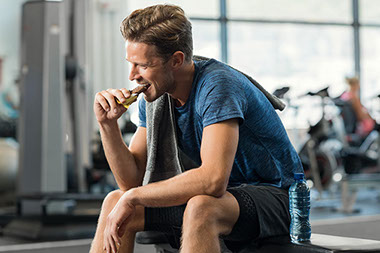
    Man eating a power bar at the gym.

    Exercise is not a solution for overeating or for eating unhealthy foods. Avoid treating exercise as a way to “make up” for eating more than your body needs. This can lead to feelings of guilt. It can also make exercise feel like a punishment.

    We tend to overestimate the calories burned through exercise and under-estimate the calories in food. The number of calories burned during exercise also varies from person to person. Factors like age, gender, and physical fitness can increase or decrease the caloric burn. The number in a chart or on a cardio machine monitor may not be accurate for you.

    Pre-Workout Eating

    You don’t have to eat before working out early in the morning, but it may give you more energy and help your body recover faster.

    Eat foods low in fat and fiber that can be digested easily. Include small amounts of protein in your pre-workout meals and snacks. This will help reduce muscle soreness. Experiment to find out what works best for you and allows you to feel your best.

    Pre-workout snack ideas (30-60 minutes before exercise):

    *  Piece of fruit

    *  Low-fat or non-fat yogurt

    *  Trail mix

    *  Whole-wheat toast with banana slices

    *  Smoothie with plain yogurt, frozen berries, and protein powder

    *  Oatmeal with fresh fruit

    Post-Workout Eating

    Exercise can increase your appetite. Your body wants to replace the calories you burned during exercise. Avoid overeating after exercise.

    Eat foods rich in protein, fiber, and healthy fats. Drink water to replenish fluids.

    Post-workout snack ideas (within 2 hours of exercise):

    *  Smoothie with plain yogurt, frozen berries, protein powder and avocado

    *  Banana with peanut butter

    *  Whole-wheat pita with turkey and veggies

    *  Protein bar (choose a bar with fewer than 5g of sugar)

    *  String cheese, apple, and whole grain crackers

    *  Veggie omelet with avocado

    If you are close to your normal meal time, just have that. Or, if you are not close to your normal meal time, have a small snack.
    © American Institute for Preventive Medicine
  • Build A Strong Core

    BE FIT

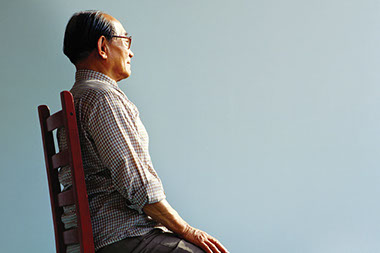
    Image of older man sitting on chair.

    “A strong core is key to good posture and for doing most day-to-day activities with ease, such as getting in or out of a car, walking up and down stairs, or reaching for a book from a shelf,” said Michelle Miller, an exercise physiologist at Indiana University. Weak core muscles can result in poor posture, increased susceptibility to back injuries, poor balance, lack of range of motion, and an altered walking stride.

    See how it feels to turn on your core muscles-in less than a minute.

    *  Sit on the edge of a firm chair with feet and legs at a 90-degree angle and place both hands on the front of your stomach area.

    *  Now, draw your bellybutton toward the center and pretend to lift at the same time to feel contracted and lengthened throughout the middle of the body-but not so much you hold your breath. Miller often tells clients to imagine putting on a tight jacket and then zipping it up. When doing this, the front and back of the body should contract at the same time.

    *  Finding the neutral position of the hips is important for proper posture. The hips should not be tipped forward or backward. Miller encourages you to “think of your pelvis as a bucket of water-tipping means spilling.”

    *  Now, for the shoulders and head. The head should not jut forward, nor the shoulders round in. Face straight ahead, chest high and sit tall.

    “If you can hold this position sitting, you can hold it when you walk, drive, do household chores or other leisure time activities,” Miller said.

    © American Institute for Preventive Medicine

  • Safe On 2 Wheels

    BE FIT

    Image of women on bike.

    Cycling is a good form of exercise. But with more than 1.4 million injuries reported in 2012 according to the Consumer Product Safety Commission, riders need to be safety conscious before hitting the pavement (literally).

    The American Academy of Orthopaedic Surgeons offers cycling safety rules:

    *  Use a bicycle that is the proper size.

    *  Make sure you are fit enough to ride before you  start pedaling.

    *  Change riding positions to reduce stress on pressure points on your body and avoid overstressing muscles.

    *  Always wear a helmet approved by the American National Standards Institute (ANSI). It should fit  snugly but comfortably and not obstruct vision.

    *  Check your bicycle’s mechanical components regularly (brakes, tires, gears).

    *  Follow traffic signs and lights. Signal your turns   so drivers can anticipate your actions.

    *  Ride in the direction of traffic. Be aware of all surroundings.

    *  Use caution on uneven or slippery surfaces.

    *  Do not listen to music with head phones, talk on  your phone, text or do anything else that can   obstruct your hearing and vision.

    *  Avoid loose clothing. Wear padded gloves and appropriate footwear. Never wear flip flops. Use padded cycling shorts for longer rides.

    *  At night, wear bright fluorescent colors; make sure to have rear reflectors. Both a working tail light and headlight should be visible from 500 feet away.

    © American Institute for Preventive Medicine

  • Look Beyond Your Weight Goal

    Healthylife® Weigh

    Part 7

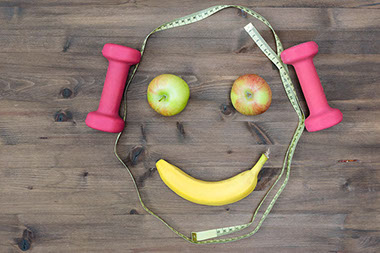
    Apples, measuring tape, dumbbells and banana assembled into a smiling face.

    A healthy lifestyle is not just about the number on the scale. Reflect on what got you motivated to lose weight and got you over hurdles. Strengthen your values by connecting more to the world around you.

    Share your story.Share your struggles, your ideas, and your motivation. Share through your words and actions. You may have inspired someone already. Post to social media or comment on another post. Start a blog about your journey as you continue to learn and manage new challenges.

    Say thank youto those who have helped you along the way and who continue to help you. This may be your healthcare professionals, health coach, coworkers, friends, family, or the stranger who makes your coffee every day. Let people know how much they mean to you. It could be the boost that person needs today.

    Address hunger in your community.Millions of people worldwide struggle with food insecurity. Someone who is food insecure doesn’t know where their next meal is coming from. Many are children. It may be you. Food banks, soup kitchens, homeless shelters, and other community organizations appreciate volunteers or donations. Volunteer to teach a cooking class or lead a grocery store tour. Share your strengths.

    Care for the environment.The global food system depends on a healthy planet. It is also one of the biggest contributors of greenhouse gases and global warming. Choose local, sustainably produced food when possible. In general, the negative environmental impact increases with how far the food traveled, how long it was stored, and how many chemicals were sprayed on it. Buy enough, but not too much, to reduce waste. Use reusable containers for eating and transporting meals and snacks.

    © American Institute for Preventive Medicine

  • Manage Your Time

    Healthylife® Weigh

    Part 5

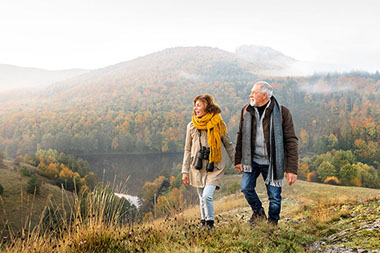
    Couple on a walk.

    Incorporate more movement into your daily activities. Take the stairs, park farther away from the building, and get up to stretch every hour. Also, plan at least 30 minutes each day, most days of the week, to engage in moderate-to-intense exercise. Add exercise to your daily schedule.

    Decrease Time Wasters

    If you feel time is a barrier for you, look at how you spend your time now. Keep a time log for a full day. Block off chunks of time when you sleep and are at work or school. Write down how much time you spend getting ready to go places, preparing food, relaxing, doing household chores, watching TV, or browsing social media.

    *  Decrease time spent watching TV or browsing social media. Set limits for yourself. Record shows so you can skip through commercials.

    *  Prepare meals ahead of time. Make more than one meal at once.

    *  Get help from others, especially with household chores and meal preparation.

    It may not be practical to make changes in all areas or plan physical activity every day. Start by taking small steps, such as being active on a weekend day or getting up a little earlier one morning to walk around the neighborhood.

    © American Institute for Preventive Medicine