Tag: balance

  • Summer With Less Screens

    FAMILY LIFE

    Image of grandparents playing basketball with grandkids.

    When the kids are home from school for the summer, it can be hard to avoid technology. Kids (and adults) are used to constant entertainment from the television, computer, smartphones and tablets. But, reducing screen time can have many benefits for families:

    *  Boredom is a great way for kids to learn to be creative. If they’re always entertained by a screen, kids don’t have a chance to be bored and to learn how to entertain themselves.

    *  Sitting in front of a screen means time not spent getting exercise.

    *  Some studies suggest that too much screen time can lead to behavior problems, lack of good thinking skills, and sleep problems.

    It’s not always realistic to avoid screens completely. If you can’t, look for ways to limit screen time. Try these tips:

    *  Choose certain times of day to be screen-free. For instance, you can choose to let kids have 30 minutes of screens after lunch, but morning is for screen-free play.

    *  Watch the clock. Decide on a daily limit of screen time, such as two hours, and stick with it. Consistent rules help kids know what they can expect each day, so there is less complaining.

    *  Visit the library. If you can get kids to read books they like, they won’t miss screens as much.

    *  When you do watch TV, watch shows together as a family. Choose educational shows when possible.

    Have a plan

    A family media plan can help you stay on track with screen time. Create yours atwww.healthychildren.org/English/media.

    © American Institute for Preventive Medicine

  • Plan A Balanced Day

    Healthylife® Weigh

    Part 2

    Person holding a shrimp bowl with seaweed, avocado, cucumber, radish, sesame seeds.

    1. Select a healthy eating plan based on the calorie needs you identified. Or, follow these guidelines:

    – Plan A: best suited for women who are currently less active and want to lose more than 10-15 pounds. This calorie level is generally too low for men.

    – Plan B: best suited for women who are moderately active and for men who are less active and want to lose more than 10-15 pounds.

    – Plan C: best suited for men and for women who are very active and need to lose less than 10 pounds.

    2. Learn how much to eat from each food group. Meet, but don’t go over, your goals for each food group.

    3. Make healthier choices within each group. Choose nutrient-dense foods that meet your body’s needs.

    4. Make changes, as needed, to your plan. Meet your goals while having enough energy to do your favorite activities.

    5. Plan activity: Be physically active for at least 2 ½ hours (150 minutes) per week. You can do this for 5, 10, 15, 20, or 30 minutes at a time.

    © American Institute for Preventive Medicine

  • Halloween Candy Control

    HEALTHY EATING

    Image of halloween treats.

    Despite all your work to help your kids eat healthy, holidays like Halloween can quickly throw your efforts off track. Candy in the stores and at school, and, of course, while trick-or-treating means your kids have plenty of access to junk food. It might be downright scary.

    While a little candy isn’t harmful, it can be easy to overdo it when junk food seems to be everywhere. And the health problems associated with sugary snacks and unhealthy foods are real:

    *  The Centers for Disease Control and Prevention says 1 in 5 school-aged children has obesity. While candy alone isn’t to blame, experts know that eating too many foods high in calories and low in nutrition (such as candy and sugary treats) are part of the problem.

    *  Sugary treats can cause cavities. The American Dental Association says some of the worst offenders are sticky treats that cling to teeth and those that sit in the mouth for a long time like hard candies and suckers. But, any high-sugar snack can spell trouble for someone’s dental health.

    The good news is, even health-conscious families can enjoy the fun of Halloween (and a few treats) if they have a plan in place before the spooky day arrives:

    *Don’t leave candy out where it can be grabbed any time.Kids (and adults) tend to reach for whatever is available, and may mindlessly eat whatever is sitting out. Put candy and other goodies in a hard-to-reach cupboard instead. This requires more effort to get to it, so it is “out of sight, out of mind.”

    *Teach kids moderation.If you make candy and sweets off-limits, kids may want the forbidden food even more. Instead, allow them a small treat after they’ve eaten a healthy dinner.

    *Lead by example.If you have a hard time avoiding sweet treats, now is a great time to make healthy eating a family effort. Reserve your candy and other treats for after dinner. Make it a small amount, such as one fun-sized candy bar.

    *Buy what you don’t like.If you like to grab a piece here and there while the trick-or-treaters visit your house, buy candy you won’t be tempted to eat.

    *Donate your candy!Teach kids to do good by giving their candy to soldiers and charitable causes, such as for kids who are in the hospital. A variety of organizations accept candy, but check first. Try your local food bank, Operation Gratitude, the Halloween Candy Buy Back and Ronald McDonald House.

    © American Institute for Preventive Medicine

  • Understanding Carbs

    HEALTHY EATING

    Image of different type of breads.

    Carbohydrates (or carbs) are one of the main types of nutrients in our diets. Fats and protein are other nutrients.

    Carbs with a simple chemical structure are called sugars. Sugars are found naturally in foods such as fruits, vegetables, and milk products. They’re also added to many foods and drinks.

    Complex carbs, such as starches and fiber, are found in whole-grain breads and cereals and in starchy vegetables such as potatoes.

    Your digestive system changes the carbs you eat into glucose, a type of sugar that your body uses for energy.

    Simple carbs are more quickly digested and absorbed than complex carbs, so simple carbs can raise your blood glucose levels faster and higher. If you have diabetes, you need to manage your blood glucose levels. High blood glucose can damage your tissues and organs.

    It makes sense to eat more complex carbs, according to researchers at NIH. And not just people with diabetes, but everyone. Complex carbs are more gradually absorbed and help control blood sugar levels.

    Whole foods with complex carbs will give you more minerals and vitamins too and are usually good sources of fiber.

    Make Wise Carb Choices

    *  Try different kinds of beans and lentils.

    *  Choose cereals high in fiber (5 or more grams per serving, read the label for this information).

    *  Switch to whole grains. Look for whole-grain bread, whole-wheat pasta, brown or wild rice, barley, quinoa, and bulgur.

    *  Eat more fresh fruits and vegetables and drink less juice.

    *  Snack on fruit and small portions of nuts and seeds.

    *  Limit candy.

    © American Institute for Preventive Medicine

  • Plan A Balanced Day 2

    Healthylife® Weigh

    Menus & Recipes

    Person holding a shrimp bowl with seaweed, avocado, cucumber, radish, sesame seeds.

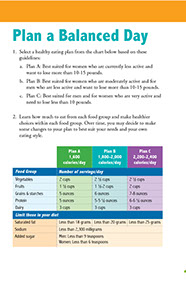
    1. Select a healthy eating plan from the chart below based on these guidelines:

    a. Plan A: Best suited for women who are currently less active and want to lose more than 10-15 pounds.

    b. Plan B: Best suited for women who are moderately active and for men who are less active and want to lose more than 10-15 pounds.

    c. Plan C: Best suited for men and for women who are very active and need to lose less than 10 pounds.

    2. Learn how much to eat from each food group and make healthier choices within each food group. Over time, you may decide to make some changes to your plan to best suit your needs and your own eating style.

    © American Institute for Preventive Medicine
  • Hey, Want To Improve Your Balance?

    SELF-CARE CORNER

    Image of older women balancing on one leg while bending over half way.

    Everyone wants to prevent falls and improve balance, at any age. NIH in Health offers these daily exercises to steady your balance (and you could do these while talking on the phone or at work too):

    *  Stand on one leg at a time for a minute. Slowly increase the time. Try to balance with your eyes closed or without holding on to anything.

    *  Stand on your toes for a count of 10, and then rock back on your heels for a count of 10.

    *  Move your hips in a big circle to the left, and then to the right. Do not move your shoulders or feet. Repeat 5 times.

    © American Institute for Preventive Medicine

  • Walking Off The Midway Munchies

    BE FIT

    Image of couple walking at a state fair with cotton candy.

    How far will you need to walk to burn off the calories of some of your favorite state fair foods? University of Nebraska Extension has it all calculated:

    *  Corn dog, large: 4.5 miles

    *  Cotton candy: 1.5 miles

    *  Fried candy bar on a stick: 4.5 miles

    *  Funnel cake, 6-inch diameter: 3 miles

    *  Soft drink, 32 oz.: 2.5 miles

    *  Sno-cone: 2.5 miles

    *  Soft pretzel: 3 miles

    So wear comfortable shoes and plan to walk off what you eat. But be prudent. Choose a small soft drink or bring along bottled water. Save your calories for the splurges. Split a funnel cake among friends; share that fried candy bar so everyone gets a bite. Limit yourself to one treat.

    © American Institute for Preventive Medicine

  • Tips For Healthy Celebration

    Healthylife® Weigh

    Part 6

    Thanksgiving dinner and family eating at table.

    Happy times may also be triggers for overeating or making less healthy food choices. Holidays and other special occasions may also make it harder to fit in physical activity.

    Items that trip you up during a celebration:

    *  Drinks: soda, alcoholic beverages

    *  Foods: desserts, large helpings of “comfort foods”

    *  Gifts of candy, cookies, etc.

    *  Too many things to do and less time to prepare healthy meals

    *  Workplace parties and cookie exchanges

    *  More travel or a change of routine

    *  Events centered around large meals, or appetizers

    *  All-you-can-eat buffets on cruise ships or at resorts

    Approaches to Celebration

    There are many ways you can approach a celebration.

    1. Make choices that fit with your healthy eating goals. Choose this option most of the time.

    2. Make mostly healthy choices, but choose small treat foods. Choose small portions of these treats and eat them mindfully.

    3. Eat without restriction. Eat and drink what you would like without feeling guilty for choosing less healthy foods. Choose this option rarely and plan to make healthy choices the next day.

    If you have been making healthy choices for a while, you may notice your body’s negative response to certain unhealthy foods. Foods high in saturated fat seem to sit in your stomach longer and make you feel uncomfortable. Meals low in fiber may leave you constipated. Artificial sugars may give you a headache. Pay attention to this difference. It can help you choose less of these foods in the future.

    © American Institute for Preventive Medicine

  • High-Intensity Workouts Aren’t Always Best

    BE FIT

    Image of women running during sunset.

    High-intensity workouts aren’t always best

    When it comes to exercise, is harder and longer always better? No, according to two studies recently published in the academic journal, Heart.

    The first study found that those who performed the most strenuous daily exercise were more than twice as likely to die of a heart attack or stroke. The second study found that men who exercised intensely for more than five hours a week were more likely to develop an irregular heartbeat later in life.

    So what’s the best exercise to do? Strive for moderate intensity exercise. You develop a fast heart rate while doing this type of exercise, but you should still be able to talk while doing the activity.

    Moderate exercise = longer life

    Studies show if you do seven hours of moderate intensity exercise each week, you will lower your risk of dying early by 40 percent. This is compared with those who exercise 30 minutes or less per week. If seven hours a week is too much for you, aim for 150 minutes per week. This amount of exercise also produces similar benefits.

    Before you start any exercise program, talk with your doctor about what’s best for you.

    Source: CDC and World Health Organization

    © American Institute for Preventive Medicine