Good balance is essential for healthy aging. The ability to maintain and recover your equilibrium as you move helps protect you from injury and falls.
Your independence depends on your ability to balance. Almost every activity necessary for daily life relies on safe movement. As people age, preserving balance protects quality of life and their confidence to move without fear.
Activities that require balance
Balance is a foundational skill that impacts almost every type of movement:
* Walking
* Housework
* Picking up kids or pets
* Getting up and down from the floor, bed, couch, or commode
* Cooking
* Navigating uneven or unexpected surfaces
* Shopping and carrying groceries
* Lifting, moving, and reaching for items
Factors that impact balance
Your brain uses information from your eyes, ears, and other body parts to constantly adjust your position in space. Anything that impacts these systems may negatively affect balance:
* Lack of physical activity
* Inner ear problems
* Lack of sleep
* Lack of strength
* Decline in coordination
* Vision changes due to cataracts, glaucoma, etc.
* Cognitive conditions such as dementia or Alzheimer’s disease
If you are concerned about your balance, talk to your doctor. It may be a sign of a more serious condition.
Improve balance
* Practice standing on one foot. Stay near a wall for support, but gradually challenge yourself to balance longer and with less support as you are able.
* Try walking heel to toe along a straight line.
* Use a wobble board. This strengthens your balance, muscles, and coordination.
* Go up and down stairs.
* Side step back and forth across a room.
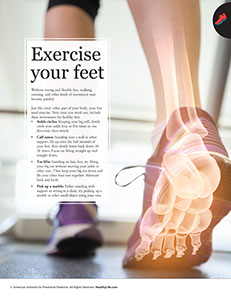
* Do calf raises. Using a wall or chair for support, rise up on the ball mounds of your feet and slowly lower back down. Do 2-3 sets of 10-15 repetitions.
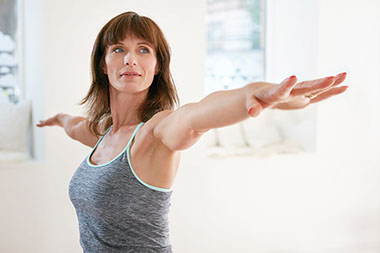
* Take yoga or tai chi classes.
* Lift weights to increase strength and preserve the muscle necessary to balance well.