Tag: beans

  • Flatulence (Gas)

    Abdominal & Urinary Conditions

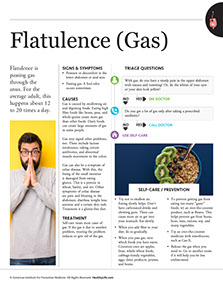
    Image of man plugging his nose with hand.

    Flatulence is passing gas through the anus. For the average adult, this happens about 6 to 20 times a day.

    Signs & Symptoms

    *  Pressure or discomfort in the lower abdomen or anal area.

    *  Passing gas. A foul odor occurs sometimes.

    Causes

    Gas is caused by swallowing air and digesting foods. Eating high fiber foods like beans, peas, and whole-grains create more gas than other foods. Dairy foods can create large amounts of gas in some people.

    Gas may signal other problems, too. These include lactose intolerance, taking certain antibiotics, and abnormal muscle movement in the colon.

    Gas can also be a symptom of celiac disease. With this, the lining of the small intestine is damaged from eating gluten. This is a protein in wheat, barley, and rye. Other symptoms of celiac disease are pain and bloating in the abdomen; diarrhea; weight loss; anemia; and a certain skin rash. Treatment is a gluten-free diet. Find out about celiac disease fromwww.celiac.nih.gov.

    Treatment

    Self-care treats most cases of gas. If the gas is due to another problem, treating the problem reduces or gets rid of the gas.

    Questions to Ask

    Self-Care / Prevention

    *  Try not to swallow air. Don’t have carbonated drinks and chewing gum. These can cause more air to get into your stomach.

    *  When you add fiber to your diet, do so gradually.

    *  When you pass gas, note which foods you have eaten. Eat less of the foods that often cause gas. Common ones are apples, bran, whole-wheat foods, cabbage-family vegetables, eggs, dairy products, prunes, and beans.

    *  To prevent getting gas from many “gassy” foods, try an over-the-counter product, such as Beano. This helps prevent gas from beans, bran, nuts, onions, soy, and many vegetables.

    *  Try an over-the-counter medicine with simethicone, such as Gas-X.

    *  Release the gas when you need to. Go to another room if it will help you be less embarrassed.

    Healthier at Home book by the American Institute for Preventive Medicine. www.HealthyLife.com. All rights reserved.

    © American Institute for Preventive Medicine

  • Protein

    Healthylife® Weigh

    Part 2

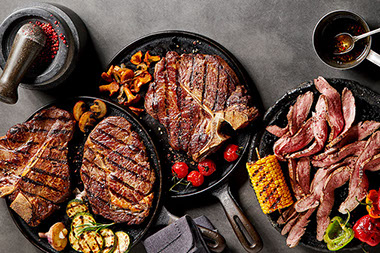
    Cooked meats and vegetables in frying pans with seasoning and garnishes.

    Protein-rich food choices make up one-quarter of MyPlate. Protein helps the body build and repair muscle tissue, fight disease, manage hunger, and perform other essential tasks. The protein group includes seafood, meats, poultry, eggs, nuts, seeds, and soy foods and beverages. Protein provides  4 calories per gram.

    Protein sources can be plant-based or animal-based. Whether you eat meat or not, make some of your choices from plant-based protein sources. Try to include at least one non-meat source of protein every day.

    Plant Protein Power

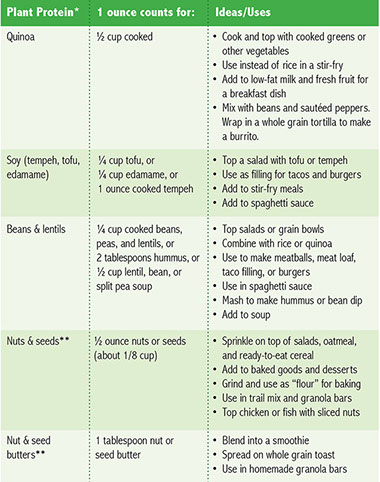
    Some plant foods are high in protein. These foods also contain fiber, vitamins, minerals, plant chemicals (phytochemicals), and other nutrients. Some, like nuts, contain healthy fats, and others, such as tempeh, contain healthy bacteria that promote gut health.

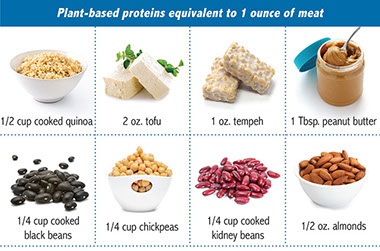
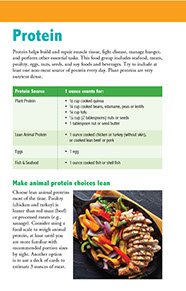
    Chart of plant-based equivalent to 1 ounce of meat.
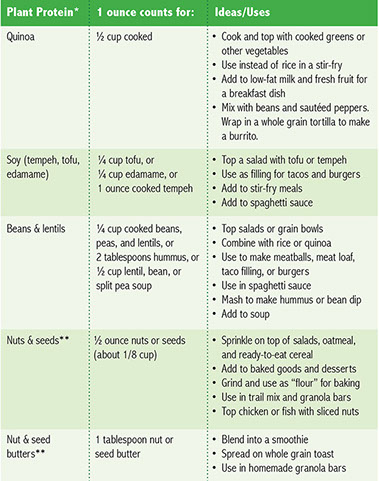
    Chart of plant protein, how much is needed to 1 ounce and ideas.

    * You can get all the protein your body needs by eating a balanced and varied diet of plant foods if you choose not to eat foods that come from animal products.

    ** Choose unsalted or low-salt nuts and no sugar added butters to reduce sodium and added sugars.

    Varieties of Seeds & Nuts

    *  Sunflower seeds

    *  Sesame seeds

    *  Flax seeds

    *  Pumpkin seeds

    *  Peanuts

    *  Cashews

    *  Almonds

    *  Walnuts

    *  Pecans

    *  Pine nuts

    *  Nut or seed butter

    Fun Fact: Peanuts are actually a legume. For planning your meals, consider them a nut. Count peanuts and peanut butter in the protein group.

    Lean Animal Protein

    Use a food scale to weigh animal protein. For deli meat and processed meats (e.g., sausage), use the nutrition facts to determine how many slices or pieces equal one ounce. For thicker cuts of unprocessed meat, estimate by comparing to a deck of cards. A deck of cards is the same size as about 3 ounces of meat. Choose lean animal proteins. Poultry (chicken and turkey) is leaner than red meat (beef) or processed meats (e.g., sausage or bacon).

    Leanest Cuts (Choose More of These)

    *  Fish

    *  Chicken breast

    *  Turkey breast

    *  Ground turkey or chicken breast (90% lean or higher)

    *  Pork tenderloin

    *  Venison (deer meat)

    Medium Fat (Choose Fewer of These)

    *  Dark meat from chicken or turkey (meat from thighs or legs)

    *  Ground beef, 90% lean or leaner

    *  Ground turkey or chicken, less than 90% lean

    *  Beef: chuck shoulder roast, top round, tenderloin, flank steak, or round steak

    Highest Fat (Limit These)

    *  Ground beef (less than 90% lean)

    *  Ribs (beef or pork)

    *  Beef brisket

    *  Sausage

    *  Bacon

    *  Bologna, pepperoni, salami

    *  Spam

    *  Hot dogs

    Lean Cooking Tips for Animal Protein

    *  Remove the skin from chicken to reduce fat. Trim visible fats from meat before cooking.

    *  Use liquid fats in cooking (canola or olive oil) instead of solid fats (butter or shortening).

    *  Poach chicken or fish in water, stock, or white wine. When roasting or broiling, place meat on a rack in a pan so that the fat drips off the meat.

    *  Place fish or chicken on foil or parchment paper. Add fresh herbs, lemon juice, and tomatoes; fold up and bake. This will help seal in flavors and juices.

    *  Tenderize leaner cuts of meat by pounding, marinating, or cooking in a pressure cooker.

    Deep frying is not a lean-cooking technique. Limit deep fried foods.

    Eggs

    One ounce counts as: 1 egg

    Eggs are a great source of protein. Eat the whole egg (including the yolk) to get many important nutrients. These include:

    *  Choline, which promotes normal cell activity and liver function

    *  Lutein and zeaxanthin, which help maintain eye health

    *  B vitamins that help with energy production in the body

    Eating just the egg white also provides protein. However, you will miss out on many important nutrients found in the yolk.

    Ideas for Adding Eggs to Your Meals and Snacks:

    Eggs can be quickly prepared on the stove or in the microwave. Add a pinch of pepper for a flavorful, on-the-go meal or snack. Eggs can be added to many dishes:

    *  Stir-fry

    *  Burritos

    *  Chili

    *  Tacos

    *  Burgers (as a topping or in place of meat)

    *  Eggs provide a filling base for vegetables. Scramble, poach, or pan-fry an egg with cooking spray. Add peppers, onions, spinach, mushrooms, tomatoes, or other colorful vegetables.

    Microwave Scrambled Eggs:Add 1 tablespoon milk per egg and whisk in a microwave-safe bowl. Microwave on high for 1 minute. Stir and cook for 1 more minute (or until done).

    Oaty Eggs Florentine:Coat a small pan with cooking spray and fry one egg. Add the cooked egg to cooked oatmeal and stir in spinach and cheese.

    Blueberry Mug Cake:Mix 1 egg with 3 teaspoons oatmeal, 10 blueberries, and a small mashed banana in a microwave safe mug. Mix in 2-3 drops vanilla extract. Microwave on high for 3 minutes. Top with low-fat yogurt.

    Fish & Seafood

    Fish and seafood are lean protein sources. Add a variety of the following choices into your weekly meal plan. If you eat animal protein, include fish at least once a week*.

    Types of Fish:Tuna, salmon, snapper, cod, flounder, haddock, halibut, perch, pollock, trout, tilapia

    Types of Seafood:Clams, lobster, oysters, scallops, shrimp, sardines, herring

    Tips for Choosing Fish:

    *  Fresh: Keep refrigerated until ready to cook. Prepare within a few days or freeze.

    *  Frozen: Thaw in the refrigerator overnight before cooking.

    *  Canned: Choose canned tuna or salmon packed in water. Drain before using. Canned fish usually costs less than fresh or frozen fish.

    *  Pouch: Choose ready-to-eat tuna that is packed in water. Get packets that don’t include mayonnaise. If needed, add a teaspoon of olive oil for moisture.

    Omega-3 Fatty Acids

    Omega-3 fatty acids are an essential fat. This means the body needs to get that type of fat from food. Omega 3-fatty acids help:

    *  Keep cells healthy, including brain cells responsible for memory

    *  Regulate blood clotting and contraction and relaxation of arteries

    *  Reduce inflammation

    *  Regulate genetic function

    Fish sources of omega-3 fatty acids:Salmon, anchovies, albacore tuna, mackerel, lake trout, halibut, sardines, oysters, and herring

    Plant-based sources of omega-3 fatty acids:Walnuts, ground flaxseeds (and oil), canola oil, soybean oil

    *  If you are planning to become pregnant or have young children, you are more sensitive to higher mercury levels found in some fish. Visitwww.epa.gov/fish-tech/epa-fda-advice-about-eating-fish-and-shellfishfor more information.

    © American Institute for Preventive Medicine

  • Protein 2

    Healthylife® Weigh

    Menus & Recipes

    Cooked meats and vegetables in frying pans with seasoning and garnishes.

    Protein helps build and repair muscle tissue, fight disease, manage hunger, and perform other essential tasks. This food group includes seafood, meats, poultry, eggs, nuts, seeds, and soy foods and beverages. Try to include at least one non-meat source of protein every day. Plant proteins are very nutrient dense.

    Chart of plant-based equivalent to 1 ounce of meat.
    Chart of plant protein, how much is needed to 1 ounce and ideas.

    * These complete proteins contain all 9 essential amino acids. Other plant proteins contain some, but not all, of these protein building blocks. Consume a variety of sources to form a “team” of complete proteins.

    ** Choose unsalted nuts and no-sugar added butters to reduce sodium and added sugars.

    Make animal protein choices lean

    Choose lean animal proteins most of the time. Poultry (chicken and turkey) is leaner than red meat (beef) or processed meats (e.g., sausage). Consider using a food scale to weigh animal protein, at least until you are more familiar with recommended portion sizes by sight. Another option is to use a deck of cards to estimate 3 ounces of meat.

    © American Institute for Preventive Medicine

  • Beans, Peas May Help You Slim Down

    HEALTHY EATING

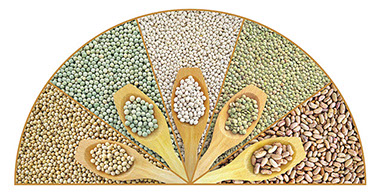
    Image of different types of peas.

    Have you ever eaten “pulses”? There’s a good chance you have – and you may want to start eating more of them.

    Pulses are the edible seeds of legumes. They include kidney beans, lima beans, butter beans, chick peas, black-eyed peas and lentils – available canned or dried.

    Nutritionists already praise pulses as an excellent source of fiber, protein and vitamins. But a recent study published in The American Journal of Clinical Nutrition says that adults who added pulses to their daily diet lost more weight than those who didn’t eat them. And, there was no other special effort involved. The feeling of fullness can help people eat less and consume fewer calories without feeling hungry.

    Pulses have other benefits too. They may help lower blood levels of LDL (bad) cholesterol. They also have a low glycemic index. Glycemic index measures how foods that contain carbohydrates raise blood sugar. Foods with a high glycemic index raise your blood sugar more than foods with a low glycemic index.

    © American Institute for Preventive Medicine