Tag: benefits

  • What Is The Intermittent Fasting Diet?

    HEALTHY EATING

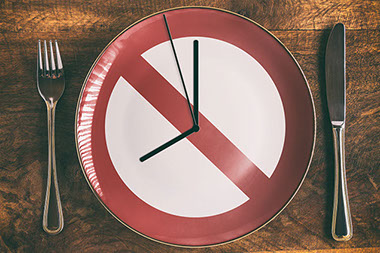
    Concept image of plate with "DO NOT" sign and clock hands.

    The intermittent fasting (IF) diet is one of the latest diet trends. The idea behind the IF diet is to use fasting, or periods of not eating, to lose weight.

    The IF diet does not focus on the types of foods you eat. Instead, it tells you to eat within certain time frames. Some IF plans say you should eat within a few hours of each day. For instance, you can eat within an 8-hour window, from noon to 8 p.m. Then, during the other 16 hours, you do not eat.

    Other IF plans tell you to eat normally for a few days a week and do a “fast” on other days. This fast may mean not eating at all or eating only small amounts. Some plans tell you to eat normally five days a week, followed by a  24-hour fast for two days.

    The history of fasting

    People who support IF diet plans say that humans are built for fasting. Our ancient ancestors didn’t have food available all the time as we do today. They didn’t have refrigerators or ways to keep food fresh and on hand. They didn’t have grocery stores and restaurants open all night.

    Before modern times, humans hunted or gathered plants for food during the day. Then, there would be no food for several hours. Sometimes, they would go for a day or more without eating because they couldn’t get food at all. For these reasons, some people believe that fasting is a way to use a similar approach today.

    More studies

    Many of the IF diet studies have been done using rats. But some small human studies show that IF can help some people lose weight.

    Research shows that IF doesn’t seem to work better than other healthy diets. And, fasting can be hard to do.

    The intermittent fasting diet is not a magical weight loss solution for everyone. But, if you are in good health and your doctor says it’s OK, it may be worth a try.
    © American Institute for Preventive Medicine

  • Why You Should Check Your Social Security Statement

    FINANCIAL HEALTH

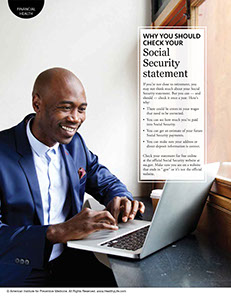
    Man smiling while using the computer.

    If you’re not close to retirement, you may not think much about your Social Security statement. But you can – and should – check it once a year. Here’s why:

    *  There could be errors in your wages that need to be corrected.

    *  You can see how much you’ve paid into Social Security.

    *  You can get an estimate of your future Social Security payments.

    *  You can make sure your address or direct deposit information is correct.

    Check your statement for free online at the official Social Security website atssa.gov. Make sure you are on a website that ends in “.gov” or it’s not the official website.

    © American Institute for Preventive Medicine
  • 5 Reasons To Be Active

    Fitness

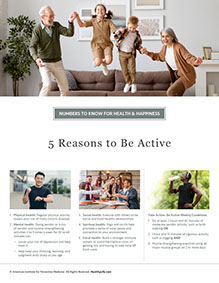
    Grandparents playing with their grandchildren.

    1.  Physical health: Regular physical activity lowers your risk of many chronic diseases.

    2.  Mental health: Doing aerobic or a mix of aerobic and muscle-strengthening activities 3 to 5 times a week for 30 to 60 minutes can:

    –  Lower your risk of depression and help treat it

    –  Help keep your thinking, learning, and judgment skills sharp as you age

    3.  Social health: Exercise with others to be social and build healthy relationships.

    4.  Spiritual health: Yoga and tai chi help promote a sense of inner peace and connection to your environment.

    5.  Fiscal health: Build a stronger immune system to avoid the medical costs of getting sick and having to take time off from work.

    Take Action: Be Active Weekly Guidelines

    1.  Do at least 2 hours and 30 minutes of moderate aerobic activity, such as brisk walkingOR

    2.  1 hour and 15 minutes of vigorous activity, such as joggingAND

    3.  Muscle strengthening exercises using all major muscle groups on 2 or more days.

    Page from HealthyLife Weigh book by the American Institute for Preventive Medicine. www.HealthyLife.com. All rights reserved.

    © American Institute for Preventive Medicine

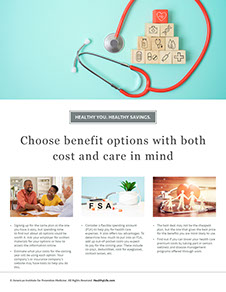
  • Choose Benefit Options With Both Cost And Care In Mind

    Medical Care

    Wooden blocks with medical icons.

    *  Signing up for the same plan as the one you have is easy, but spending time to find out about all options could be worth it. Ask your employer for written materials for your options or how to access the information online.

    *  Estimate what your costs for the coming year will be using each option. Your company’s or insurance company’s website may have tools to help you do this.

    *  Consider a flexible spending account (FSA) to help pay for health care expenses. It also offers tax advantages. To determine how much to put into an FSA, add up out-of-pocket costs you expect to pay for the coming year. These include co-pays, deductibles, cost for eyeglasses, contact lenses, etc.

    *  The best deal may not be the cheapest plan, but the one that gives the best price for the benefits you are most likely to use.

    *  Find out if you can lower your health care premium costs by taking part in certain wellness and disease management programs offered through work.

    A Year of Health Hints book by the American Institute for Preventive Medicine. www.HealthyLife.com. All rights reserved.

    © American Institute for Preventive Medicine
  • Informed Consent

    Medical Care

    Image of person filling out forms.

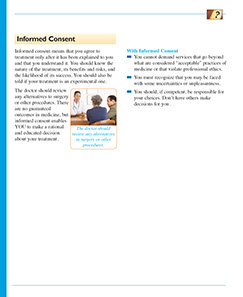
    Informed consent means that you agree to treatment only after it has been explained to you and that you understand it. You should know the nature of the treatment, its benefits and risks, and the likelihood of its success. You should also be told if your treatment is an experimental one.

    The doctor should review any alternatives to surgery or other procedures. There are no guaranteed outcomes in medicine, but informed consent enables YOU to make a rational and educated decision about your treatment.

    With Informed Consent

    *  You cannot demand services that go beyond what are considered “acceptable” practices of medicine or that violate professional ethics.

    *  You must recognize that you may be faced with some uncertainties or unpleasantness.

    *  You should, if competent, be responsible for your choices. Don’t have others make decisions for you.

    Page from the Healthier at Home book by the American Institute for Preventive Medicine. www.HealthyLife.com. All rights reserved.

    © American Institute for Preventive Medicine
  • Medicare

    Medical Care

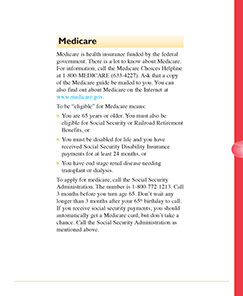
    Image of older couple talking to agent.

    Medicare is health insurance funded by the federal government. There is a lot to know about Medicare. For information, call the Medicare Choices Helpline at 1-800-MEDICARE (633-4227). Ask that a copy of the Medicare guide be mailed to you. You can also find out about Medicare on the Internet atwww.medicare.gov.

    To be “eligible” for Medicare means:

    *  You are 65 years or older. You must also be eligible for Social Security or Railroad Retirement Benefits, or

    *  You must be disabled for life and you have received Social Security Disability Insurance payments for at least 24 months, or

    *  You have end stage renal disease needing transplant or dialysis.

    To apply for medicare, call the Social Security Administration. The number is 1-800-772-1213. Call 3 months before you turn age 65. Don’t wait any longer than 3 months after your 65th birthday to call. If you receive social security payments, you should automatically get a Medicare card, but don’t take a chance. Call the Social Security Administration as mentioned above.

    Page from the Health at Home Lifetime book by the American Institute for Preventive Medicine. www.HealthyLife.com. All rights reserved.

    © American Institute for Preventive Medicine
  • Use Your Benefits Before The Year Runs Out

    Medical Care

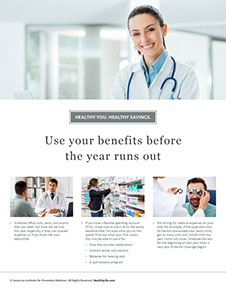
    Smiling female doctor.

    *  Schedule office visits, tests, and exams that you need, but have not yet had this year, especially if they are covered expenses or if you have met your deductible.

    *  If you have a flexible spending account (FSA), make sure to use it all by the yearly deadline date. You lose what you do not spend. Find out what your FSA covers. You may be able to use it for:

    –  Over-the-counter medications

    –  Contact lenses and solution

    –  Batteries for hearing aids

    –  A quit tobacco program

    *  Put timing for medical expenses on your side. For example, if the expected costs for dental care exceed your yearly limit, get as many visits this month that this year’s limit will cover. Schedule the rest for the beginning of next year when a new year of dental coverage begins.

    A Year of Health Hints book by the American Institute for Preventive Medicine. www.HealthyLife.com. All rights reserved.

    © American Institute for Preventive Medicine

  • Brussels Sprouts: A Winter Veggie Powerhouse

    HEALTHY EATING

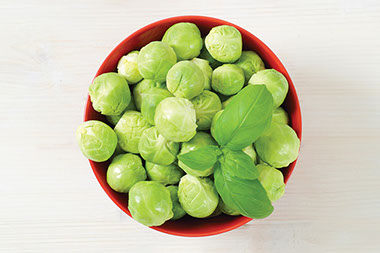
    Brussels spouts in red bowl.

    Brussels sprouts may have a reputation for being the vegetable your mother made you eat. But there’s plenty of reasons that adults and kids alike should eat their Brussels sprouts. Their peak season is fall to winter, so now is a good time to try them.

    Why eat Brussels sprouts?

    Brussels sprouts belong to the cruciferous vegetable family. Other cruciferous vegetables include broccoli, cauliflower, kale and cabbage.

    Like other veggies, brussels sprouts are low in calories and packed with nutrients. They also have plenty of fiber to help with digestion. Fiber may also help you feel fuller, longer.

    Brussels sprouts also have some special health benefits. They may play a role in reducing the risk of developing cancer.

    How to cook brussels sprouts

    Brussels sprouts are versatile and can be roasted, used in casseroles, salads and even on pizza. Many people can find a way to cook them that agrees with their tastes.

    A popular way to roast them is to toss them with honey, lemon juice or dried fruit for a sweet side dish. But brussels sprouts also work well with savory flavors like parmesan cheese or garlic.

    Nutrition

    One half cup of cooked Brussels sprouts contains just 28 calories. It also contains 2 grams of fiber and very little fat and carbohydrates. Brussels sprouts are a good source of many important nutrients, including vitamins A and C. These vitamins are antioxidants, which help fight inflammation and some diseases.

    In addition, Brussels sprouts are packed with vitamin K, which is important for blood clotting and healthy bones. Brussels sprouts contain important minerals like iron, magnesium and phosphorus. And finally, they contain heart-healthy omega-3 fats.

    If you haven’t eaten Brussels sprouts in a while, give them a try. They make a nutritious and delicious addition to any diet.

    Sources: Academy of Nutrition and Dietetics, National Institutes of Health, US Department of Agriculture

    © American Institute for Preventive Medicine
  • Tea Time: Is Tea Good For You?

    HEALTHY EATING

    A tea pot with two cups of tea and lemons.

    Many people drink tea every day. The most popular teas are black, green and oolong. Matcha tea is also becoming more popular.

    Black, green, oolong and matcha teas come from a plant known as Camellia sinensis. Each of these teas looks and tastes different because of how they are processed.

    Caffeine content

    Tea, like coffee, naturally contains caffeine and can be different in each cup. If you steep your tea longer, it will have more caffeine than a quick steep.

    Estimates of the caffeine content per 8-ounce cup:

    *  Coffee: 95 milligrams

    *  Black tea: 48 milligrams

    *  Oolong tea: 38 milligrams

    *  Green tea: 29 milligrams

    *  Decaffeinated tea: Very small amounts

    Some tea packages will tell you how much caffeine it contains. Look for this on the product label.

    Watch your caffeine intake

    You can still drink too much caffeine from tea if you’re not careful. Too much caffeine can make you feel nervous or shaky. It can also make it hard for you to sleep.

    Most healthy adults can tolerate up to 400 milligrams of caffeine each day. People who are more sensitive to caffeine may need to consume much less than this amount.

    Decaf teas are a good option if you love tea but want to cut back on caffeine. They still contain only small amounts of caffeine.

    Are herbal teas really “tea”?

    Herbal teas are not made from the tea plant Camellia sinensis. Instead, they are made from the roots, leaves, flowers and other parts of certain plants.

    For instance, chamomile tea is made from chamomile flowers. Peppermint and spearmint teas are made from the plant’s leaves.

    Herbal teas don’t contain any caffeine. They are usually safe in regular amounts. But ask a doctor before you consume herbal tea if you are taking medicine or have any health conditions. These teas can interfere with some medications or cause side effects in some people.

    © American Institute for Preventive Medicine

  • Telemedicine: Pros & Cons

    SELF-CARE CORNER

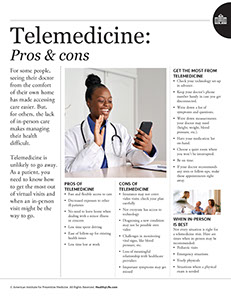
    Doctor smilng and waving Hi while on a telemedicine call.

    For some people, seeing their doctor from the comfort of their own home has made accessing care easier. But, for others, the lack of in-person care makes managing their health difficult.

    Telemedicine is unlikely to go away. As a patient, you need to know how to get the most out of virtual visits and when an in-person visit might be the way to go.

    Pros of telemedicine

    *  Fast and flexible access to care

    *  Decreased exposure to other ill patients

    *  No need to leave home when dealing with a minor illness or concern

    *  Less time spent driving

    *  Ease of follow-up for existing health issues

    *  Less time lost at work

    Cons of telemedicine

    *  Insurance may not cover video visits; check your plan carefully

    *  Not everyone has access to technology

    *  Diagnosing a new condition may not be possible over video

    *  Challenges in monitoring vital signs, like blood pressure, etc.

    *  Loss of meaningful relationship with healthcare providers

    *  Important symptoms may get missed

    Get the most from telemedicine

    *  Check your technology set-up in advance.

    *  Keep your doctor’s phone number handy in case you get disconnected.

    *  Write down a list of symptoms and questions.

    *  Write down measurements your doctor may need (height, weight, blood pressure, etc.).

    *  Have your medication list on-hand.

    *  Choose a quiet room where you won’t be interrupted.

    *  Be on time.

    *  If your doctor recommends any tests or follow-ups, make those appointments right away.

    When in-person is best

    Not every situation is right for a telemedicine visit. Here are times when in-person may be recommended:

    *  Pediatric visits

    *  Emergency situations

    *  Yearly physicals

    *  Situations where a physical exam is needed

    © American Institute for Preventive Medicine