Tag: benefits

  • A Case For More Time In The Kitchen

    Healthylife® Weigh

    Part 3

    Couple cooking in the kitchen.

    While this section gives lots of tips for saving time, you may not want to speed through food preparation! Here are some reasons to allow extra time in your day or week for food preparation:

    *  Making more recipes from scratch will give you more control over what is in your food. You can also experiment with more flavors.

    *  Time in the kitchen can be a special time to connect with family and friends after a busy day or week. Turn the TV off and share tasks, like tossing a salad or setting the table.

    *  Many traditions are based around food. Cook old recipes or prepare a meal with an older family member. Sharing stories around food preparation can help you feel connected to your heritage. You may even create new traditions for the next generation of cooks!

    *  Cooking can be an enjoyable hobby. Searching for new recipes, getting creative with modifications, and sharing with others can help you manage stress and bring joy to your day.

    © American Institute for Preventive Medicine

  • Find Reasons To Care About Physical Activity

    Healthylife® Weigh

    Part 5

    Elderly couple jogging.

    Being physically active helps you manage your weight. When you engage in physical activity, you burn calories. The more intense the activity, the more calories you burn. However, all exercise boosts your metabolism. Exercise builds muscle, the biggest fat burner in the body. Even in a state of rest, muscle burns calories efficiently (you’ll still be experiencing the benefits of your morning workout in the afternoon). Losing weight can slow your metabolism, but exercise can balance this effect.

    There are many other reasons to be active that may motivate you. Being physically active may help you live out the values you identified in Part 1.

    © American Institute for Preventive Medicine

  • 5 Reasons You Need Fat In Your Diet

    HEALTHY EATING

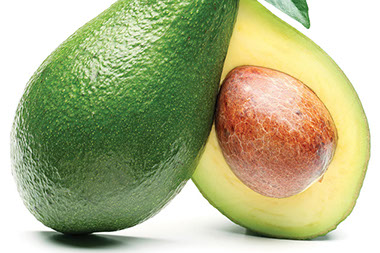
    Image of avocado.

    Energy:

    Fat provides a highly concentrated form of energy. One gram of fat gives you 9 calories of energy, which is over twice that provided by carbohydrates or protein.

    Organs need a cushion:

    A cushion of fat helps protect organs from injury and holds them in place.

    Cell structure:

    Whether it is hair, skin, or eyes, fats make up part of the membrane that surrounds each cell of the body, and without them the rest of the cell can’t function.

    Immune function:

    Without good fats in our diet, immune function becomes partially impaired and our bodies are susceptible to foreign invaders such as bacterial and viral infections.

    Nutrient transport:

    Vitamins A, D, E, and K are fat-soluble vitamins and need fat to help the body transport, store, and absorb them.

    © American Institute for Preventive Medicine

  • Apple Cider Vinegar: A Miracle Cure?

    HEALTHY EATING

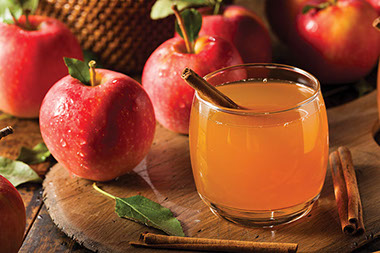
    Image of apple cider vinegar.

    The belief that apple cider vinegar is a “cure-all” has been circulating in recent years on numerous websites and promoted by natural health groups. But, can it really cure diseases and keep you healthy?

    Some say apple cider vinegar helps you lose weight, control blood sugar and improve digestion. Unfortunately, these health claims have not been proven by any valid research study. And, using it in place of medications or healthy lifestyle changes can be downright dangerous.

    In addition, people with heartburn or gastroesophageal reflux disease (GERD) may find that vinegar actually makes their reflux worse. Drinking too much of it can also damage tooth enamel.

    The bottom line: Most healthy people can enjoy apple cider vinegar in food without any problems. But, don’t use it, or any natural remedy, to cure diseases. Always ask your doctor before you try any natural remedy or supplement to be sure it’s safe for you.

    © American Institute for Preventive Medicine

  • Eap Is At Your Service

    WORK LIFE

    Image of 2 business women shaking hands.

    In an edition of Psychology Today, Steve Albrecht, doctor of business administration, encourages employees to find out about the many services available from their Employee Assistance Program (EAP) and reach out for help if needed. Dr. Albrecht has written or co-written 15 books, including Ticking Bombs: Defusing Violence in the Workplace, and Fear and Violence on the Job. He is also a former police officer and domestic violence investigator with the San Diego Police Department.

    Dr. Albrecht gave four reasons why employees do not use their EAP services:

    1. They do not think what they say or do will be held in confidence.

    2. They see reaching out for help as a weakness. This is especially true  for men.

    3. They think they need to get permission from their boss or Human Resources to seek services from their EAP.

    4. They do not know their EAP exists.

    First, according to Dr. Albrecht, services and discussions between employees and EAP providers are kept confidential. There is an exception-an EAP counselor has a duty to warn or intervene if the employee wants to harm himself or herself or others. The company gets no reports or records of employee use of EAP services.

    Second, employees need to be reassured that EAP offers help for many very common issues that affect most people. Examples are money worries, marital issues, raising children or step-children, blended families, sick kids, and dealing with parents with Alzheimer’s disease.

    Employees can also get help for financial problems, burnout, stress-related illnesses, cancer and mental health issues. These include substance abuse, workplace conflicts, depression and suicidal thoughts.

    Third, employees simply need to call the EAP phone number and make an appointment. They do not have to tell coworkers, their boss or Human Resources.

    Lastly, Dr. Albrecht is puzzled why employees do not know about their EAP. Companies with EAP programs list their services and contact numbers on posters and brochures in lunch rooms and break rooms. New employees receive EAP information.

    To find out if your company offers EAP services, check your benefits manual or website or ask your human resources manager. Help is just a phone call away.

    © American Institute for Preventive Medicine

  • Navigate Open Enrollment

    WELL-BEING

    Image of 2 people talking.

    Make the most of your benefit plan, especially during open enrollment periods. Here are money-saving tips from HighRoads, a benefits management company.

    *Get your plan materials.Some companies are giving you a Summary Plan Description online, via mobile apps, as well as on paper. It’s good to know how you can access this information during open enrollment and throughout the year, in case you want to review it again when you are in need of a particular medical service. Take time to read the plan.

    *Calculate your costs.Many employers provide cost calculators to help project your total cost for the coming plan year. The total cost includes the premium you pay as well as your share of the deductible and coinsurance. Take the time during open enrollment to think through your potential medical needs and calculate your anticipated expenses before selecting a plan. It may save you hundreds in the long run.

    *Consider an account.Your employer may offer you the option of a health care account, whether it is a flexible spending account, a health reimbursement account, or a health savings account. These accounts can help you save money on qualified medical expenses that aren’t covered by your health care plan, such as deductibles and coinsurance. Each account has a different set of rules about how and when you can spend the money, but each is worth considering because the savings you’ll see can add up quickly.

    *Is prevention covered?One of the benefits of health care reform is an extended list of preventive care benefits that must be offered by new health care plans for free. Preventive services such as colonoscopy screenings, Pap smears and mammograms for women, well-child visits, and flu shots for all children and adults must be offered without out-of-pocket costs. However, these benefits are only for new health plans and don’t apply to “grandfathered” plans that haven’t significantly changed in a few years.

    *Use wellness incentives.More employers than ever before are offering incentives such as premium discounts, low deductibles, gym memberships, or prizes to employees and their family members for health improvement.

    *Know your deadlines.No matter what changes you may make, if any, during this year’s open enrollment period, don’t let your selection deadlines slip by without action.

    © American Institute for Preventive Medicine

  • Olive Oil

    HEALTHY EATING

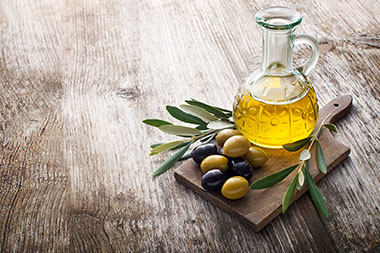
    Image of olives and olive oil.

    Olive oil is a more healthful choice than many other cooking fats. Using olive oil in place of saturated fats has been shown to help lower bad cholesterol and raise good cholesterol levels, which is why olive oil is heart healthy.

    Know these facts about olive oil, from the North American Olive Oil Association:

    *  Extra virgin olive oil is the most flavorful olive oil, with an unlimited range of flavors spanning from smooth and subtle to peppery and pungent. A finishing drizzle of extra virgin olive oil can enhance the texture, taste, and aroma of food.

    *  Olive oil, sometimes referred to as “classic” or “pure” olive oil, has a milder flavor with just a hint of fruitiness. The subtle flavor of olive oil makes it a perfect everyday cooking oil and easily adapts to a number of cooking methods such as grilling, sautéing, roasting, frying, and baking.

    *  Use bottled olive oil within 8 to 12 weeks of opening. Sealed packages can keep for up to 2 years.

    *  Dark bottles or tins are best at reducing potential damage from light.

    *  Avoid packages that show signs of improper handling or storage such as dust on the bottle, broken or loose seal on the cap, or an orange tint to the oil, which could indicate overexposure to fluorescent lighting or that heat has damaged the oil.

    *  Look for a country of origin statement, which is required by federal labeling laws and is typically found on the back label near the nutritional information.

    © American Institute for Preventive Medicine

  • What Really Are Antioxidants?

    HEALTHY EATING

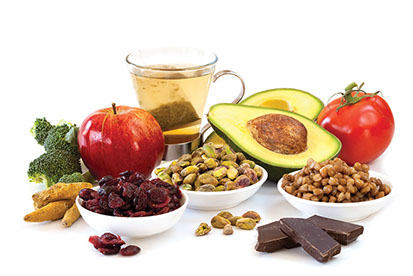
    Image of different sources of antioxidants.

    Antioxidants play an important role in overall health. They are natural compounds found in some foods that help neutralize free radicals in our bodies.

    Free radicals are substances that occur naturally in our bodies but attack the fats, protein, and the DNA in our cells, which can cause different types of diseases and accelerate the aging process, according to Claudia Fajardo-Lira, professor of food science and nutrition at California State University-Northridge.

    The best antioxidant sources are fruits and vegetables, as well as products derived from plants. Some good choices include blueberries, raspberries, apples, broccoli, cabbage, spinach, eggplant, and legumes like red kidney beans or black beans.

    They’re also found in green tea, black tea, red wine, and dark chocolate. Usually, the presence of color indicates there is a specific antioxidant in that food.

    The keyword here is variety. Try to get as many fruits and vegetables with different colors when you plan your meals and go to the grocery store. An array of color in your diet will give you the widest range of helpful antioxidants.

    Antioxidants added to foods are as effective as those that occur naturally. Vitamins such as C, A, and E can be added to foods-and they often are, such as in orange juice.

    It’s important not to overdo it on vitamin supplements because there can be too much of a good thing. With food alone, it would be extremely difficult to consume too many antioxidants.

    The MyPlate tool based on the Dietary Guidelines for Americans recommends that you make half your plate fruits and vegetables. If you aim to do that at most meals, you can be sure to get the antioxidants you need, recommends the Institute of Food Technologists.

    © American Institute for Preventive Medicine