
Tag: bike

  • Pedal For Fitness

    Fitness

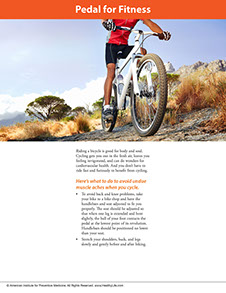
    A closeup image of a bike tire while a cyclist rides through a trail.

    Riding a bicycle is good for body and soul. Cycling gets you out in the fresh air, leaves you feeling invigorated, and can do wonders for cardiovascular health. And you don’t have to ride fast and furiously to benefit from cycling.

    Here’s what to do to avoid undue muscle aches when you cycle.

    *  To avoid back and knee problems, take your bike to a bike shop and have the handlebars and seat adjusted to fit you properly. The seat should be adjusted so that when one leg is extended and bent slightly, the ball of your foot contacts the pedal at the lowest point of its revolution. Handlebars should be positioned no lower than your seat.

    *  Stretch your shoulders, back, and legs slowly and gently before and after biking.
    Page image from A Year of Health Hints book by the American Institute for Preventive Medicine. www.HealthyLife.com. All rights reserved.

    © American Institute for Preventive Medicine
  • Ride Your Bike To Work

    BE FIT

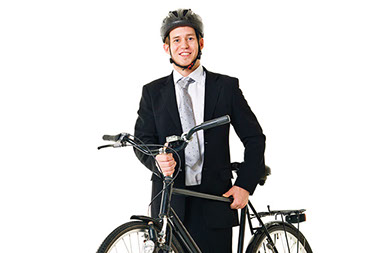
    Image of young man in a business suit with a bike and helmet on.

    Think of the money you’ll save on gas, train fare, and parking. If you live within 10 miles of your work, find solutions to overcome these popular excuses:

    *Not safe:Use less congested roads if rush-hour traffic clogs the main streets.

    *Have to dress nicely at work:Drive to work one day each week and leave a week’s worth of clean clothes.

    *No place to shower:To clean up, use a deodorant soap and washcloth in the restroom.

    *No secure place to park my bike:Check for a storage closet or furnace room, or stash your bike with a friend who lives nearby or at a bike shop.

    *I’d have to ride in the dark:Wear light-colored, reflective clothing, attach lights and reflectors and use a route that’s lit by streetlights.

    *Hate riding in cold and rainy weather:If it’s pouring or sleeting, leave the bike at home.

    *Too far:Drive part way and cycle the rest. Look for a park-and-ride commuter lot.

    Source: Bicycling magazine’s 1,000 All-Time Best Tips

    © American Institute for Preventive Medicine

  • Safe On 2 Wheels

    BE FIT

    Image of women on bike.

    Cycling is a good form of exercise. But with more than 1.4 million injuries reported in 2012 according to the Consumer Product Safety Commission, riders need to be safety conscious before hitting the pavement (literally).

    The American Academy of Orthopaedic Surgeons offers cycling safety rules:

    *  Use a bicycle that is the proper size.

    *  Make sure you are fit enough to ride before you  start pedaling.

    *  Change riding positions to reduce stress on pressure points on your body and avoid overstressing muscles.

    *  Always wear a helmet approved by the American National Standards Institute (ANSI). It should fit  snugly but comfortably and not obstruct vision.

    *  Check your bicycle’s mechanical components regularly (brakes, tires, gears).

    *  Follow traffic signs and lights. Signal your turns   so drivers can anticipate your actions.

    *  Ride in the direction of traffic. Be aware of all surroundings.

    *  Use caution on uneven or slippery surfaces.

    *  Do not listen to music with head phones, talk on  your phone, text or do anything else that can   obstruct your hearing and vision.

    *  Avoid loose clothing. Wear padded gloves and appropriate footwear. Never wear flip flops. Use padded cycling shorts for longer rides.

    *  At night, wear bright fluorescent colors; make sure to have rear reflectors. Both a working tail light and headlight should be visible from 500 feet away.

    © American Institute for Preventive Medicine