Tag: bite

  • Brace Yourself For Adult Orthodontics

    Dental & Mouth Concerns

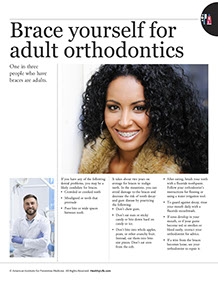
    Image of adult women with braces.

    Each year, over four million people-many of them adults-are fitted for braces.  If you have any of the following dental problems, you may be a likely candidate for braces.

    *  Crowded or crooked teeth.

    *  Buckteeth, misaligned teeth, or lower teeth that protrude.

    *  Poor bite or wide spaces between teeth.

    It takes about two years for braces to realign teeth. In the meantime, you can avoid damage to the braces and decrease the risk of tooth decay and gum disease by practicing the following:

    *  Don’t chew gum.

    *  Don’t eat nuts or sticky candy or bite down hard on candy or ice.

    *  Don’t bite into whole apples, pears, or other crunchy fruit. Instead, cut them into bite-size pieces. Don’t eat corn from the cob.

    *  After eating, brush your teeth with a fluoride toothpaste. Some orthodontists also recommend cleaning your teeth with a water irrigation appliance after you brush.

    *  To guard against decay, rinse your mouth daily with a fluoride mouthwash.

    *  If sores develop in your mouth, or if your gums become red or swollen or bleed easily, contact your orthodontist for advice.

    *  If a wire from the braces becomes loose, don’t try to repair it yourself. See your orthodontist.
    A Year of Health Hints book by the American Institute for Preventive Medicine. www.HealthyLife.com. All rights reserved.

    © American Institute for Preventive Medicine
  • Ticked Off

    MEDICAL NEWS

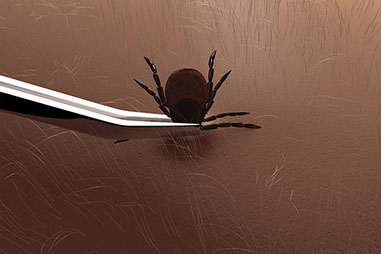
    Close up image of a tick being removed from a person's skin.

    Act fast to lower your risk for problems related to Lyme disease caused by tick bites, urges Time for Lyme, Inc.

    Have I been bitten? Lyme disease can only be transmitted from a bite by an infected deer tick, not from another person or animal, although pets commonly bring ticks into the home. All family members and pets should be inspected immediately and carefully after exposure to tick environments. You’ve been bitten if you find a tick attached to the skin. The longer it has been attached, the greater the risk of disease.

    How should I remove the tick? The proper way to remove a tick is with a set of fine-point tweezers. Do not attempt to burn the tick or use your fingers or soap or any other substance on it, as these may irritate the tick and cause it to inject bodily fluids into the wound.

    Using fine-point tweezers, grasp the tick as close to the skin surface as possible, near the head of the tick. Pull backward gently but firmly, using an even, steady pressure. Do not jerk or twist. Do not squeeze, crush, or puncture the body of the tick, as this may cause transmission of infection-causing organisms. If any mouth parts of the tick remain in the skin, leave them alone; they will come out naturally.

    If the tick is found crawling, a good way to remove it is by using a piece of tape: stick the tape to the tick and then suffocate it by sealing it into the tape. Otherwise, you can dispose of it in alcohol or flush it down the toilet. After removing the tick, wash your skin and hands thoroughly with soap and water.

    Monitor any bite site for redness that might mean a rash of Lyme disease. A bull’s-eye pattern might develop. Other typical symptoms that may develop within a few days of being bitten include headache, stiff neck, swollen glands, fatigue, dizziness, and pains that come and go.

    See your doctor if you have symptoms or concerns. Early Lyme disease is treated with antibiotics. For more information, go towww.LymeResearchAlliance.org.

    © American Institute for Preventive Medicine