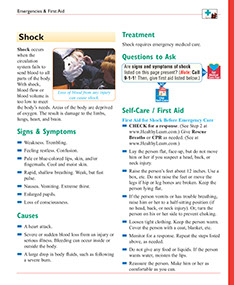
Shock occurs when the circulation system fails to send blood to all parts of the body. With shock, blood flow or blood volume is too low to meet the body’s needs. Areas of the body are deprived of oxygen. The result is damage to the limbs, lungs, heart, and brain.
Signs & Symptoms
* Weakness. Trembling.
* Feeling restless. Confusion.
* Pale or blue-colored lips, skin, and/or fingernails. Cool and moist skin.
* Rapid, shallow breathing. Weak, but fast pulse.
* Nausea. Vomiting. Extreme thirst.
* Enlarged pupils.
* Loss of consciousness.
Causes
* A heart attack.
* Severe or sudden blood loss from an injury or serious illness. Bleeding can occur inside or outside the body.
* A large drop in body fluids, such as following a severe burn.
Treatment
Shock requires emergency medical care.
Questions to Ask
Self-Care / Prevention
First Aid for Shock Before Emergency Care
* CHECK for a response. Give Rescue Breaths or CPR as needed.
* Lay the person flat, face-up, but do not move him or her if you suspect a head, back, or neck injury.
* Raise the person’s feet about 12 inches. Use a box, etc. Do not raise the feet or move the legs if hip or leg bones are broken. Keep the person lying flat.
* If the person vomits or has trouble breathing, raise him or her to a half-sitting position (if no head, back, or neck injury). Or, turn the person on his or her side to prevent choking.
* Loosen tight clothing. Keep the person warm. Cover the person with a coat, blanket, etc.
* Monitor for a response. Repeat the steps listed above, as needed.
* Do not give any food or liquids. If the person wants water, moisten the lips.
* Reassure the person. Make him or her as comfortable as you can.