Tag: bloating

  • Bloated Belly: Ways To Get Relief

    SELF-CARE CORNER

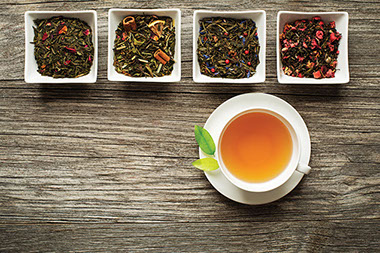
    Image of tea and different tea leaves.

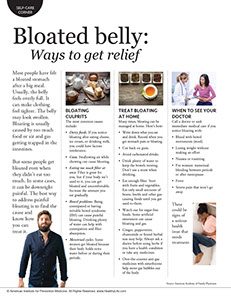
    Most people have felt a bloated stomach after a big meal. Usually, the belly feels overly full. It can make clothing feel tighter. The belly may look swollen. Bloating is usually caused by too much food or air and gas getting trapped in the intestines.

    But some people get bloated even when they didn’t eat too much. In some cases, it can be downright painful. The best way to address painful bloating is to find the cause and know how you can treat it.

    Bloating culprits

    The most common causes include:

    *  Dairy foods. If you notice bloating after eating cheese, ice cream, or drinking milk, you could have lactose intolerance.

    *  Gum. Swallowing air while chewing can cause bloating.

    *  Eating too much fiber at once. Fiber is great for you, but if your body isn’t used to it, you can get bloated and uncomfortable. Increase the amount you eat gradually.

    *  Bowel problems. Being constipated or having irritable bowel syndrome (IBS) can cause painful bloating. Drinking plenty of water can help with constipation and fiber absorption.

    *  Menstrual cycles. Some women get bloated because their body holds extra water before or during their periods.

    Treat bloating at home

    Many times, bloating can be managed at home. Here’s how:

    *  Write down what you eat and drink. Record when you get stomach pain or bloating.

    *  Cut back on gum.

    *  Avoid carbonated drinks.

    *  Drink plenty of water to keep the bowels moving. Don’t use a straw when drinking.

    *  Eat enough fiber. Start with fruits and vegetables. Eat only small amounts of beans, lentils and other gas-causing foods until you get used to them.

    *  Watch out for sugar-free foods. Some artificial sweeteners can cause bloating and gas.

    *  Ginger, peppermint, chamomile or fennel herbal teas may help. Always ask a doctor before using herbs if you have a health condition or take any medicines.

    *  Over-the-counter anti-gas medicines with simethicone help move gas bubbles out of the body.

    When to see your doctor

    Call a doctor or seek immediate medical care if you notice bloating with:

    *  Blood with bowel movements (stool)

    *  Losing weight without making an effort

    *  Nausea or vomiting

    *  For women: menstrual bleeding between periods or after menopause

    *  Fever

    *  Severe pain that won’t go away

    These could be signs of a serious health issue that needs treatment.

    Source: American Academy of Family Physicians
    © American Institute for Preventive Medicine
  • Flatulence (Gas)

    Abdominal & Urinary Conditions

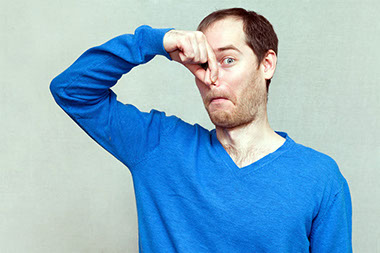
    Image of man plugging his nose with hand.

    Flatulence is passing gas through the anus. For the average adult, this happens about 6 to 20 times a day.

    Signs & Symptoms

    *  Pressure or discomfort in the lower abdomen or anal area.

    *  Passing gas. A foul odor occurs sometimes.

    Causes

    Gas is caused by swallowing air and digesting foods. Eating high fiber foods like beans, peas, and whole-grains create more gas than other foods. Dairy foods can create large amounts of gas in some people.

    Gas may signal other problems, too. These include lactose intolerance, taking certain antibiotics, and abnormal muscle movement in the colon.

    Gas can also be a symptom of celiac disease. With this, the lining of the small intestine is damaged from eating gluten. This is a protein in wheat, barley, and rye. Other symptoms of celiac disease are pain and bloating in the abdomen; diarrhea; weight loss; anemia; and a certain skin rash. Treatment is a gluten-free diet. Find out about celiac disease fromwww.celiac.nih.gov.

    Treatment

    Self-care treats most cases of gas. If the gas is due to another problem, treating the problem reduces or gets rid of the gas.

    Questions to Ask

    Self-Care / Prevention

    *  Try not to swallow air. Don’t have carbonated drinks and chewing gum. These can cause more air to get into your stomach.

    *  When you add fiber to your diet, do so gradually.

    *  When you pass gas, note which foods you have eaten. Eat less of the foods that often cause gas. Common ones are apples, bran, whole-wheat foods, cabbage-family vegetables, eggs, dairy products, prunes, and beans.

    *  To prevent getting gas from many “gassy” foods, try an over-the-counter product, such as Beano. This helps prevent gas from beans, bran, nuts, onions, soy, and many vegetables.

    *  Try an over-the-counter medicine with simethicone, such as Gas-X.

    *  Release the gas when you need to. Go to another room if it will help you be less embarrassed.

    Healthier at Home book by the American Institute for Preventive Medicine. www.HealthyLife.com. All rights reserved.

    © American Institute for Preventive Medicine
  • Irritable Bowel Syndrome (Ibs)

    Abdominal & Urinary Conditions

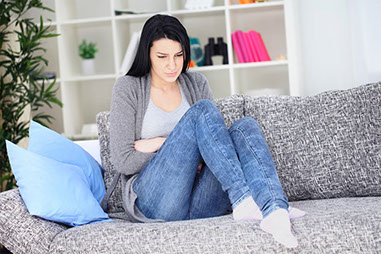
    Image of women sitting holding stomach in pain.

    Irritable bowel syndrome (IBS) is a problem that mostly affects the bowel (the large intestine) and is not caused by any other bowel disease. It can be painful, does not damage the colon or lead to other health problems.

    Signs & Symptoms

    *  Gas, bloating, pain, or discomfort in the abdomen.

    *  Chronic diarrhea, constipation (or both).

    *  Mucus in the stool.

    Causes

    The cause is not known. A person with IBS has an extra sensitive colon. Muscles in the intestines go into spasm, causing symptoms.

    Treatment

    Changes in eating habits, stress relief, and medications treat IBS.

    Questions to Ask

    Self-Care / Prevention

    *  Don’t smoke. If you smoke, quit. Avoid secondhand smoke.

    *  Maintain a healthy diet. Lose weight if you are overweight.

    *  Avoid constipation. Don’t strain to pass stool.

    *  Exercise to keep abdominal muscles strong. Follow your doctor’s advice.

    *  When you do sit ups, keep your knees bent and your feet flat on the floor.

    *  Follow proper lifting techniques.

    *  Wear a weight lifting belt to support the back when lifting.

    *  Wear a truss. This is a device that holds a hernia in place.

    *  For mild pain, take an over-the-counter medicine for pain. If even mild pain lasts longer than a week, see your doctor.

    Resources

    National Institute of Diabetes and Digestive and Kidney Diseases (NIDDK)

    www.niddk.nih.gov

    Healthier at Home book by the American Institute for Preventive Medicine. www.HealthyLife.com. All rights reserved.

    © American Institute for Preventive Medicine
  • Premenstrual Syndrome (Pms)

    Women’s Health

    Four out of 10 menstruating women have premenstrual syndrome (PMS). A syndrome is a group of signs and symptoms that indicate a disorder.

    Signs & Symptoms

    As many as 150 symptoms are linked to PMS. The most common ones are:

    *  Abdominal bloating. Weight gain.

    *  Anxiety. Depression.

    *  Breast tenderness.

    *  Fatigue.

    *  Feelings of hostility and anger.

    *  Feeling cranky.

    *  Food cravings, especially for chocolate or sweet and/or salty foods.

    *  Headache.

    *  Mood swings.

    *  Tension.

    For some women, symptoms are slight and may last only a few days before menstruation. For others, they can be severe and last the entire 2 weeks before every period. Also, other problems women have, such as depression, may be worse with PMS. This is known as “menstrual magnification.”

    Causes

    The exact cause or causes for PMS are not known. A female’s response to normal monthly changes in estrogen, progesterone, and testosterone appear to be involved. So do changes in the level of seratonin, a brain chemical. With PMS, symptoms must occur within 2 weeks before the menstrual period and go away shortly after the period begins. Symptoms are not present between days 4 and 12 of the menstrual cycle. True PMS usually stops with menopause.

    Treatment

    *  Self-care measures.

    *  Regular exercise. This includes 20 minutes of aerobic exercise, such as walking or aerobic dance, at least 3 times a week.

    *  Medications. These include:

    – A water pill called spironolactone.

    – An anti-anxiety medicine.

    – An antidepressant medicine, such as an SSRI (e.g., fluoxentine or sertraline). This is taken a week or 2 before the menstrual period.

    – Birth control pills.

    Questions to Ask

    Self-Care / Prevention

    *  Get emotional support.

    *  Do aerobic exercises. Swim. Walk. Bicycle.

    *  Rest. Take naps if you need to.

    *  Learn to relax. Try deep breathing. Meditate. Do yoga. Take a warm bath. Get a massage.

    *  Eat carbohydrate-rich foods. Examples are whole grain breads and cereals, fruits, and vegetables.

    *  Have good sources of calcium, such as skim milk, nonfat yogurt, collard greens, and kale. Choose cereals and juices that have added calcium. Get good sources of magnesium, too. These include spinach; other green, leafy vegetables; and whole grain cereals.

    *  Try to avoid stress when you have PMS.

    *  Limit or avoid caffeine, alcohol, and cigarettes 2 weeks before your period is due.

    *  Limit salt, fat, and sugar.

    *  If you need to satisfy a food craving, do so with a small serving. For example, if you crave chocolate, have a small chocolate bar or add chocolate syrup to skim milk. If you crave salt, eat a small bag of pretzels.

    *  The vitamin and minerals listed below seem to help some females with PMS. Ask your doctor if you should take any of them and in what amounts.

    – Calcium.

    – Magnesium.

    – Vitamin E.

    Resources

    National Women’s Health Information Center

    www.womenshealth.gov

    Women's Self-Care book by the American Institute for Preventive Medicine. www.HealthyLife.com. All rights reserved.

    © American Institute for Preventive Medicine