Tag: blockage

  • Choking

    First Aid

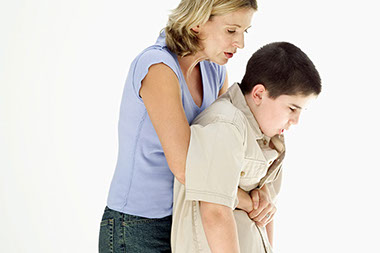
    Image of an adult women giving the heimlich maneuver to a child who's choking.

    With choking, the airway is partly or completely blocked. When it is completely blocked, the brain doesn’t get oxygen. Without oxygen, the brain can begin to die in 4 to 6 minutes.

    Signs & Symptoms

    When a person’s airway is completely blocked, he or she:

    *  Can’t talk.

    *  Can’t breathe.

    *  Can’t cough.

    *  May turn blue.

    When a person’s airway is partly blocked, he or she:

    *  Wheezes.

    *  Coughs.

    *  Has fast and/or labored breathing.

    *  Has chest pain when breathing in.

    Causes

    *  Food goes down the windpipe. Small objects get stuck in the throat and airway.

    *  Fluids, such as mucus or liquids, are swallowed the wrong way and block the airway.

    *  Snoring. Choking can occur when the tongue blocks the airway.

    Treatment

    Emergency action is needed for a person who cannot breathe, speak, or cough forcefully. The Heimlich maneuver can expel an object that blocks the airway. It is used for a person who is conscious. Emergency medical care is needed for a person who loses consciousness. Rescue breaths and chest compressions are needed before medical help arrives. Even if the object is expelled, the person should see a doctor or go to a hospital emergency department.

    Questions to Ask

    Self-Care / First Aid

    First Aid for Choking When Able to Breathe and Speak (or an infant or child can cry)

    *  Cough to clear the airway.

    *  Take a slow, deep breath to get a lot of air into the lungs.

    *  Give a deep, forceful cough. Breathe in deeply enough to be able to cough out 2 or 3 times in a row before taking a second breath.

    *  Don’t slap a person on the back. Doing this can drive the object down deeper.

    *  Have the person sit or stand. Bending forward may cause the object to fall against the vocal cords. Get emergency care right away!

    Prevention

    *  Chew all foods well before swallowing. Eat at a slow pace.

    *  Limit alcoholic drinks before you eat. This lessens the chance of swallowing large pieces of food.

    *  If you wear dentures, make sure they fit well. Since your mouth sensation is lessened, you are at a higher risk of choking. Eat slower. Chew food more thoroughly.

    *  Try not to laugh and eat at the same time. Laughing can draw food into the windpipe.

    *  Don’t run or play sports with objects in the mouth.

    *  For children under 5 years old, cut hot dogs, sausages, seedless grapes, and caramels into small pieces before you give these to them. And don’t give them nuts; popcorn; foods with pits, (e.g., cherries); gum (especially bubble gum); hard candy, throat lozenges, and cough drops.

    *  Don’t let your child chew or suck on rubber balloons or pieces of them.

    *  Keep small, solid objects, such as paper clips, away from children 3 years old and younger. Make sure, too, that they don’t get toys that have small parts, such as eyes on stuffed animals, game pieces, dice, etc. A young child should not play with any object smaller than his or her closed fist.

    *  Put childproof latches on cupboards that have harmful items.

    *  Store all medicines and vitamins out of children’s reach and in containers with childproof lids. Keep these items in locked cabinets, if needed.

    *  Remove plastic labels and decals from baby walkers and other kiddy furniture before children can peel them off.
    Healthier at Home book by the American Institute for Preventive Medicine. www.HealthyLife.com. All rights reserved.

    © American Institute for Preventive Medicine
  • Earwax

    Ear, Nose & Throat Conditions

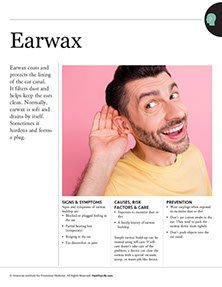
    Earwax coats and protects the lining of the ear canal. It filters dust and helps keep the ears clean. Normally, earwax is soft and drains by itself. Sometimes it hardens and forms a plug.

    Signs & Symptoms

    Signs and symptoms of earwax buildup are:

    *  Blocked or plugged feeling in the ear

    *  Partial hearing loss (temporary)

    *  Ringing in the ear

    *  Ear discomfort or pain

    Causes

    *  Exposure to excessive dust or dirt

    *  A family history of earwax buildup

    Simple earwax build-up can be treated using self-care. If self-care doesn’t take care of the problem, a doctor can clear the earwax with a special vacuum, scoop, or water-pik-like device.

    Prevention

    *  Wear earplugs when exposed to excessive dust or dirt.

    *  Don’t use cotton swabs in the ear. They tend to pack the earwax down more tightly.

    *  Don’t push objects into the ear canal.

    Self-Care

    {Note: Use only if you know that your eardrum is not ruptured or infected. See signs of a ruptured eardrum and ear infection under “When to Seek Medical Care” on this page.}

    *  Don’t try to scrape out earwax. You could put a hole in your eardrum or damage the skin of your ear canal.

    *  Use an over-the-counter product, such as Murine Ear Drops, Debrox, etc. Follow package directions.

    *  Hold a warm, wet washcloth on the blocked ear or, take a warm shower. Let the water gently flow into the ear. Use the tip of a warm washcloth to remove the softened wax. Don’t use cold water. This may cause dizziness.

    *  Lie on your side or tilt your head sideways. Using a clean medicine dropper, carefully squeeze a few drops of lukewarm water into your ear. Leave the water there for about 10 minutes. Tilt your head to let the water drain out of the ear. After several minutes, do the same thing again. If the ear wax has not cleared in 3 hours, repeat this entire procedure. {Note: Instead of just warm water, you can use a mixture of 1 part warm water and 1 part hydrogen peroxide. Keep the drops in the ear for 3, not 10 minutes, though.}

    *  Rest a hot water bottle on the affected ear for a few minutes. Afterward, use a washcloth to remove the softened wax.

    When to Seek Medical Care

    Contact Doctor When:

    *  You have sudden or total hearing loss in one or both ears.

    *  Earwax has not cleared after using self-care for several days.

    *  You have signs of a ruptured eardrum:

    – Ear pain

    – Blood or other ear discharge

    – Partial hearing loss

    – Ringing or burning in the ear

    *  You have ear pain with any of these signs of an ear infection:

    – Feeling of fullness in the ear that leads to ear pain

    – Fever of 101°F or higher

    – Blood, pus, or fluid from the ear

    – Temporary hearing loss

    – Redness and swelling of the skin of the ear canal

    – Nausea, vomiting, and/or dizziness

    Health at Home Lifetime book by the American Institute for Preventive Medicine. www.HealthyLife.com. All rights reserved.

    © American Institute for Preventive Medicine

  • Heart Disease

    Heart & Circulation Problems

    Heart disease is a common term for coronary artery disease (CAD). It is the number one cause of death in the U.S. in both men and women. With heart disease, arteries that supply blood to the heart become hardened and narrowed. Heart disease can lead to these problems:

    *  Angina. With this, the heart muscle does not get as much blood and oxygen as it needs for a given level of work. A heart attack damages the heart muscle. Angina does not. It is a warning sign that a heart attack could occur, though.

    *  Heart attack.

    *  Heart failure (HF). With this, the heart “fails” to supply the body with enough blood and oxygen for its needs. This develops slowly. It becomes chronic.

    Signs & Symptoms

    *  Symptoms of angina are pain, discomfort, or a squeezing pressure in the chest. Aching in a tooth, jaw, or neck can also occur. Symptoms usually go away with rest and/or nitroglycerin. Angina attacks may occur with anger, excitement, or exertion, such as walking up a hill.

    *  Symptoms of a heart attack.

    *  Symptoms of heart failure are: Shortness of breath; feeling very tired or weak; swelling in the lower legs, ankles, and feet; dry cough or one with pink, frothy mucus; rapid weight gain; and a fast heart beat.

    Causes

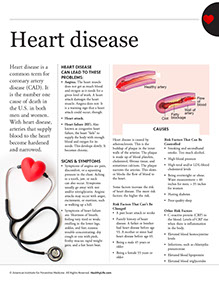
    Illustration of healthy artery vs a clogging artery.

    Heart disease is caused by atherosclerosis. This is the buildup of plaque in the inner walls of the arteries. The plaque is made up of blood platelets, cholesterol, fibrous tissue, and sometimes calcium. The plaque narrows the arteries. This slows or blocks the flow of blood to the heart.

    Some factors increase the risk of heart disease. The more risk factors; the higher the risk.

    Risk Factors That Can’t Be Changed

    *  A past heart attack or stroke.

    *  Being a male 45 years or older.

    *  Being a female 55 years or older.

    *  Family history of heart disease:

    – A father or brother had heart disease before age 55.

    – A mother or sister had heart disease before age 65.

    Risk Factors That Can Be Controlled

    *  High blood pressure.

    *  High-risk blood cholesterol levels.

    *  Smoking.

    *  Being overweight or obese.

    *  Lack of physical activity.

    *  Having diabetes and high total and/or LDL (bad) cholesterol.

    *  Using cocaine or amphetamines.

    *  Metabolic syndrome.

    Other Factors that May Play a Role in Heart Disease

    *  Waist measurement > 40 inches for men; > 35 inches for women.

    *  C-reactive protein (CRP) in the blood. Levels of CRP rise when there is inflammation in the body.

    *  Elevated blood homocysteine levels.

    *  Infections, such as chlamydia pneumoniae.

    *  Elevated blood lipoprotein (a).

    *  Elevated blood triglycerides.

    Treatment

    The goals of treatment are to relieve symptoms, control or reduce risk factors, stop or slow further damage to the arteries, and prevent and treat cardiac events. Treatment includes:

    *  Self-Care / Prevention measures on this page.

    *  Medications.

    *  Procedures to open blocked or narrowed arteries or bypass them.

    *  Cardiac rehabilitation (rehab).

    Questions to Ask

    Self-Care / Prevention

    *  Have regular medical checkups. Get your blood pressure checked at each office visit or or as advised by your doctor. Get your blood cholesterol tested regularly, as advised by your doctor.

    *  Don’t smoke. If you smoke, quit.

    *  Get to or stay at a healthy weight.

    *  Take all medications as prescribed.

    *  If you are 50 to 69 years old, ask your doctor about the benefits and harms of aspirin therapy (e.g., 1 low-dose aspirin daily) to help prevent cardiovascular disease.

    *  See your doctor if you have any of the Signs & Symptoms of Diabetes.

    *  Follow a diet low in saturated fats, trans fats, and cholesterol. Limit sodium to 1,500 to 2,400 milligrams per day. Follow theDASH Eating Plan.

    *  Get regular exercise. Follow your doctor’s advice.

    *  Manage stress. Practice relaxation techniques.

    *  If you drink alcohol, do so in moderation. Too much alcohol can raise the risk for high blood pressure, heart disease, stroke, and other health problems. Moderate drinking, may be linked to a lower risk of coronary heart disease in some persons. Moderation means no more than 2 drinks a day for men; 1 drink a day for women and persons age 65 and older. One drink = 5 oz. of wine; 12 oz. of beer; or 1-1/2 oz. of 80-proof liquor.

    *  Ask your doctor how much, if any, alcohol you should drink.

    *  Get your doctor’s advice about taking vitamins, minerals, and herbal products.

    Metabolic Syndrome

    Metabolic Syndrome is having at least three of these five conditions:

    1.  Abdominal obesity. Waist measurement for this varies according to sex and ethnic group. Ask your doctor.

    2.  High triglycerides:* ≥ 150 mg/dL

    3.  Low HDL-cholesterol:* < 40 mg/dL for males; < 50 mg/dL for females

    4.  High blood pressure:* ≤ 140 mm Hg systolic and/or ≤ 90 mm Hg diastolic

    5.  High fasting glucose:* ≥ 100 mg/dL

    * Or taking medication to treat this condition.

    Resources

    The American Heart Association

    800.AHA.USA1 (242.8721)

    www.heart.org/HEARTORG

    National Heart, Lung, and Blood Institute (NHLBI)

    www.nhlbi.nih.gov

    Healthier at Home book by the American Institute for Preventive Medicine. www.HealthyLife.com. All rights reserved.

    © American Institute for Preventive Medicine
  • Objects In The Ear Or Nose

    First Aid

    A foreign object stuck in an ear or the nose needs to be removed. If not, an infection could result. Damage to structures in the nose or ear could also occur.

    Signs & Symptoms

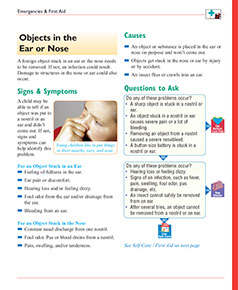
    A child may be able to tell if an object was put in a nostril or an ear and didn’t come out. If not, signs and symptoms can help identify this problem.

    For an Object Stuck in an Ear

    *  Feeling of fullness in the ear.

    *  Ear pain or discomfort.

    *  Hearing loss and/or feeling dizzy.

    *  Foul odor from the ear and/or drainage from the ear.

    *  Bleeding from an ear.

    For an Object Stuck in the Nose

    *  Constant nasal discharge from one nostril.

    *  Foul odor. Pus or blood drains from a nostril.

    *  Pain, swelling, and/or tenderness.

    Causes

    *  An object or substance is placed in the ear or nose on purpose and won’t come out.

    *  Objects get stuck in the nose or ear by injury or by accident.

    *  An insect flies or crawls into an ear.

    Treatment

    Medical care is needed for foreign objects that can’t be removed with self-care. After an object is removed, an antibiotic may be needed if an infection is present. Small, button-sized batteries need to be removed to prevent burns.

    Questions to Ask

    Self-Care / Prevention

    To Remove an Insect from an Ear

    *  Kill the insect before you try to remove it. To do this, tilt the person’s head to put the ear with the insect in an upward position. Pour warm (not hot) mineral, olive, or baby oil into the ear. As you pour the oil, straighten the ear canal. In a child, pull the earlobe gently backward and downward; backward and upward in an adult.

    *  The goal is to suffocate the insect and cause it to float out.

    To Remove Objects Other Than Insects

    *  Don’t use oil.

    *  Tilt the head toward the side with the foreign object. Gently shake the head toward the floor to try to get the object out. Do not shake a baby. Gently pull the ear up and back.

    *  Don’t use a sharp tool, cotton swab, etc., to try to locate and remove the object. This risks pushing the object farther into the ear. Doing this could damage the middle ear.

    *  Remove the object with blunt tweezers if it is easily seen and can be grasped and pulled out.

    To Remove Objects in the Nose

    *  Don’t use a sharp tool, cotton swab, etc., to try to locate and remove the object.

    *  Breathe through the mouth until the object is removed.

    *  Apply gentle pressure to close the other nostril and gently try to blow the object out.

    *  Remove the object with blunt tweezers, if it is easily seen and can be grasped and pulled out.

    Healthier at Home book by the American Institute for Preventive Medicine. www.HealthyLife.com. All rights reserved.

    © American Institute for Preventive Medicine
  • Peripheral Artery Disease

    Heart & Circulation Problems

    Peripheral artery disease (PAD) occurs when blood vessels outside of the heart become too narrow to supply enough oxygen to the limbs. Blood flow is reduced. This is most common in the legs and much less common in the arms. Often, PAD occurs with coronary artery disease.

    Signs & Symptoms

    *  Muscle pain in one or both legs when walking, especially when walking fast or uphill. The pain lessens or goes away with rest. Pain can be in the calves (most often) or thighs. Much less often, it can also be in the arms, fingers, lower back, buttocks, or the foot arches.

    *  Fatigue that improves with rest

    With severe disease, symptoms are:

    *  Muscle pain at rest, especially at night

    *  Cold or numb feet

    *  Weak or no pulse in the affected limb

    *  Pale, bluish-colored toes

    *  Open sores on the lower leg, toes, or ankles

    *  Shiny and hairless skin on affected areas

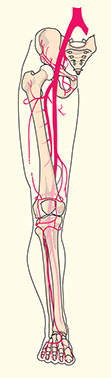
    Illustration of arteries of the leg.

    Arteries of the Leg

    Causes, Risk Factors & Care

    *  Smoking

    *  Diabetes, especially in women. {Note: If you have diabetes and smoke cigarettes, you are very prone to peripheral vascular disease. If you have diabetes, YOU MUST NOT SMOKE.}

    *  Fatty buildup (plaque) in the arteries High cholesterol

    *  High blood pressure

    *  Being elderly

    *  Taking some medications, such as beta- blockers, to lower high blood pressure. {Note: Don’t stop taking any prescribed medicines on your own. Consult with your doctor.}

    *  Agent Orange exposure

    Treatment for peripheral artery disease includes:

    *  A graduated exercise program, such as walking.

    *  Medicines, such as ones to lower cholesterol and/or high blood pressure and to improve blood flow

    *  Surgery, if needed, such as balloon angioplasty or bypass surgery

    Prevention

    *  Don’t smoke. If you smoke, quit.

    *  Do regular exercise.

    *  Get to and/or stay at a healthy weight.

    *  Follow a diet low in saturated fat and cholesterol.

    Self-Care

    *  Follow measures under “Prevention” in this topic.

    *  Follow a graduated walking program as advised by your doctor.

    *  Take medicines as prescribed.

    *  Take good care of your feet:

    – Check the feet daily.

    – Don’t walk barefoot.

    – Wear comfortable, roomy shoes. Avoid sandals and high heels.

    – Cut toenails straight across. Do not cut nails close to the skin.

    – Use an antifungal foot powder to avoid athlete’s foot.

    When to Seek Medical Care

    Contact Doctor When:

    *  You have any pain, redness, or a leg or foot wound and you have a history of diabetes or peripheral vascular disease.

    *  The pain, redness, and swelling extend up the ankle to the leg.

    *  The skin of your foot has turned grayish to black in color.

    *  Repeated muscle pain occurs in a leg when you walk and it goes away with rest.

    *  Leg pain occurs when you are at rest.

    Get Immediate Care When:

    You have all of these problems:

    *  Sudden onset of pain

    *  Rapid skin color changes: white, red, blue, grayish, or black

    *  You cannot feel sensation in your foot for the first time.

    Health at Home Lifetime book by the American Institute for Preventive Medicine. www.HealthyLife.com. All rights reserved.

    © American Institute for Preventive Medicine