Tag: blood

  • Be Ready To Donate Blood

    WELL-BEING

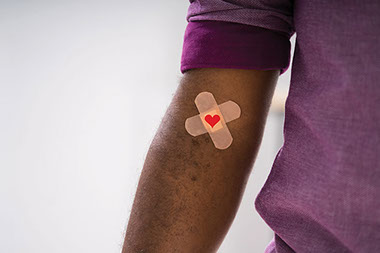
    Arm with bandaid and heart where he gave blood.

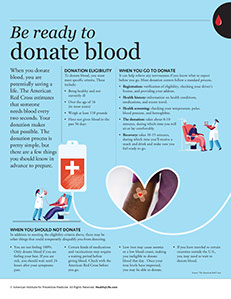
    When you donate blood, you are potentially saving a life. The American Red Cross estimates that someone needs blood every two seconds. Your donation makes that possible. The donation process is pretty simple, but there are a few things you should know in advance to prepare.

    Donation eligibility

    To donate blood, you must meet specific criteria. These include:

    *  Being healthy and not currently ill

    *  Over the age of 16 (in most states)

    *  Weigh at least 110 pounds

    *  Have not given blood in the past 56 days

    When you go to donate

    It can help relieve any nervousness if you know what to expect before you go. Most donation centers follow a standard process.

    *Registration:verification of eligibility, checking your driver’s license, and providing your address.

    *Health history:information on health conditions, medications, and recent travel.

    *Health screening:checking your temperature, pulse, blood pressure, and hemoglobin.

    *The donation:takes about 8-10 minutes, during which time you will sit or lay comfortably.

    *Recovery:takes 10-15 minutes, during which time you’ll receive a snack and drink and make sure you feel ready to go.

    When You Should Not Donate

    In addition to meeting the eligibility criteria above, there may be other things that could temporarily disqualify you from donating.

    *  You are not feeling 100%. Only donate blood if you are feeling your best. If you are sick, you should wait until 24 hours after your symptoms pass.

    *  Certain kinds of medications and vaccinations may require a waiting period before giving blood. Check with the American Red Cross before you go.

    *  Low iron may cause anemia or a low blood count, making you ineligible to donate blood that day. Once your iron levels have improved, you may be able to donate.

    *  If you have traveled to certain countries outside the U.S., you may need to wait to donate blood.

    Source: The American Red Cross

    © American Institute for Preventive Medicine

  • Living Well With Sickle Cell

    MEDICAL NEWS

    Two couples walking and laughing along the beach.

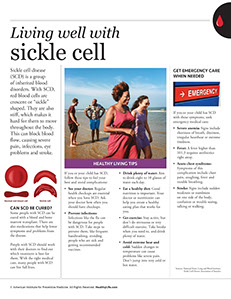
    Sickle cell disease (SCD) is a group of inherited blood disorders. With SCD, red blood cells are crescent or “sickle” shaped. They are also stiff, which makes it hard for them to move throughout the body. This can block blood flow, causing severe pain, infections, eye problems and stroke.

    Can SCD be cured?

    Some people with SCD can be cured with a blood and bone marrow transplant. There are also medications that help lower symptoms and problems from the disease.

    People with SCD should work with their doctors to find out which treatment is best for them. With the right medical care, many people with SCD can live full lives.

    Healthy living tips

    If you or your child has SCD, follow these tips to feel your best and avoid complications:

    *  See your doctor: Regular health checkups are essential when you have SCD. Ask your doctor how often you should have checkups.

    *  Prevent infections: Infections like the flu can be dangerous for people with SCD. Take steps to prevent them, like frequent handwashing, avoiding people who are sick and getting recommended vaccines.

    *  Drink plenty of water: Aim to drink eight to 10 glasses of water each day.

    *  Eat a healthy diet: Good nutrition is important. Your doctor or nutritionist can help you create a healthy eating plan that works for you.

    *  Get exercise: Stay active, but don’t do strenuous or very difficult exercise. Take breaks when you need to, and drink plenty of water.

    *  Avoid extreme heat and cold: Sudden changes in temperature can cause problems like severe pain. Don’t jump into very cold or hot water.

    Get emergency care when needed

    If you or your child has SCD with these symptoms, seek emergency medical care:

    *  Severe anemia: Signs include shortness of breath, dizziness, irregular heartbeat or extreme tiredness.

    *  Fever: A fever higher than 101.3 requires antibiotics right away.

    *  Acute chest syndrome: Symptoms of this complication include chest pain, coughing, fever and trouble breathing.

    *  Stroke: Signs include sudden weakness or numbness on one side of the body, confusion or trouble seeing, talking or walking.

    Sources: National Heart, Lung and Blood Institute, Sickle Cell Disease Association of America

    © American Institute for Preventive Medicine

  • Q & A Blood Donation

    WELL-BEING

    Close up of hands holding a piece of paper shaped as a blood drop.

    Every day, people need life-saving blood transfusions. These transfusions are possible because people donate their blood. Despite the need for donated blood, many people are afraid to donate. They may have fears about the process, needles or even their own health. Get the facts about blood donation so you can make an informed decision.

    More than 4 million lives are saved each year because of blood donations.

    Q: Is blood donation safe?

    A: Yes. Each donation uses a new, sterile needle that is thrown away after one use. You may also be given a quick health check to be sure you’re healthy enough to donate. This may include taking your temperature, blood pressure and pulse.

    Q: What if I don’t like needles?

    A: Many people have a fear of needles. But blood donation is a quick process that can help save up to three lives. Facing your fears can mean the world to another person. Try listening to relaxing music, deep breathing or reading a book during your donation. Drinking fluids before donating will make donation easier and faster.

    Q: Will I faint afterward?

    A: Some people feel lightheaded after donating blood. But most people feel fine afterward. If this concerns you, you can have a few extra minutes to sit or lie down. You can also lower the risk of this happening by eating a healthy meal before your donation and drinking at least 16 ounces of water. When you feel well enough, slowly sit up. Blood donation only takes about 1/10th of the blood from your body. Your body replaces this lost blood quickly.

    Q: Don’t they only need rare blood types?

    A: Sometimes there is a public appeal for certain blood types. But all blood types are needed and valuable. If you don’t know your blood type, you can find out after your donation.

    If you have any health conditions, you can ask your doctor whether blood donation is right for you.

    Source: American Heart Association

    © American Institute for Preventive Medicine

  • Blood Donation

    Medical Care

    Hands cupped together holding a red paper shaped as a blood drop.

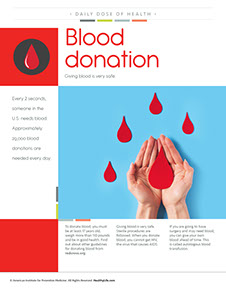
    Giving blood is very safe.

    Every 2 seconds, someone in the U.S. needs blood. Approximately 29,000 blood donations are needed every day.

    To donate blood, you must be at least 17 years old, weigh more than 110 pounds and be in good health. Find out about other guidelines for donating blood fromredcross.org.

    Giving blood is very safe. Sterile procedures are followed. When you donate blood, you cannot get HIV, the virus that causes AIDS.

    If you are going to have surgery and may need blood, you can give your own blood ahead of time. This is called autologous blood transfusion.

    A Year of Health Hints book by the American Institute for Preventive Medicine. www.HealthyLife.com. All rights reserved.

    © American Institute for Preventive Medicine

  • Diabetes

    Diabetes Education

    Diabetes is too much sugar (glucose) in the blood. Glucose needs to get into the cells to be used for energy. Insulin is the hormone needed for glucose to get from the blood into the cells. Diabetes results when no insulin is made, not enough insulin is made, or the body does not use insulin well.

    Types of Diabetes

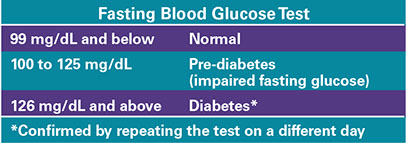
    One test used to diagnose diabetes is a fasting blood glucose test.

    Overweight and obese adults between ages 40 and 70 years old should be tested for adnormal blood sugar levels and type 2 diabetes. Follow your doctor’s advice for screening tests for diabetes.

    Type 1

    With this type, the pancreas gland makes no insulin or very small amounts. Often, the pancreas has fewer cells that make insulin. This type most often occurs in children and young adults. It can happen at any age, though.

    Type 2

    With this type, the pancreas does not make enough insulin or the body does not use insulin the right way. Often, this occurs in persons who are overweight and/or who don’t exercise. Modest weight loss and moderate physical activity can delay or help prevent type 2 diabetes.

    Pre-diabetes

    With this type, blood glucose levels are higher than normal, but not high enough to be diagnosed with diabetes. Many people with pre-diabetes develop type 2 diabetes within 10 years. Modest weight loss and moderate physical activity can delay or help prevent type 2 diabetes.

    Gestational

    This type occurs during pregnancy. It usually ends when the pregnancy ends. It does, though, increase the risk for the mother to get diabetes in the future. The mother will need follow-up blood sugar checks.

    Signs & Symptoms

    In the U.S., about 27 percent of people with diabetes do not know they have it. They may not have symptoms. According to the American Diabetes Association, some signs and symptoms of diabetes are:

    *  Urinating often

    *  Unusual thirst

    *  Extreme hunger

    *  Unusual weight loss

    *  Extreme fatigue

    *  Being very cranky

    *  Blurry vision

    If you have any of these symptoms, see your doctor. In type 1 diabetes, symptoms tend to come on quickly. In type 2, symptoms tend to come on more slowly. You can even have diabetes without any symptoms.

    A screening test can detect diabetes early. Early treatment may reduce other health problems related to diabetes.

    Diabetes has no cure, but it can be controlled. Goals are to keep blood sugar levels between 70 and 130 mg/dL before meals; and less than 180 mg/dL two hours after starting a meal.

    Health Problems Related to Diabetes

    When diabetes is left untreated or not treated well, you are at an increased risk for these health problems:

    *  Heart disease

    *  Stroke

    *  Poor circulation

    *  Foot problems

    *  Infections in general and slow healing of wounds and infections

    *  Yeast infections, especially in women

    *  Kidney and eye problems. This includes blindness.

    *  Gangrene. Sometimes this is so severe that the affected limb must be amputated.

    Risk Factors

    Discuss your risk for diabetes with your doctor or health care provider.

    For Type 2 Diabetes

    *  Your mother, father, brother, and/or sister has or had diabetes.

    *  You are overweight. You are not physically active.

    *  You are age 45 or older.

    *  You are female with a past history of gestational diabetes and/or you had at least one baby who weighed more than 9 pounds.

    *  You come from ethnic groups that are more prone to diabetes: African Americans, Latinos, Native Americans, Asian Americans, and Pacific Islanders.

    For Type 1 Diabetes

    *  You have a family history of type 1 diabetes.

    *  You had a virus that has injured the pancreas gland or a problem that has destroyed cells in the pancreas gland that make insulin.

    Medical Care

    Medication

    Diabetes pills. These are prescribed when diet and exercise are not enough to control your blood sugar. Types include:

    *  Ones that delay or block the breakdown of starches and some sugars (e.g., acarbose).

    *  Ones that help your body release more insulin (e.g., glyburide and tolbutamide).

    *  Ones that lower blood sugar without helping your body make more insulin (e.g., metformin).

    Insulin. There are different types based on how fast and over how many hours they work. People with type 1 diabetes need insulin. Some persons with type 2 diabetes need insulin. It can be given through:

    *  Insulin injections (shots)

    *  Insulin pump therapy

    Other medicines, as needed, to control blood pressure, blood cholesterol levels, etc.

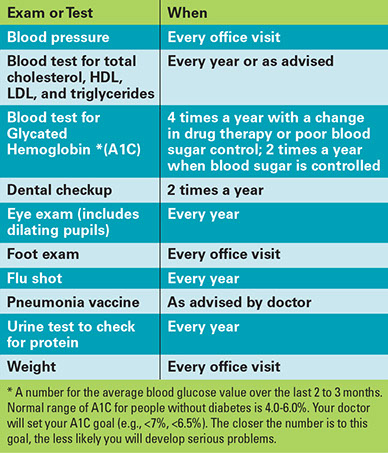
    Exams & Tests

    If you have diabetes, have exams and tests, as advised. In general, diabetics should have the following:

    Self-Care

    Keep Track of Your Blood Glucose

    *  Test your blood sugar, as advised. People with type 1 diabetes may be told to test before each meal and at bedtime. People with type 2 diabetes may be told to test every other day or daily and at certain times.

    *  Keep a log of your blood sugar results. Note any reasons that could help explain why your blood sugar is higher or lower than usual. Share this log with your health care provider.

    Foot Care

    *  Check your feet every day. Let your health care provider know of any problems (swelling, redness, other color changes, ingrown toenails, corns, and foot injuries). Use a mirror to look at the bottom of your feet.

    *  Keep your feet clean.

    *  Wear shoes and slippers that fit your feet well. Don’t go barefoot, indoors or outdoors.

    *  Cut nails straight across and not too close to the skin. Have a foot doctor cut your toenails, if advised.

    Skin Care

    To reduce the risk of skin problems and infections:

    *  Keep your skin clean. Bathe or shower, daily, with warm water and a mild soap.

    *  Apply lotion to your skin to keep it moist.

    *  Protect your skin from damage.

    – Avoid cuts, scrapes, punctures, etc. If you get a skin injury, treat it right away. Keep it clean and cover the area with a clean, dry bandage. Call your doctor if the injury does not start to heal in a day or two or if you notice signs of infection (redness, swelling, pus, throbbing, and pain).

    – Avoid sunburn. Use a “broad spectrum” sunscreen, with an SPF of 15 or higher.

    – Wear gloves in cold weather and when you do work that may injure your hands.

    Diet

    In general, you may be advised to:

    *  Lose weight if you are overweight.

    *  Eat meals at regular times.

    *  Follow a meal plan for breakfast, lunch, dinner, and snacks. You may be told to count carbohydrates. Books, booklets, and food labels list carbohydrate amounts.

    *  Have 20 to 35 or more grams of dietary fiber per day. Fiber is in bran, whole-grain breads and cereals, fresh fruits and vegetables, beans and peas, and seeds.

    *  Strictly limit saturated and trans fats. To do this, choose nonfat dairy products; very lean meats (and in small amounts); and limit all animal and “hydrogenated fats.”

    *  Limit alcohol. Follow your doctor’s or health care provider’s advice.

    Exercise

    Regular exercise helps control your weight and blood sugar. It also lowers your blood cholesterol, blood pressure, and risk of heart disease. Exercise may also reduce the amount of medicine you need to take for your diabetes and make you feel better.

    *  If told to, test your blood glucose before and after exercise.

    *  When you exercise, have with you a carbohydrate source, such as fruit juice, hard candies, or glucose gel or tablets. For each of these, take the amount as advised by your health care provider.

    *  Find out if you should also carry a glucagon emergency kit. Your doctor needs to prescribe this. You and persons you exercise with should learn how to use this.

    Diabetic Emergencies

    Hypoglycemia (Low Blood Sugar)

    This can happen if you: Skip or don’t finish meals or snacks or wait too long to eat; exercise more than usual; and/or take excess diabetes medicine or insulin.

    Symptoms

    *  Shaky feeling. Weakness. Dizziness.

    *  Rapid pulse. Shallow breathing.

    *  Sweating. Cold, clammy skin.

    *  Sudden blurred or double vision

    *  Numbness or tingling around the mouth and lips

    *  Sudden mood changes. Confusion.

    *  Faintness. You may pass out.

    What to Do

    If you can, check your blood sugar. If it is lower than the level set by your health care provider, such as 70 mg/dL, have 15 grams of a “fast acting” carbohydrate. Examples are:

    *  1/2 cup (4 ounces) fruit juice or regular (not diet) pop

    *  5 or 6 regular (not sugar-free) hard candies

    *  4 teaspoons of sugar or honey

    *  6 to 10 gumdrops or jelly beans

    *  3 glucose tablets (or the number your health care provider advises). Drug stores sell these.

    *  1 cup (8 ounces) of milk

    *  If you don’t feel better after 15 minutes, take the same amount of sugar source again. If you still don’t feel better, call your doctor.

    *  If a person with diabetes passes out, can’t swallow, or can’t be roused, get emergency care. Use a prescribed emergency glucagon kit to inject glucagon. If there is no glucagon, rub sugar or any type of sweet paste, such as cake frosting, inside the person’s mouth. Call for emergency medical care. Do not give insulin, food, or liquids.

    Hyperglycemia (High Blood Sugar)

    This can happen if you: Get sick; eat too much; don’t do your normal exercises; don’t take your insulin or your diabetes pills or don’t take enough of them.

    Symptoms

    *  Extreme thirst

    *  Urinating often

    *  Nausea

    *  Acting cranky

    *  Dry, itchy skin

    *  Feeling very sleepy

    *  Blurred vision

    What to Do

    *  Check your blood sugar. Follow your doctor’s advice for your blood sugar level. If it is over 240 mg/dL or if you are sick, you may be told to check your urine for ketones. Call your doctor right away if your urine shows moderate or large amounts of ketones.

    *  Follow your treatment plan more closely.

    High Blood Sugar with Ketones in the Blood

    This is a serious condition. It can result in a coma. It occurs in persons who have type 1 diabetes. It is called diabetic ketoacidosis (DKA).

    Early Symptoms

    *  Intense thirst. Dry mouth.

    *  High blood glucose levels

    *  Urinating often

    *  Positive urine ketone tests

    Later Symptoms

    *  Tiredness. Dry, flushed skin.

    *  Nausea and/or vomiting

    *  “Fruity” breath odor

    *  Hard time breathing. Usually short, deep breaths.

    *  Lethargy. Can’t be roused.

    What to Do

    *  Call your doctor right away for advice.

    *  If you can’t reach your doctor, get to a hospital emergency department right away.

    High Blood Glucose without Ketones

    This is called hyperosmolar hyperglycemic nonketonic syndrome (HHNS). It occurs most often in persons who have type 2 diabetes. It usually comes after another illness, such as the flu, that caused dehydration. If it is not treated, seizures, coma, and even death can occur.

    Symptoms

    *  Dehydration. This may be the only symptom.

    Warning Signs of HHNS

    These occurred days or weeks before HHNS.

    *  Extreme thirst

    *  Very high blood glucose levels (over 600 mg/dL)

    *  High fever

    *  May have vision loss

    *  Sleepiness or confusion

    What to Do

    *  Drink water

    *  Get to a hospital emergency department right away.

    Resources

    American Diabetes Association

    800.DIABETES (342.2383)

    www.diabetes.org

    National Institute of Diabetes and Digestive and Kidney Diseases (NIDDK)

    www.niddk.nih.gov
    Diabetes brochure by the American Institute for Preventive Medicine. www.HealthyLife.com. All rights reserved.

    © American Institute for Preventive Medicine

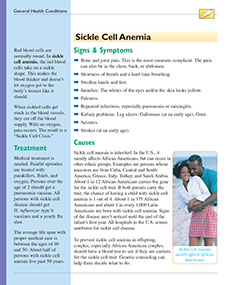
  • Sickle Cell Anemia

    Bone & Muscle Problems

    Red blood cells are normally round. In sickle cell anemia, the red blood cells take on a sickle shape. This makes the blood thicker and doesn’t let oxygen get to the body’s tissues like it should. When sickled cells get stuck in the blood vessels, they cut off the blood supply. With no oxygen, pain occurs. The result is a “Sickle Cell Crisis.”

    Signs & Symptoms

    *  Bone and joint pain. This is the most common complaint. The pain can also be in the chest, back, or abdomen.

    *  Shortness of breath and a hard time breathing.

    *  Swollen hands and feet.

    *  Jaundice. The whites of the eyes and/or the skin looks yellow.

    *  Paleness.

    *  Repeated infections, especially pneumonia or meningitis.

    *  Kidney problems. Leg ulcers. Gallstones (at an early age). Gout.

    *  Seizures.

    *  Strokes (at an early age).

    Causes

    Sickle cell anemia is inherited. In the U.S., it mostly affects African Americans, but can occur in other ethnic groups. Examples are persons whose ancestors are from Cuba, Central and South America, Greece, Italy, Turkey, and Saudi Arabia. About 1 in 12 African Americans carries the gene for the sickle cell trait. If both parents carry the trait, the chance of having a child with sickle cell anemia is 1 out of 4. About 1 in 375 African Americans and about 1 in every 1,000 Latin Americans are born with sickle cell anemia. Signs of the disease aren’t noticed until the end of the infant’s first year. All hospitals in the U.S. screen newborns for sickle cell disease.

    To prevent sickle cell anemia in offspring, couples, especially African American couples, should have a blood test to see if they are carriers for the sickle cell trait. Genetic counseling can help them decide what to do.

    Treatment

    Medical treatment is needed. Painful episodes are treated with painkillers, fluids, and oxygen. Other treatments:

    *  Hydroxyurea medicine.

    *  Blood transfusions.

    *  Stem cell transplant. This may be an option for children who have a brother or sister without sickle cell disease that is a matched donor.

    In the U.S., the life span for a person with sickle cell disease is 40-60 years.

    Questions to Ask

    Self-Care / Prevention

    *  Follow your doctor’s treatment plan. Wear a medical alert tag.

    *  Avoid physical stress and high altitudes.

    *  Discuss airplane travel with your doctor.

    *  Ask your doctor what over-the- counter medicines you can use before you try any.

    *  Drink at least 8 glasses of water a day. Get the rest you need.

    *  Follow a balanced diet. Have at least 5 servings of fruits and vegetables a day. Take folic acid (a B vitamin) supplements and other vitamins and minerals, as advised by your doctor.

    *  Don’t wear tight clothing.

    *  If at home and in a “sickle cell crisis:”

    – Stay warm. Apply warm compresses to painful parts of your body.

    – Rest in bed.

    – Take pain medication, as prescribed.

    Healthier at Home book by the American Institute for Preventive Medicine. www.HealthyLife.com. All rights reserved.

    © American Institute for Preventive Medicine

  • Important Health Screenings For Men

    WELL-BEING

    Image of male doctor.

    Even if you feel fine, you should see your doctor for regular health screenings. Many health conditions cause no symptoms in their earliest stages. Screenings can help you get earlier treatment and a better outcome. The National Institutes of Health recommends the following tests for men:

    Abdominal aortic aneurysm:

    Adults ages 65 to 75 who have smoked may need this screening once. Others should consult with their doctor.

    Blood pressure:

    Every one to two years, depending on your risk factors or health conditions.

    Cholesterol:

    Beginning at age 35, every five years if levels are normal. Men with high blood pressure, other risk factors for heart disease or certain health conditions may need to get screened sooner or more often.

    Colon cancer:

    Screening may begin at age 50, or earlier, if you have a family history of the disease, certain risk factors or certain health conditions.

    Diabetes:

    Every three years beginning at age 45. Earlier and/or more frequent testing may be advised if you have certain risk factors.

    Eyes:

    Every one to two years, or more often if you have glaucoma, have certain eye conditions or if your doctor recommends it.

    Hearing:

    Adults over age 65 may need a hearing test if signs of hearing loss are present.

    Lung cancer:

    Annual screening may be recommended for adults aged 55 to 80 years who have a 30 pack-year (smoke one pack per day for 30 years) smoking history AND currently smoke or have quit within the past 15 years.

    Osteoporosis:

    Discuss screening with your doctor if you are over age 50.

    Physical exam:

    Height, weight and Body Mass Index (BMI) should be measured at well visits.

    Prostate cancer:

    Discuss screening with your doctor. Men with certain risk factors may need screenings beginning at age 45.

    Sexually transmitted infections:

    Depending on age, lifestyle and medical history, you may need to discuss with your doctor about getting tested for chlamydia, syphilis, HIV and other infections.

    Men of all ages and health statuses need regular health screenings. Call your doctor to schedule your well visit!

    © American Institute for Preventive Medicine

  • Sepsis: Be Aware Of This Deadly Condition

    MEDICAL NEWS

    Image of sick women in bed.

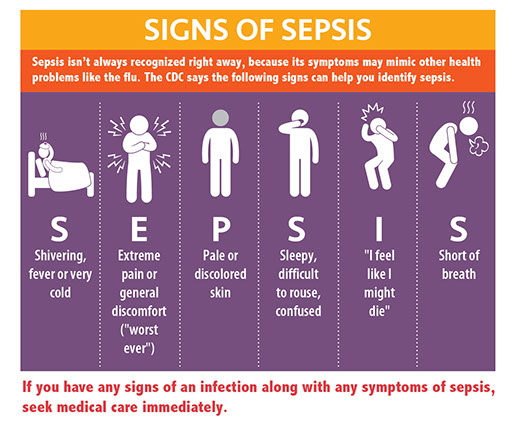
    Sepsis is among the top causes of disease-related death in our country, killing about 200,000 people each year. Actress Patty Duke’s recent death from sepsis brought more attention to this dangerous disease. It’s important to know the signs of sepsis so you can seek emergency medical care for this serious condition. Early treatment can save lives.

    Sepsis is a strong and harmful reaction of the body’s immune system. It can be triggered by common infections, such as pneumonia, a urinary tract infection, or even a minor infection like a cut or scrape, if it becomes infected and the infection spreads.

    Most of the time, these infections don’t cause sepsis. But when sepsis does occur, it can cause a dangerous drop in blood pressure, resulting in organ failure and death. It tends to affect the very young, the elderly or those with weakened immune systems.

    Influenza vaccines and pneumococcal vaccines may help prevent sepsis. Consider getting these vaccines to reduce your risk.

    © American Institute for Preventive Medicine