Tag: bonding

  • The Family That Plays Together Stays Together

    FAMILY LIFE

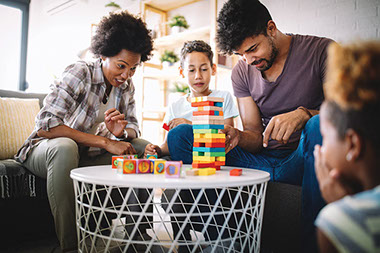
    Family playing Jenga.

    Playing games is an easy and fun way to experience quality interactions and build family connections. The more time you spend together, the stronger your bond will be. But, finding a game that everyone will enjoy can be a challenge. Here are eight games that are fun and accessible to a wide range of ages.

    Charades

    This classic game is super easy and sure to have everyone laughing. Even better, no one is too young or too old to play.

    Pictionary

    If you can hold a pencil, you can play pictionary. Whether your family and friends can decipher your drawing is another matter, but all part of the fun.

    Minute to win it style games

    The idea is to create a challenge and compete for one minute. For example, who can stack the most cups or keep the most balloons in the air? The options are endless.

    Ninja course

    Using your home or yard as an obstacle course creates many opportunities for play. Set up a ninja course appropriate for your group and compete in teams or race your personal best.

    Dominos

    You can play the traditional game or just imagine the amazing fun you could create working together with the whole family.

    Dice games

    Rolling dice is fairly simple for any age. Simple addition or pattern matching is possible for even young kids. Look for games such as Quix™, Farkle™, and Yahtzee™.

    Jenga™

    This game will test everyone’s dexterity. The simple rules mean young and old can get in the mix.

    Card games

    A standard deck of cards contains a wealth of all-ages gameplay. Try easy games like snap, pig, or crazy eights.
    © American Institute for Preventive Medicine

  • Family Matters 2

    Social Health

    Well-being relates to relatives.

    Your family is where you learn who you are and how to relate to others. It plays a vital role in fulfilling the human need to belong and have close, long-term relationships. Whether you are a child, teen, or adult, family experiences can promote or hinder your well-being.

    Tips to foster family well-being:

    *  Live a healthy lifestyle together.

    – Plan for, shop, and eat healthy foods.

    – Exercise as a family if you can. Or, promote physical activity suited for each family member.

    – Get enough sleep.

    *  Plan to eat at least one meal a day together. Have each person talk about his or her day, such as stating the best part and worst part.

    *  Spend time together. Attend important events for each family member.

    *  Express care and concern. Be available to help each other out. Listen, listen, listen.

    *  Practice good manners. Say, “Thank you” and “You’re welcome.” Make it a practice to send thank you calls, notes, letters, or emails to others for gifts and other acts of kindness.

    *  Express affection. Say, “I love you,” “I care about you,” and “You mean a lot to me.”

    *  Discuss the value of the family as a whole. Encourage individual expression and development.

    *  Define clear, yet flexible roles for family members. Assign family chores.

    *  Keep the house as organized as possible.

    *  Discuss the need to adapt to changes and deal with stressful events.

    *  Seek professional help for problems the family cannot deal with on its own.

    Factors that promote well-being:

    *  Being well cared for and feeling secure

    *  Receiving trust, love, support, and hugs

    *  Spending quality time together

    *  Listening well to each other

    *  Solving problems in a positive way

    *  Positive mood of family members

    *  Satisfaction with job and/or being a parent

    *  Being involved with partner and children

    *  Higher income and/or financial security

    Action Step

    This week, let at least two family members know how much you love them. Visit or call a relative who is alone or would be happy to hear from you.

    ays to Well-Being book by the American Institute for Preventive Medicine. www.HealthyLife.com. All rights reserved.

    © American Institute for Preventive Medicine

  • Bonding For A Beautiful Smile

    Dental & Mouth Concerns

    Bonding can correct certain dental problems effectively and inexpensively. By bonding plastic or porcelain to the tooth, a dentist can:

    *  Cover discoloration.

    *  Close small gaps between teeth.

    *  Repair fractured and chipped teeth.

    *  Protect exposed roots caused by receding gums.

    *  Seal out decay-causing bacteria on back teeth.

    If you’ve had your teeth bonded, take these steps to prevent chips, stains, or other problems.

    *  Don’t chew ice or bite down on hard foods or candy.

    *  Avoid smoking, drinking coffee or tea, or eating blueberries or other foods that easily stain.

    *  Have the bonded teeth checked every three to five years. They may need to be touched up or done over.

    Image of women smiling.
    A Year of Health Hints book by the American Institute for Preventive Medicine. www.HealthyLife.com. All rights reserved.

    © American Institute for Preventive Medicine

  • Create Family Ties

    FAMILY LIFE

    Image of three generational family.

    Families who spend time together as a cohesive unit are more likely to survive a crisis, such as an illness or job loss than those with poor coping skills.

    According to the CDC, good communication between parents and children is important for developing positive relationships.

    *  Teach active listening skills. Pay attention to what others say. Ask questions if you don’t understand what your spouse or children are trying to tell you.

    *  Hold regular family meetings to present complaints and set mutual goals and plans.

    *  Celebrate birthdays, holidays and other special occasions together.

    *  Learn the value of compromise.

    *  Be flexible. This is especially important if one parent returns to work or if one wage earner loses his or her job.

    *  Allow for individual strengths and interests. Don’t compare brothers and sisters. Allow family members to have “their own space.”

    © American Institute for Preventive Medicine
  • Family Matters

    FAMILY LIFE

    Image of family sitting on a couch with their pet dog.

    Your family is where you learn who you are and how to relate to others. It plays a vital role in fulfilling the human need to belong and have close, long-term relationships. Whether you are a child, teen, or adult, family experiences can promote or hinder your well-being.

    Tips to foster family well-being

    *  Live a healthy lifestyle together.

    – Plan for, shop, and eat healthy foods.

    – Exercise as a family if you can. Or, promote physical activity suited for each family member.

    – Get enough sleep.

    *  Plan to eat at least one meal a day together. Have each person talk about his or her day, such as stating the best part and worst part.

    *  Spend time together. Attend important events for each family member.

    *  Express care and concern. Be available to help each other out. Listen, listen, listen.

    *  Practice good manners. Say, “Thank you” and “You’re welcome.” Make it a practice to send thank you calls, notes, letters, or emails to others for gifts and other acts of kindness.

    *  Express affection. Say, “I love you,” “I care about you,” and “You mean a lot to me.”

    *  Discuss the value of the family as a whole. Encourage individual expression and development.

    *  Define clear, yet flexible roles for family members. Assign family chores.

    *  Keep the house as organized as possible.

    *  Discuss the need to adapt to changes and deal with stressful events.

    *  Seek professional help for problems the family cannot deal with on its own.

    © American Institute for Preventive Medicine

  • Getting Active As A Family

    FAMILY LIFE

    Image of family jogging.

    One of the best ways to prevent weight problems in children is to make exercise and activity a family event. Not only can parents set a good example, but it helps everyone get healthier while bonding and having fun together. The U.S. Department of Health and Human Services offers some tips:

    *  Find some free time. Being active together just twice a week can have health and emotional benefits. Try to find some 30-minute time slots and put your activity time on the calendar.

    *  Don’t make too many changes at once. To get everyone on board, start gradually and be sure to celebrate each time you make a healthy change.

    *  Ask for the kids’ ideas. Ask your kids about where they’d like to walk or bike. Talk to them about sports or activities they want to try.

    Remember, any time you make a change toward more activity and less screen time, you’re helping everyone in your family lead a healthier life.

    © American Institute for Preventive Medicine

  • Strike The Right Cord

    FAMILY LIFE

    Image of young smiling family.

    Children can be strangled by window cords on blinds and curtains. In fact, such tragedies are among the top hazards in American homes. Infants and children die each year from accidental strangling in the cords.

    The Consumer Product Safety Commission recommends that only cordless window coverings or those with unreachable cords be used in homes with young children. They are available today in the marketplace and will prevent window blind strangulations.

    In addition, the Window Covering Safety Council encourages parents, grandparents and caregivers to follow these basic cord-safety precautions:

    *  Move all furniture, cribs, beds, and climbable surfaces away from windows.

    *  Keep all window shades, blinds, and drapery cords well out of the reach of children.

    *  Install only cordless window coverings in homes with young children.

    © American Institute for Preventive Medicine