Tag: bone

  • Plan For A Healthier, Happier Menopause

    Women’s Health

    Image of two mature women laughing.

    Some women dread menopause, associating the change of life with hot flashes, painful intercourse, mood swings, and the specter of old age. As with menstruation and childbearing, menopause is a rite of passage that has some discomforts. But you can help to prevent or alleviate many of them.

    *  To maintain a positive outlook, share your feelings with friends, stay active, and take an interest in others in your community.

    *  To lessen mood swings, cut down on caffeine, alcohol, and sweets.

    *  To help maintain hormonal balance, do regular exercise. Lose weight if you are overweight.

    Kegel exercises (named for the individual who invented them) can help to keep your pelvic and vaginal muscles toned, preventing a prolapsed uterus or poor bladder control, both of which sometimes accompany menopause. To feel these muscles at work, stop and start your urine flow in midstream the next time you use the toilet. Then practice the two exercises that follow.

    *  Squeeze the pelvic/vaginal muscles for 3 seconds, then relax them for 3 seconds. Do this ten times, three times a day.

    *  Squeeze and relax the same muscles as quickly as possible. Repeat ten times, three times a day.

    A Year of Health Hints book by the American Institute for Preventive Medicine. www.HealthyLife.com. All rights reserved.

    © American Institute for Preventive Medicine

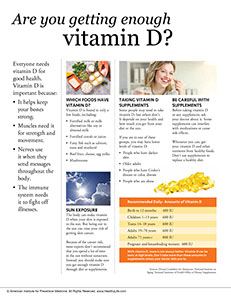
  • Are You Getting Enough Vitamin D?

    SELF-CARE CORNER

    Women holding a glass of water and a vitamin D pill.

    Everyone needs vitamin D for good health. Vitamin D is important because:

    *  It helps keep your bones strong.

    *  Muscles need it for strength and movement.

    *  Nerves use it when they send messages throughout the body.

    *  The immune system needs it to fight off illnesses.

    Which foods have vitamin D?

    Vitamin D is found in only a few foods, including:

    *  Fortified milk or milk alternatives like soy or almond milk

    *  Fortified cereals or juices

    *  Fatty fish such as salmon, tuna and mackerel

    *  Beef liver, cheese, egg yolks

    *  Mushrooms

    Sun exposure

    The body can make vitamin D when your skin is exposed to the sun. But being out in the sun can raise your risk of getting skin cancer.

    Because of the cancer risk, most experts don’t recommend that you spend a lot of time in the sun without sunscreen. Instead, you should make sure you get enough vitamin D through diet or supplements.

    Taking vitamin D supplements

    Some people may need to take vitamin D, but others don’t. It depends on your health and how much you get from your diet or the sun.

    If you are in one of these groups, you may have lower levels of vitamin D:

    *  People who have darker skin

    *  Older adults

    *  People who have Crohn’s disease or celiac disease

    *  People who are obese

    Recommended Daily- Amounts of Vitamin D

    Birth to 12 months: 400 IU

    Children 1-13 years: 600 IU

    Teens 14-18 years: 600 IU

    Adults 19-70 years: 600 IU

    Adults 71 years+: 800 IU

    Pregnant and breastfeeding women: 600 IU

    With vitamin D, more is not always better. Vitamin D can be toxic at high levels. Don’t take more than these amounts in supplements unless your doctor tells you to.

    Be careful with supplements

    Before taking vitamin D or any supplement, ask your doctor about it. Some supplements can interfere with medications or cause side effects.

    Whenever you can, get your vitamin D and other nutrients from healthy foods. Don’t use supplements to replace a healthy diet.

    Sources: Dietary Guidelines for Americans, National Institute on Aging, National Institutes of Health Office of Dietary Supplements

    © American Institute for Preventive Medicine