Tag: breakfast

  • Recipe: Banana Walnut Oatmeal

    HEALTHY EATING

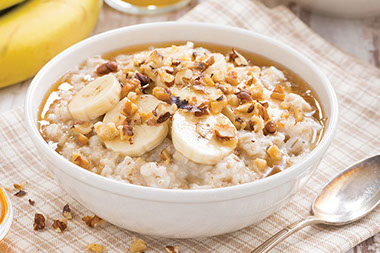
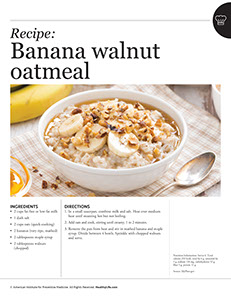
    Bowl of banana walnut oatmeal.

    Ingredients

    *  2 cups fat-free or low-fat milk

    *  1 dash salt

    *  2 cups oats (quick-cooking)

    *  2 bananas (very ripe, mashed)

    *  2 tablespoons maple syrup

    *  2 tablespoons walnuts (chopped)

    Directions

    1.  In a small saucepan, combine milk and salt. Heat over medium heat until steaming hot but not boiling.

    2.  Add oats and cook, stirring until creamy, 1 to 2 minutes.

    3.  Remove the pan from heat and stir in mashed banana and maple syrup. Divide between 4 bowls. Sprinkle with chopped walnuts and serve.

    Nutrition Information: Serves 4: Total calories 292 kcals, total fat 6 g, saturated fat 1 g, sodium 118 mg, carbohydrates 52 g, fiber 5 g, protein 11 g.

    Source: MyPlate.gov

    © American Institute for Preventive Medicine

  • 7 Quick And Easy Breakfast Tips

    HEALTHY EATING

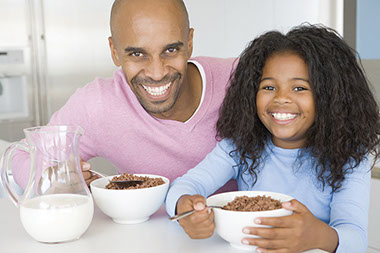
    Image of father and daughter having breakfast.

    A healthy breakfast is a must for kids. Skip it and your kids will be playing nutritional catch-up for the rest of the day, said Carole L. Adler, a dietitian at the Food and Drug Administration.

    When kids skip breakfast, they don’t get what they need to be at their best. “Growing bodies and developing brains need regular, healthy meals,” she said. According to the Academy of Nutrition and Dietetics, studies show that school children who eat breakfast perform better in the classroom.

    As with other meals, it’s a good idea for your kids (and you) to eat a healthy balance of fruits and vegetables, proteins, grains, and dairy-not just for breakfast but throughout the day.

    Here are Adler’s 7 quick and easy breakfast tips to ensure your children start their day off right.

    1.Breakfast doesn’t have to mean traditional breakfast foods.Anything goes. Even last night’s leftovers.

    2.Give kids foods they like.Put veggies on that left-over whole-grain pizza. Or make muffins with zucchini and carrots and spread with peanut butter with a glass of milk. Mix sugary cereal with a healthier nutrient-packed brand.

    3.Make healthy trade-offs.Nutritional balance is key. Not enough vegetables in the morning meal? Prepare extra carrot, celery, and broccoli sticks with a hummus dip as an afternoon snack.

    4.Take growth and activity levels into account.Adler says that having a breakfast that contains protein, fat, and carbohydrates helps children feel full and stay focused until lunch. Protein choices might include an egg, some nuts, a slice of deli meat or cheese, or a container of yogurt.

    5.Don’t take, “Mom, I don’t have time for breakfast” as an excuse.Make sure your kids grab a piece of fruit on the way out the door, and hand them a bag of nut-and-fruit trail mix or a whole-wheat tortilla spread with peanut butter or almond butter and a carton of milk.

    6.Prep the night before.Morning is a busy time for everyone-you included. So take ten minutes to think ahead and prep for breakfast the night before. Chop up fruit to layer in a yogurt parfait or add to cereal. Cut up vegetables for an omelet. Mix up muffin or whole-grain waffle batter, cover, and put in the fridge.

    7.Use the Nutrition Facts label and ingredient statement when you shop.

    Desk snacks.

    People who have snacks in or on the desk reported weighing 15.4 pounds more than those who don’t. Use an opaque candy dish with a lid and store candy in a drawer where it’s less visible and accessible, advises Cornell University researcher, Dr. Brian Wansink, author of Slim by Design. Or, keep dried fruit or unsalted nuts in your desk drawer.
    © American Institute for Preventive Medicine

  • Oatmeal: A Good Choice For A Power Breakfast

    HEALTHY EATING

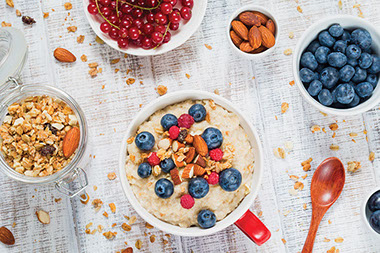
    Image of a bowl of oatmeal with berries and almonds.

    You probably already know that oatmeal is healthy, and perhaps you’ve been told it “sticks to your ribs.” But what’s the science behind oatmeal’s healthy history?

    Oatmeal can keep you full

    Avoid a mid-morning hunger attack, and you’ll be less tempted to pick up a donut. Oatmeal contains a special kind of fiber known as oat beta glucan. These beta glucans can increase levels of certain hormones that may help control appetite.

    Oatmeal helps digestion

    Oatmeal’s soluble fiber content is widely recommended to help keep bowels running smoothly. Regular intake of fiber-rich foods, like oatmeal, can help avoid bloating and uncomfortably hard stools.

    Oats can improve cholesterol

    High cholesterol is a major risk factor for heart disease. Studies have shown that eating oats regularly can lower “bad” LDL cholesterol due to its oat beta glucan fiber.

    Even if you eat a gluten-free diet, oats can be a healthy choice. They contain B vitamins and magnesium, which may be lacking in many people who don’t eat gluten. Look for oats labeled “gluten free” to avoid any gluten contamination that could happen during processing.

    Tips if you don’t like oatmeal

    Oatmeal can be eaten a variety of ways, so don’t rule it out if you haven’t enjoyed it in the past. Far beyond apple cinnamon and other sugary flavor packets often found in the supermarket, you can try it savory, add it to other foods, or even eat it for dinner!

    Consider these ideas:

    *  Add oats to turkey burgers or meatloaf to stretch your meat further and add health benefits

    *  Sprinkle oats over baked apples for a healthy “apple crisp”

    *  Use oats in casseroles or dinner rolls

    Sources: Oldways Whole Grains Council, Academy of Nutrition and Dietetics

    © American Institute for Preventive Medicine