Tag: breaks

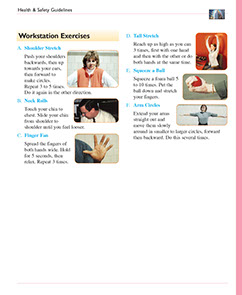
  • Workstation Exercises

    Work Life

    Shoulder Stretch

    Push your shoulders backwards, then up towards your ears, then forward to make circles. Repeat 3 to 5 times. Do it again in the other direction.

    Neck Rolls

    Touch your chin to chest. Slide your chin from shoulder to shoulder until you feel looser.

    Finger Fan

    Spread the fingers of both hands wide. Hold for 5 seconds, then relax. Repeat 3 times.

    Tall Stretch

    Reach up as high as you can 3 times, first with one hand and then with the other or do both hands at the same time.

    Squeeze a Ball

    Squeeze a foam ball 5 to 10 times. Put the ball down and stretch your fingers.

    Arm Circles

    Extend your arms straight out and move them slowly around in smaller to larger circles, forward then backward. Do this several times.
    Healthier at Home book by the American Institute for Preventive Medicine. www.HealthyLife.com. All rights reserved.

    © American Institute for Preventive Medicine
  • Avoid Drowsy Driving 2

    SleepWell® Program

    Week 2

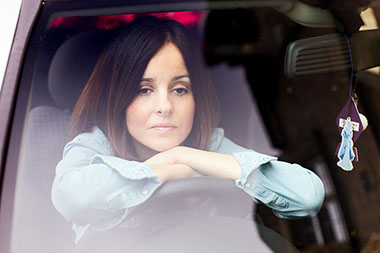
    Image of a drowsy driver.

    Driving while sleepy can severely impair your driving and cause an accident. Studies have linked sleepiness and fatigue to decreases in reaction time, decision making, and mind and body coordination. All of these factors are very important for safe driving.

    According to estimates from the American Automobile Association (AAA), one out of every five deadly traffic accidents is due to drowsy driving. More than one-quarter of drivers admitted to driving in the past month while having trouble keeping their eyes open. (Source: AAA, 2014.)

    Drive when you feel alert. On long drives, plan 15 minute breaks to get out and stretch your legs every two hours.

    Closing your eyes for even a second (called microsleep) can be enough to travel blindly far down the road (or off the road). If you drive while you are fatigued, you and anyone around you is at serious risk.

    Signs of fatigue:

    *  You can’t stop yawning

    *  You have trouble keeping your head up

    *  Your eyes close for a moment or go out of focus

    *  You have wandering, disconnected thoughts

    *  You have no memory of driving the last few miles

    *  You miss seeing a sign or your exit

    *  You slow down when you don’t mean to or break suddenly or too late

    *  You drift across the road or veer off onto rumble strips

    What to do:

    *  Pull to the side of the road or go to a rest stop

    *  Take a 15-20 minute nap. If you can, have 250-300 mg caffeine (amount in 2 cups of coffee) before the nap.

    *  Get a non-drowsy person to drive or find some way of getting home without driving yourself

    *  Drive to a motel or place where you can sleep

    © American Institute for Preventive Medicine
  • Breastfeeding And Work

    WORK LIFE

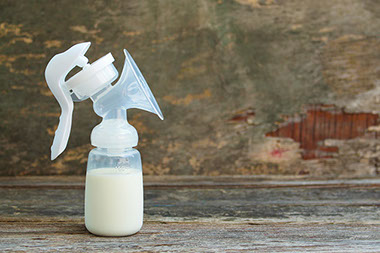
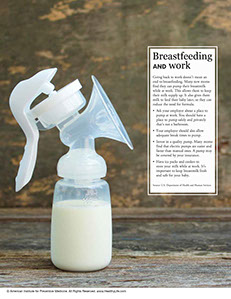
    Breast pump bottle filled with milk.

    Going back to work doesn’t mean an end to breastfeeding. Many new moms find they can pump their breastmilk while at work. This allows them to keep their milk supply up. It also gives them milk to feed their baby later, so they can reduce the need for formula.

    *  Ask your employer about a place to pump at work. You should have a place to pump safely and privately that’s not a bathroom.

    *  Your employer should also allow adequate break times to pump.

    *  Invest in a quality pump. Many moms find that electric pumps are easier and faster than manual ones. A pump may be covered by your insurance.

    *  Have ice packs and coolers to store your milk while at work. It’s important to keep breastmilk fresh and safe for your baby.

    Source: U.S. Department of Health and Human Services

    © American Institute for Preventive Medicine
  • Simple Steps To A Great Work Day

    WORK LIFE

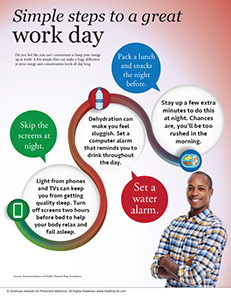
    Smiling man with arms crossed.

    Do you feel like you can’t concentrate or keep your energy up at work? A few simple fixes can make a huge difference in your energy and concentration levels all day long.

    Pack a lunch and snacks the night before.Stay up a few extra minutes to do this at night. Chances are, you’ll be too rushed in the morning.

    Set a water alarm.Dehydration can make you feel sluggish. Set a computer alarm that reminds you to drink throughout the day.

    Skip the screens at night.Light from phones and TVs can keep you from getting quality sleep. Turn off screens two hours before bed to help your body relax and fall asleep.

    Sources: National Institutes of Health, National Sleep Foundation

    © American Institute for Preventive Medicine
  • Stay Healthy At Work

    WORK LIFE

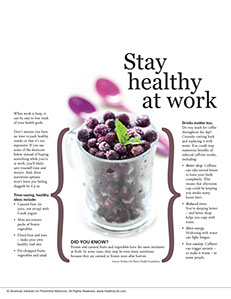
    Image of frozen berries in a glass.

    When work is busy, it can be easy to lose track of your health goals.

    Don’t assume you have no time to pack healthy snacks or that it’s too expensive. If you use some of the shortcuts below instead of buying something while you’re at work, you’ll likely save yourself time and money. And, these nutritious options won’t leave you feeling sluggish by 4 p.m.

    Time-saving, healthy ideas include:

    *  Canned fruit (in juice, not syrup) with Greek yogurt

    *  Mini microwave packs of frozen vegetables

    *  Dried fruit and nuts – make your own healthy trail mix

    *  Pre-chopped fruits, vegetables and salad

    Did you know?

    Frozen and canned fruits and vegetables have the same nutrients as fresh. In some cases, they may be even more nutritious because they are canned or frozen soon after harvest.

    Source: Produce for Better Health Foundation

    Drinks matter too.

    Do you reach for coffee throughout the day? Consider cutting back and replacing it with water. You could reap numerous benefits of reduced caffeine intake, including:

    *  Better sleep. Caffeine can take several hours to leave your body completely. This means that afternoon cup could be keeping you awake many hours later.

    *  Reduced stress. You’re sleeping better – and better sleep helps you cope with stress.

    *  More energy. Hydrating with water can fight fatigue.

    *  Less anxiety. Caffeine can trigger anxiety – or make it worse – in some people.

    © American Institute for Preventive Medicine

  • Knowing When Not To Weigh Yourself

    Weight Control

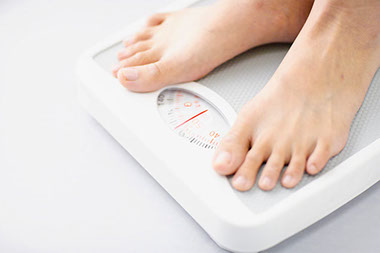
    Image on feet on a scale.

    If you weigh yourself every day, you’ll regret it. Of course, daily weigh-ins are tempting. When you’re working so hard to stay on a diet, you’re eager to see how you’re doing. But weighing yourself more than once a week may undermine your efforts. Here’s why:

    *  Praise each family member’s existing healthy habits. Note who takes the best care of their teeth, hair, or skin, for example.

    *  Set up health goals for each family member so that the heavy child isn’t the only one working on improving health.

    *  A moderate, acceptable weekly weight loss is around 1 pound. This comes out to an average of 2.3 ounces per day, which most scales do not register.

    *  You could easily get discouraged if no weight loss is recorded on a particular day. After a week, your weight loss is more likely to register.

    *  As much as 70 percent of your body weight consists of water. Your weight on the scale can go up and down daily due to fluctuations in water, so you can’t judge how well you did on your diet yesterday by what you weigh today. Consistent progress over many weeks is a true indication of fat being lost.

    *  Don’t become obsessed with the weight registered on your scale. The important issue is whether or not you’re learning new eating habits and exercising regularly. As you improve your eating and exercise habits, you will lose weight.

    Page from A Year of Health Hints book by the American Institute for Preventive Medicine. www.HealthyLife.com. All rights reserved.

    © American Institute for Preventive Medicine
  • A Safer Way To Shovel Snow

    Personal Safety

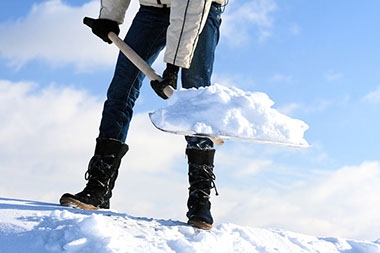
    Image of a person shoveling snow.

    Many people know that shoveling snow can put many at risk for back injury or a heart attack, but think, “It won’t happen to me” and shovel anyway.

    Shoveling snow strains the back, because you bend at the waist to lift a load. And shoveling can trigger a heart attack in three ways. The increase in activity requires your heart to work harder. Also, without realizing it, you may hold your breath as you lift, which can trigger a sudden rise in heart rate and blood pressure. And cold weather causes blood vessels to constrict, so the heart has to pump more blood.

    If you have a history of back problems or heart problems, don’t shovel snow, period. Have someone else do it. If you’re over age 40 and overweight, if you have high blood pressure, if you smoke, or if you lead a sedentary life, check with your doctor before lifting a shovel.

    The following hints can help make a tough job easier, even if you’re not at special risk for back or heart problems.

    *  Dress properly. Protect your head and hands from the cold, and don’t bundle up so much that you overheat or can’t move freely.

    *  To prevent back strain, keep your knees slightly bent and both feet planted firmly on the ground or pavement.

    *  Consider removing snow with a snowblower or plow instead of a shovel-it’s far less stressful and gets the job done quickly.

    A Year of Health Hints book by the American Institute for Preventive Medicine. www.HealthyLife.com. All rights reserved.

    © American Institute for Preventive Medicine

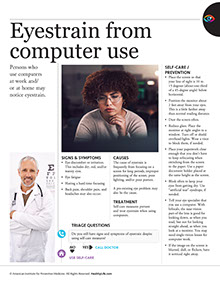
  • Eyestrain From Computer Use

    Eye Conditions

    Persons who use computer video display terminals (VDTs) at work and/or at home may notice eyestrain.

    Signs & Symptoms

    *  Eye discomfort or irritation. This includes dry, red, and/or watery eyes.

    *  Eye fatigue.

    *  Having a hard time focusing.

    *  Back pain, shoulder pain, and headaches may also occur.

    Causes

    The cause of eyestrain is most likely from conditions that surround the VDT, not the VDT itself. These include improper positioning of the VDT and supplies, poor lighting, and/or poor posture.

    A pre-existing eye problem may also be the cause.

    Treatment

    Self-care measures prevent and treat eyestrain when using VDTs.

    Questions to Ask

    Self-Care / Prevention

    *  Place the screen so that your line of sight is 10 to 15 degrees (about one-third of a 45-degree angle) below horizontal.

    *  Position the VDT screen about 2 feet away from your eyes. This is a little farther away than normal reading distance.

    *  Dust the screen often.

    *  Reduce glare. Place the VDT at right angles to a window. Turn off or shield overhead lights. Wear a visor to block them, if needed.

    *  Place your paperwork close enough that you don’t have to keep refocusing when switching from the screen to the paper. Use a paper document holder placed at the same height as the VDT screen.

    *  Blink often to keep your eyes from getting dry. Use “artificial tear” eyedrops, if needed.

    *  Tell your eye specialist that you use a VDT. Glasses and contacts worn for other activities may not be good for VDT work. With bifocals, the near-vision part of the lens is good for looking down, as when you read, but not for looking straight ahead, as when you look at a video display screen. You may need single-vision lenses for VDT work.

    *  If the image on the VDT screen is blurred, dull, or flickers, have it serviced right away.

    Resources

    Prevent Blindness America

    www.preventblindness.org

    Healthier at Home book by the American Institute for Preventive Medicine. www.HealthyLife.com. All rights reserved.

    © American Institute for Preventive Medicine
  • Avoid Drowsy Driving

    Healthylife® Weigh

    Part 3

    Alert driver.

    Driving while sleepy can severely impair your driving and cause an accident. Studies have linked sleepiness and fatigue to decreases in reaction time, decision-making, and mind and body coordination. All of these factors are very important for safe driving.

    According to estimates from the National Safety Council in 2017, one out of every five deadly traffic crashes is due to drowsy driving.

    Drive when you feel alert. On long drives, plan 15-minute breaks to get out and stretch your legs every 2 hours. Avoid using food to stay alert. Closing your eyes for even a second (called microsleep) can be enough to travel blindly down the road (or off the road). If you drive while you are fatigued, you and anyone around you is at serious risk.

    Signs of Fatigue

    *  You can’t stop yawning.

    *  You have trouble keeping your head up.

    *  Your eyes close for a moment or go out of focus.

    *  You have wandering, disconnected thoughts.

    *  You have no memory of driving the last few miles.

    *  You miss seeing a sign or your exit.

    *  You slow down when you don’t mean to or brake suddenly or too late.

    *  You drift across the road or veer off onto rumble strips.

    What to do:

    *  Pull to the side of the road or go to a rest stop.

    *  Take a 15-20-minute nap. If you can, have 250-300 mg of caffeine (about 2 cups of coffee) before the nap.

    *  Get a non-drowsy person to drive or find some way of getting to your destination without driving yourself.

    *  Drive to a motel or place where you can sleep.

    © American Institute for Preventive Medicine

  • Build Support At Work

    Healthylife® Weigh

    Part 4

    Employees talking over a coffee break.

    *  Find out about your company’s wellness program.

    – Participate in challenges, such as a step contest, offered through your wellness program. There may be rewards for participation or winning the challenge.

    – Join the wellness committee and participate in surveys that give you a chance to share your opinion. Let your company know what policies will help you be healthy. Your employer wants you to be healthy, as this helps their health care costs and helps you be productive at work.

    – Volunteer to be a wellness champion. Sharing your journey with others may help give your goals a bigger purpose.

    *  Organize walk times with coworkers at work. If you can, spend part of your lunch break going for a walk around the building or outside.

    *  If you are going out to eat with coworkers, suggest you go somewhere that offers healthy options.

    *  Celebrations at work should include healthy options and limit unhealthy options. Encourage the person who organizes these events to make healthier options available.

    *  Split meal prep with a coworker. Bring a healthy lunch or snack to share for the first half of the week. For the second half of the week, your coworker brings a healthy lunch or snack to share.

    © American Institute for Preventive Medicine