Tag: breastfeeding

  • Breastfeeding And Work

    WORK LIFE

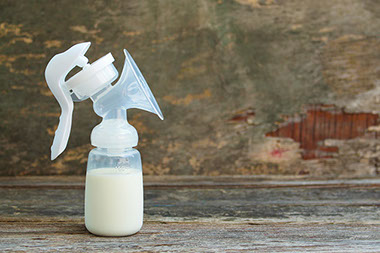
    Breast pump bottle filled with milk.

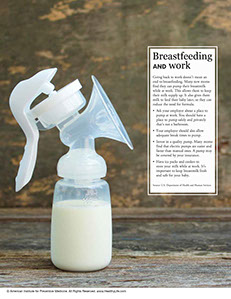
    Going back to work doesn’t mean an end to breastfeeding. Many new moms find they can pump their breastmilk while at work. This allows them to keep their milk supply up. It also gives them milk to feed their baby later, so they can reduce the need for formula.

    *  Ask your employer about a place to pump at work. You should have a place to pump safely and privately that’s not a bathroom.

    *  Your employer should also allow adequate break times to pump.

    *  Invest in a quality pump. Many moms find that electric pumps are easier and faster than manual ones. A pump may be covered by your insurance.

    *  Have ice packs and coolers to store your milk while at work. It’s important to keep breastmilk fresh and safe for your baby.

    Source: U.S. Department of Health and Human Services
    © American Institute for Preventive Medicine

  • Breast Care For Nursing Mothers

    Pregnancy & Prenatal Care

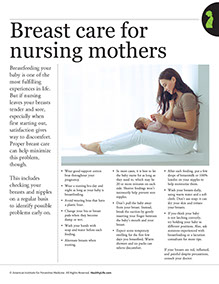
    Image of women with newborn baby.

    Breast-feeding your baby is one of the most fulfilling experiences in life.  But if nursing leaves your breasts tender and sore, satisfaction gives way to discomfort. Proper breast care can minimize this problem, though.

    *  Wear good support bras throughout your pregnancy.

    *  Wear a nursing bra day and night as long as your baby is breast-feeding.

    *  Avoid wearing bras that have a plastic liner.

    *  Change your bra or breast pads when they become damp or wet.

    *  Alternate breasts when nursing.

    *  Avoid nursing your baby more than 20 minutes at a time on each breast.

    *  Don’t pull the baby away from your breast. Instead, break the suction by gently inserting your finger between the baby’s mouth and your breast.

    *  Expect some temporary swelling for the first few days you breast-feed. Warm showers and ice packs can relieve discomfort.

    *  Wash your breasts daily, using warm water and a soft cloth. Don’t use soap; it can dry your skin and irritate your breasts.

    If your breasts are red, inflamed. and painful despite precautions, consult your doctor.

    A Year of Health Hints book by the American Institute for Preventive Medicine. www.HealthyLife.com. All rights reserved.

    © American Institute for Preventive Medicine