Tag: calcium

  • Bone Up On Calcium & Vitamin D

    Nutrition

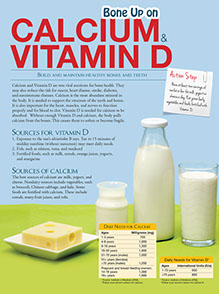
    Build and maintain healthy bones and teeth.

    Calcium and Vitamin D are two vital nutrients for bone health. They may also reduce the risk for cancer, heart disease, stroke, diabetes, and autoimmune diseases. Calcium is the most abundant mineral in the body. It is needed to support the structure of the teeth and bones. It is also important for the heart, muscles, and nerves to function properly and for blood to clot. Vitamin D is needed for calcium to be absorbed. Without enough Vitamin D and calcium, the body pulls calcium from the bones. This causes them to soften or become fragile.

    Sources for vitamin D:

    1.  Exposure to the sun’s ultraviolet B rays. Ten to 15 minutes of midday sunshine (without sunscreen) may meet daily needs.

    2.  Fish, such as salmon, tuna, and mackerel

    3.  Fortified foods, such as milk, cereals, orange juices, yogurts, and margarine

    Sources of calcium:

    The best sources of calcium are milk, yogurt, and cheese. Non dairy sources include vegetables, such as broccoli, Chinese cabbage, and kale. Some foods are fortified with calcium. These include cereals, many fruit juices, and tofu.

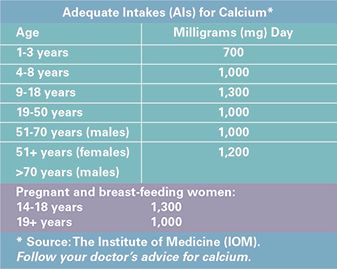
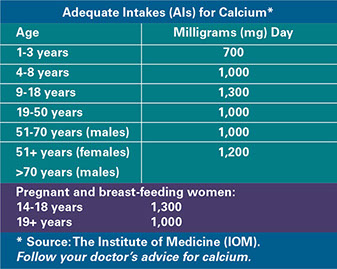
    Daily Needs for Calcium*

    Ages

    1-3 years

    4-8 years

    9-18 years

    19-50 years

    51-70 years (males)

    51+ years (females)

    >70 years (males)

    Pregnant and breast-feeding women:

    14-18 years

    19+ years

    Milligrams (mg)

    700

    1,000

    1,300

    1,000

    1,000

    1,200

    1,300

    1,000

    * Source: Institute of Medicine (IOM).

    * Follow your doctor’s advice for calcium.

    Daily Needs for Vitamin D*

    Ages

    1-70 years

    >70 years

    International Units (IUs)

    600

    800

    * Source: Institute of Medicine (IOM). The National Osteoporosis Foundation advises 400-800 IUs for adults under age 50 years; 800-1,000 IUs for adults age 50 years and older.

    * Follow your doctor’s advice for vitamin D.

    Action Step

    Have at least two servings of nonfat or low-fat milk, yogurt or cheese a day. Eat green leafy vegetables and foods fortified with Vitamin D.

    Page from Ways to Well-Being book by the American Institute for Preventive Medicine. www.HealthyLife.com. All rights reserved.

    © American Institute for Preventive Medicine

  • Get Your Recommended Daily Calcium

    Nutrition

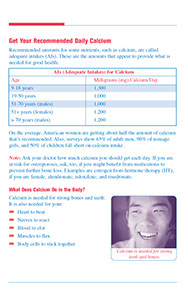
    Recommended amounts for some nutrients, such as calcium, are called adequate intakes (AIs). These are the amounts that appear to provide what is needed for good health.

    Note: Ask your doctor how much calcium you should get each day. If you are at risk for osteoporosis, ask, too, if you might benefit from medications to prevent further bone loss. Examples are estrogen from hormone therapy (HT), if you are female; alendronate; raloxifene; and risedronate.

    What Does Calcium Do in the Body?

    Calcium is needed for strong bones and teeth. It is also needed for your:

    *  Heart to beat

    *  Nerves to react

    *  Blood to clot

    *  Muscles to flex

    *  Body cells to stick together

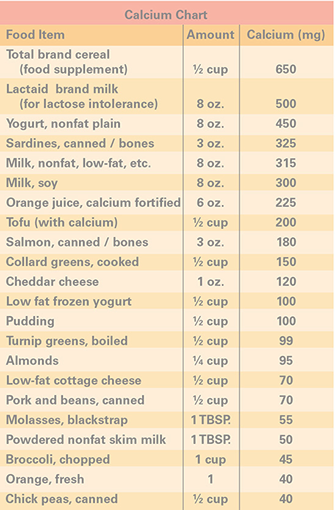
    Milk, yogurt, cheese, soy milk, tofu, collard greens, and broccoli are good sources of calcium. (See “Calcium Content in Foods” chart.) If you don’t drink milk because you can’t digest the sugar in milk (lactose intolerance), do the following:

    *  Have milk products that already have lactase added to them.

    *  Drink milk fermented by certain bacteria (acidophilus milk), if tolerated.

    *  Take commercial preparations of lactase (which can be added as drops or taken as pills) when you have lactose-containing foods.

    *  Have soy milk and other food products with added calcium.

    Some persons who can’t digest milk sugar (lactose) can tolerate aged cheeses, yogurt with active cultures, and possibly small amounts of dairy foods if eaten with meals and snacks.

    If you can’t tolerate milk products at all, eat nondairy food sources of calcium (soymilk, beans, tofu, broccoli, kale, collard greens, spinach, fish with small bones). Have food items that are fortified with calcium, such as some orange and apple juices and calcium fortified cereal products. (See “Calcium Content in Foods” chart and check food labels.)

    Labels do not list calcium in milligrams (mg), but as a percentage of the daily value (DV). The DV for calcium is based on 1,000 mg of calcium per day. It’s easy to figure out calcium in mg. Just add zero to the % DV. Examples are given in the chart below.

    Calcium Content in Foods

    Calcium Supplements

    (Check with your doctor or dietitian about taking calcium supplements.)

    Calcium supplements should not be used in persons with a history of calcium-containing kidney stones. Supplemental calcium may also worsen chronic constipation and interfere with iron absorption.

    If you do take calcium supplements:

    *  Drink at least 6 to 8 glasses of water per day.

    *  Avoid taking more than 500 to 600 mg at one time. Take calcium with meals.

    *  Avoid bone meal or dolomite. These could contain lead or other toxic metals.

    *  Avoid taking calcium supplements with iron supplements and laxatives. These can reduce calcium absorption.

    There are many forms of calcium supplements. Look for the amount in milligrams of elemental calcium that a source provides. Choose calcium supplements that have calcium carbonate, calcium citrate, and/or calcium gluconate.

    {Note: Beware of marketing claims for “coral calcium” products which promote them to prevent or treat cancer, heart disease, lupus, and multiple sclerosis. The Federal Trade Commission (FTC) has charged some marketers of this with making false and unsubstantiated claims about the product’s health benefits.}

    Should I Take a Vitamin D Supplement If I Take a Calcium Supplement?

    Vitamin D helps the body absorb and use calcium. You can get vitamin D, daily, from vitamin D fortified dairy products. Other food sources are salt-water fish, egg yolks, and liver. You can also get vitamin D from direct exposure to sunlight on your skin. In general, about 15 minutes of direct sunlight per day gives you the amount of vitamin D needed for a day. Persons who are elderly or homebound often do not get adequate sun exposure to get enough vitamin D. Also, during winter, sunlight in the Northern U.S. is not intense enough to let the body build up enough vitamin D. Check with your doctor or health care provider about the need for a vitamin D supplement. Some calcium supplements also contain vitamin D.

    On the average, American women are getting about half the amount of calcium that’s recommended. Also, surveys show 65% of adult men, 90% of teenage girls, and 50% of children fall short on calcium intake.

    How Do I Get My Adequate Intake for Calcium?

    You can get your Adequate Intake (AI) for calcium by having good food sources of calcium and by taking calcium supplements, if necessary.

    Can I Get Too Much Calcium?

    Whether or not you tolerate milk products, if you use calcium supplements, do so wisely. You can easily consume too much calcium with the use of calcium-fortified foods, calcium supplements, and antacids. Long term excessive intakes of calcium might decrease the absorption of other minerals and promote kidney stone formation. Your goal should be to get adequate, rather than, excessive amounts of calcium. Aim to get your Adequate Intake (AI) amount or the amount recommended by your doctor.

    Page from HealthyLife Weigh book by the American Institute for Preventive Medicine. www.HealthyLife.com. All rights reserved.

    © American Institute for Preventive Medicine

  • Men Need Calcium, Too

    Men’s Health

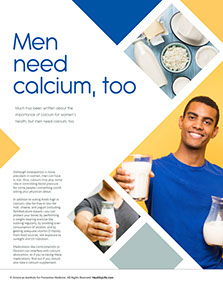
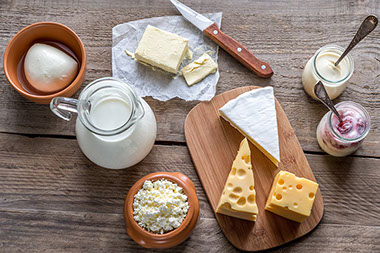
    Image of calcium rich dairy products.

    Much has been written about the importance of calcium for women’s health, but men need calcium, too. Although osteoporosis is more prevalent in women, it can strike men. And studies have suggested that calcium may play some role in controlling blood pressure for some people-something worth asking your physician about.

    In addition to eating foods high in calcium-like fat-free or low-fat milk, cheese, and yogurt-you can protect your bones by performing a weight- bearing exercise like walking regularly, by avoiding over-consumption of alcohol, and by getting adequate vitamin D (from either fortified milk or sunshine).

    Medications like corticosteroids or Dilantin can interfere with calcium absorption, so if you’re taking these medications, find out if you should also take a calcium supplement.

    A Year of Health Hints book by the American Institute for Preventive Medicine. www.HealthyLife.com. All rights reserved.

    © American Institute for Preventive Medicine

  • Osteoporosis

    Bone & Muscle Problems

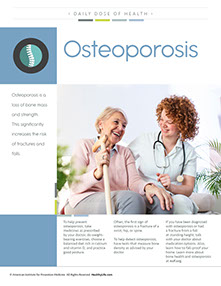
    Nurse with older women holding a cane.

    Osteoporosis is a loss of bone mass and strength. This significantly increases the risk of fractures and falls.

    To help prevent osteoporosis, take medicines as prescribed by your doctor, do weight-bearing exercises, choose a balanced diet rich in calcium and vitamin D, and practice good posture.

    Often, the first sign of osteoporosis is a fracture of a wrist, hip, or spine.

    To help detect osteoporosis, have tests that measure bone density as advised by your doctor.

    If you have been diagnosed with osteoporosis or had a fracture from a fall at standing height, talk with your doctor about medication options. Also, learn how to fall-proof your home. Learn more about bone health and osteoporosis atnof.org.

    Health at Home Lifetime book by the American Institute for Preventive Medicine. www.HealthyLife.com. All rights reserved.

    © American Institute for Preventive Medicine

  • Osteoporosis 2

    Women’s Health

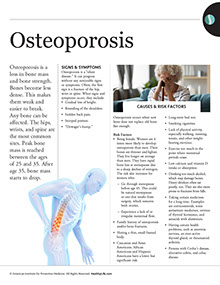
    Osteoporosis is a loss in bone mass and bone strength. Bones become less dense. This makes them weak and easier to break. Any bone can be affected. The hips, wrists, and spine are the most common sites. Peak bone mass is reached between the ages of 25 and 35. After age 35, bone mass starts to drop.

    Signs & Symptoms

    Osteoporosis is a “silent disease.” It can progress without any noticeable signs or symptoms. Often, the first sign is a fracture of the hip, wrist, or spine. When signs and symptoms occur, they include:

    *  Gradual loss of height.

    *  Rounding of the shoulders.

    *  Sudden back pain.

    *  Stooped posture.

    *  “Dowager’s hump.”

    Causes

    Osteoporosis occurs when new bone does not replace old bone fast enough.

    Risk Factors Include:

    *  Being female. Women are 4 times more likely to develop osteoporosis than men. Why?

    – Their bones are thinner and lighter.

    – They live longer on average than men.

    – They have rapid bone loss at menopause due to a sharp decline of estrogen. The risk also increases for women who: Go through menopause before age 45. This could be natural menopause or one that results from surgery which removes both ovaries. Experience a lack of or irregular menstrual flow.

    *  Having a thin, small framed body.

    *  Being Caucasian or Asian. African Americans and Hispanic Americans are at a risk, too.

    *  Lack of physical activity, especially walking, running, tennis, and other weight-bearing exercises.

    *  Long-term bed rest.

    *  Exercising too much to the point where menstrual periods cease.

    *  Low calcium and vitamin D intake or absorption.

    *  Family history of osteoporosis and/or bone fractures.

    *  Smoking cigarettes.

    *  Drinking too much alcohol, which may damage bones. Heavy drinkers often eat poorly, too. They are also more prone to fractures from falls.

    *  Taking certain medicines for a long time. Examples are: Corticosteroids; some antiseizure medicines; overuse of thyroid hormones; and antacids with aluminum.

    *  Having certain health problems, such as anorexia nervosa, an over-active thyroid gland, or rheumatoid arthritis.

    *  Persons with Crohn’s disease, ulcerative colitis, and celiac disease are at risk, too.

    Treatment

    There is no cure for osteoporosis. The focus of treatment is to prevent the disease, to prevent further bone loss, and build new bone. Special X-rays, such as one known as DEXA, can measure bone density in various sites of the body. These tests can help doctors decide if and what kind of treatment is needed. Treatment includes:

    *  Medications. There are different kinds. Your doctor will prescribe one(s) best suited for your needs.

    *  A balanced diet rich in calcium and vitamin D and taking supplements of these, as needed.

    *  Exercises, as advised by your doctor.

    *  Proper posture.

    *  Fall prevention measures:

    – Wear flat, sturdy, non-skid shoes.

    – Get regular vision exams. Wear corrective glasses, etc., as needed.

    – Ask your doctor if any medications you take could increase the risk of falls. Ask how to deal with this. Let your doctor know if your medicine(s) affect your vision, balance, etc.

    – Use grab bars and safety mats or nonskid tape in your tub and shower.

    – Use handrails on stairways.

    – Pick things up by bending your knees and keeping your back straight. Don’t stoop.

    – Use a cane or walker if necessary.

    – If you use throw rugs, use ones with nonskid backs.

    – See that halls, stairways, and entrances are well lit. Use night lights in hallways, bathrooms, etc.

    – Stay home if it is icy or slippery outside.

    Questions to Ask

    Self-Care / Prevention

    To Treat Osteoporosis

    *  Take medications, as prescribed.

    *  Do the daily exercises approved by your doctor.

    *  Practice good posture.

    To Treat, Slow, and Prevent Osteoporosis

    *  Eat a balanced diet.

    *  Get your daily calcium need.

    Choose High Calcium Foods Daily

    *  Skim and low-fat milks, yogurts, and cheeses. {Note: If you are lactose intolerant, you may need to use dairy products that are treated with the enzyme lactose or you can add this enzyme using over-the-counter drops or tablets.}

    *  Soy milks and yogurts with added calcium.

    *  Soft-boned fish and shellfish, such as cod, salmon, sardines, and shrimp.

    *  Vegetables, especially broccoli, kale, and collards.

    *  Beans and bean sprouts, as well as tofu (soy bean curd), if processed with calcium.

    *  Calcium-fortified foods, such as some orange juices, apple juices, and ready-to-eat cereals.

    *  Take calcium supplements, as advised by your doctor.

    Get Your Recommended Daily Need for Vitamin D.

    *  Choose nonfat and low-fat dairy products that are fortified with vitamin D, saltwater fish, liver, and egg yolks. You also get vitamin D from direct exposure of sunlight on your skin. Fifteen minutes of midday sun exposure (without sunscreen) may meet the daily need.

    *  Take vitamin D supplements, as advised by your doctor. The best source of vitamin D for bone health is vitamin D3.

    *  Do regular, weight-bearing exercises at least 3 or 4 times a week. Examples are walking and low-impact or non-impact aerobics. (If you have osteoporosis, follow the exercise program outlined by your doctor.)

    *  Do not smoke.

    *  Limit alcohol.

    *  Use fall prevention measures.

    Resources

    National Osteoporosis Foundation

    www.nof.org

    Women's Self-Care book by the American Institute for Preventive Medicine. www.HealthyLife.com. All rights reserved.

    © American Institute for Preventive Medicine

  • Osteoporosis 3

    Bone & Muscle Problems

    Osteoporosis is a loss in bone mass and bone strength. Bones become less dense. This makes them weak and easier to break. Any bone can be affected. The hips, wrists, and spine are the most common sites.

    Signs & Symptoms

    Osteoporosis is a “silent disease.” It can occur without pain. You don’t see or feel changes taking place inside your bones. Often, the first sign is a fracture of the hip, wrist, or spine. When signs and symptoms occur, they include:

    *  Gradual loss of height

    *  Rounding of the shoulders

    *  Sudden back pain

    *  Stooped posture

    *  Dowager’s hump

    Causes & Risk Factors

    Bone is living tissue. It breaks down and is replaced with new bone. Osteoporosis occurs when new bone does not replace old bone fast enough.

    Risk Factors

    *  Being female. Women are more likely to develop osteoporosis than men.

    *  Low estrogen level. This occurs with menopause.

    *  Low testosterone level in men

    *  Aging

    *  A family history of osteoporosis or broken bones as adults

    *  Having a thin, small-framed body

    *  Lack of exercise, especially weight-bearing ones, such as walking and dancing

    *  Long-term bed rest

    *  Low calcium and vitamin D intake or absorption

    *  Smoking

    *  Drinking too much alcohol

    *  Long term use of some medicines, such as oral corticosteroids and antacids with aluminum

    *  Having certain health problems, such as anorexia nervosa, an over-active thyroid gland, and rheumatoid arthritis. Persons with Crohn’s disease, ulcerative colitis, and celiac disease are at an increased risk, too.

    Diagnosis

    There is no cure for osteoporosis. The focus is to:

    *  Prevent the disease

    *  Prevent further bone loss

    *  Build new bone

    *  All women 65 years of age and older should have a bone mineral density (BMD) screening test. Women who have had a fracture or are at a high risk for osteoporosis should get this test sooner than age 65, as advised by their doctors.

    *  Older men should have a BMD test if they have key risk factors for BMD-related fractures:

    – A past fracture, possibly due to osteoporosis

    – Low body weight. Physical inactivity.

    – Prolonged use of corticosteroid medications.

    {Note: Follow your doctor’s advice for when and how often to get screening tests for osteoporosis.}

    *  The most common test used to measure how dense bones are is a special X-ray known as a DXA or DEXA scan. You lie on a table and a technician moves a scanner above your spine, hip, or wrist. This safe and painless test takes about 10-20 minutes. Test results can identify persons who are at the highest risk for fractures.

    Medical Care

    Talk about your bone health with your doctor. Discuss:

    *  Your personal and family medical history

    *  Medications you take and have taken

    *  Falls or broken bones you have had as an adult

    *  Self-Care / Prevention measures you do already and ones you need help with

    Medical treatment may include:

    *  Treatment for problems that increase the risk for low bone mass and osteoporosis

    *  Evaluating your risk of falls. Tests for this include ones that check your balance, vision, blood pressure, muscle strength, and heart rhythm.

    *  An exercise program for your needs. Physical therapy may be prescribed.

    *  High doses of vitamin D if your blood level is very low. Your doctor needs to prescribe this.

    *  Medications:

    – Some slow down the breakdown of old bone. Two categories of these are bisphosphonates (biss-FOSS-fuh-nates) and anti-resorptive agents. Some of these medications are pills. Others are given in shots or through an IV.

    – Another one (teriparatide) helps the body make new bone faster than the old bone is broken down.

    Talk to your doctor about the benefits and risks of medications. Find out what side effects you should let him or her know about.

    Reasons to Contact Doctor/Provider

    *  You have any “Signs & Symptoms” of Osteoporosis.

    *  You want to find out about medicines and other ways to prevent and/or treat osteoporosis.

    *  You are a female age 65 or older and have not had a bone mineral density (BMD) test.

    *  You are a female age 50 and older; you have had a fracture or are at high risk for osteoporosis; and  you have not had a BMD test.

    *  You are an elderly male; you have risk factors for osteoporosis; and you need advice on getting a BMD test.

    *  After a fall, bump or strain, you have wrist, hip, or back pain.

    *  After a fall, you are not able to get up. Call or have someone call 9-1-1!

    Self-Care / Prevention

    Get Your Recommended Adequate Intake (AI) for Calcium Every Day

    *  Choose high-calcium foods daily. Examples are milk, yogurt, salmon, and green leafy vegetables.

    *  Take calcium supplements, as advised by your doctor. It is best to limit calcium to 500 milligrams at a time. Ask your doctor about taking Tums® to get calcium.

    *  Eat a balanced diet. Have at least 5 fruits and vegetables every day. These have many vitamins, minerals, and anti-oxidants that can benefit bone health, as well as overall health.

    *  Don’t smoke. If you smoke, quit! Get help from your doctor,www.smokefree.gov, and/or 1.800.QUIT.NOW (784.8669).

    *  Limit alcohol. Too much alcohol interferes with  the body’s need for calcium and vitamin D. It also increases the risk for falls.

    *  Take medications, as prescribed.

    Sources of vitamin D:

    *  Sun exposure (without sunscreen) on your skin. Fifteen minutes of midday sunshine may meet the daily need. {Note: You may not get vitamin D benefits from the sun: During winter months; if you have dark skin; and/or you are age 60 years and older.}

    *  Foods, such as fortified milks and cereals, egg yolks, saltwater fish, and liver.

    *  Vitamin D supplements, as advised by your doctor. The best source of vitamin D for bone health is vitamin D3.

    Use Fall Prevention Measures

    (Falling is what leads to broken bones for many people with osteoporosis.)

    *  Ask your doctor if any medications you take could cause you to fall and how to deal with this. Find out how to deal with vision and balance problems, too.

    *  Put salt or kitty litter on icy sidewalks. Or stay home during bad weather!

    *  Use grab bars and safety mats, etc. in your tub and shower.

    *  Use handrails on both sides of stairways.

    *  When you reach for things on the floor or pick things up, bend at your knees, not at your waist.

    *  Wear flat, sturdy, nonskid shoes.

    *  If you use throw rugs, use ones with nonskid backs. Or tack them down to the floor.

    *  Use a cane or walker, if necessary.

    *  Keep halls, stairways, and entrances well lit. Use night lights in hallways, bathrooms, etc.

    *  Keep a flashlight next to your bed.

    *  Practice proper posture.

    In the house, carry a cordless or cell phone with you, if you can. Doing this keeps you from rushing to answer the phone when it rings. You will also be able to call for help if you do fall.

    Be Physically Active

    Physical activity throughout life is important for bone health. Putting stress on your bones tells your body that your bones need to be made stronger.

    *  Do regular, weight-bearing exercise. Do this at least 3 or 4 times a week. Examples are walking, dancing, and step aerobics.*

    *  Do resistance exercises to strengthen muscles and build bone.* Examples are using weights and resistance bands.

    *  Do exercises that increase flexibility.* Examples are tai chi, yoga and stretching exercises.

    *  (Note: A person with osteoporosis should follow the exercise program outlined by his or her doctor.)

    Low bone mass and osteoporosis pose a major health threat.

    *  One out of every 2 women and one in 4 men over age 50 will have an osteoporosis-related fracture in his or her lifetime.

    *  After a fracture, persons are more likely to have chronic pain, a fear of falling, and depression. They lose independence and have a lower quality of life.

    *  One year after a hip fracture, 1 in 4 people dies, 1 can’t walk, and 2 of the 4 can walk but are less mobile than before the fracture.

    *  In the U.S., costs for osteoporosis and related fractures have been estimated to be about $14 billion a year.

    Resources

    National Osteoporosis Foundation

    800.231.4222

    www.nof.org

    NIH Osteoporosis and Related Bone Disease National Resource Center

    800.624.BONE (624.2663)

    www.bone.nih.gov
    Osteoporosis brochure by the American Institute for Preventive Medicine. www.HealthyLife.com. All rights reserved.

    © American Institute for Preventive Medicine

  • Dairy

    Healthylife® Weigh

    Part 2

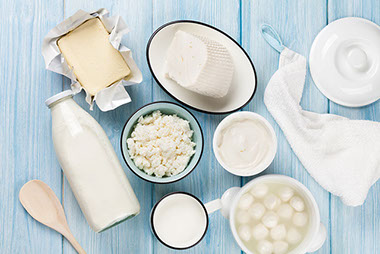
    Dairy products.

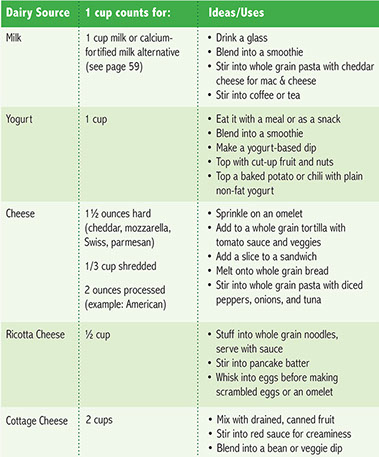
    The dairy group includes milk and foods made from milk. Dairy provides calcium, vitamin D (milk), healthy fats, and protein. Milk alternatives (such as those made from soy) are included if they are fortified with calcium.

    Chart showing dairy sources and ideas.

    Dairy Alternatives

    Many people avoid lactose-containing milk due to an intolerance or preference. Lactose is the sugar in milk that causes digestive problems if you are lactose intolerant. You can obtain many of the nutrients found in milk by eating or drinking lactose-free dairy or fortified dairy alternatives.

    Tips for Reducing Problems with Lactose

    You may be able to consume dairy by having it a different way.

    *  Choose smaller servings of dairy at each meal or snack.

    *  Consume dairy with other foods to slow the digestive process.

    *  Experiment with different dairy products. You may have problems with milk, but are okay with cultured milk products like yogurt.

    *  Take lactase enzyme tablets or drops to help you digest the lactose.

    Dairy alternatives include soy milk, almond milk, rice milk, cashew milk, oat milk, and coconut milk. These milks and products made with them (like yogurt) count toward your daily needs if they are fortified with calcium.

    Calcium

    Calcium is needed for strong bones and teeth. It is also needed for your:

    *  Heart to beat

    *  Nerves to react

    *  Blood to clot

    *  Muscles to flex

    *  Body cells to stick together

    If you cannot tolerate dairy, you can also obtain calcium from these foods:

    *  Calcium-fortified juices, cereals, and breads

    *  Tofu, tempeh, and other fortified soy products

    *  Small bones in canned fish (sardines, salmon with bones)

    *  Leafy greens (collard and turnip greens, kale, bok choy)

    Calcium-fortified foods and beverages may not provide the other nutrients found in dairy products. Try to fulfill your dairy group needs from dairy most of the time.

    © American Institute for Preventive Medicine

  • Dairy 2

    Healthylife® Weigh

    Menus & Recipes

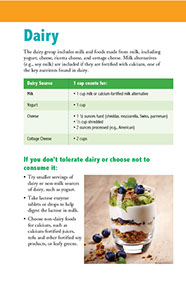
    Dairy products.

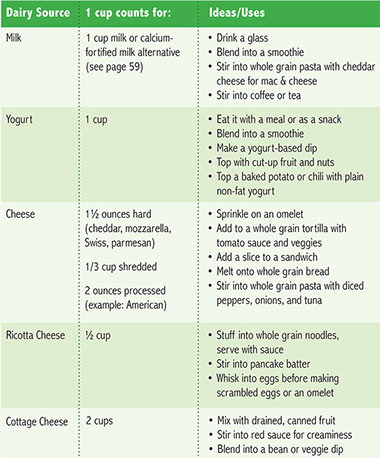
    The dairy group includes milk and foods made from milk, including yogurt, cheese, ricotta cheese, and cottage cheese. Milk alternatives  (e.g., soy milk) are included if they are fortified with calcium, one of the key nutrients found in dairy.

    Chart showing dairy sources and ideas.

    If you don’t tolerate dairy or choose not to consume it:

    *  Try smaller servings of dairy or non-milk sources of dairy, such as yogurt.

    * Take lactose enzyme tablets or drops to help digest the lactose in milk.

    * Choose non-dairy foods for calcium, such as calcium-fortified juices, tofu and other fortified soy products, or leafy greens.

    © American Institute for Preventive Medicine

  • Kidney Stones Hurt

    MEDICAL NEWS

    Image of male doctor.

    Although they can be painful, kidney stones rarely cause permanent damage, and you may be able to prevent them, according to the National Institutes of Health. Back or side pain that won’t go away is the primary symptom of a kidney stone. You may also have pinkish or foul-smelling urine, a fever, or painful urination. Caucasians are more prone to kidney stones than African Americans, and men are more prone than women. Age is also a factor. The chance of getting a kidney stone rises as men enter their 40s and continues to rise into their 70s. For women, the risk peaks in their 50s.

    Each day, about 50 gallons of blood flows through your kidneys. The kidneys remove waste products including various minerals and other substances from the blood and transfer them into urine so your body can get rid of these waste products. In people who get stones, certain minerals in the urine combine with other waste products and start to form a stone.

    Kidney stones aren’t all the same. The most common type is made of the mineral calcium, combined with either oxalate or phosphate. Less common types of stones are made of uric acid or other chemicals, all of which are naturally found in the body. No one knows why these substances form kidney stones in some people but not in others, since we all have them in our urine.

    Most kidney stones eventually pass out of the body during urination. But some can grow large enough to begin blocking the flow of urine. That causes intense pain and may also put you at risk for infection. Most kidney stones that don’t pass on their own are treated in an outpatient setting. The most common procedure is called lithotripsy. Greek for “stone crushing,” this technique uses shock waves to reduce kidney stones into small fragments, which then easily flow away in urine.

    If you’ve had more than one kidney stone, you’re at higher risk for forming another. But there are ways to help prevent most types of kidney stones. First, your doctor needs to know what type of stone it is. If you pass a stone, try to catch it in a strainer. A laboratory analysis can help your doctor plan a strategy to prevent more stones. Other tests, which may include urine and blood tests, can help your doctor figure out why you had a kidney stone.

    Drinking more water may help prevent kidney stones. Depending on the type of stone you’re at risk for, your doctor may also advise you to avoid certain foods or drinks. For example, people prone to forming calcium oxalate stones should avoid spinach, peanuts, and chocolate. People prone to forming uric acid stones should cut back on meat. Doctors can also prescribe certain medications to help prevent these types of stones.

    Stone watch

    Call a doctor if you have any of the following signs of a kidney stone:

    *  Extreme pain in your back or side that won’t go away

    *  Blood in your urine (it will look pink)

    *  Fever and chills

    *  Vomiting

    *  Urine that smells bad or looks cloudy

    *  A burning feeling when you urinate

    © American Institute for Preventive Medicine

  • Non-Dairy Calcium-Rich Foods

    HEALTHY EATING

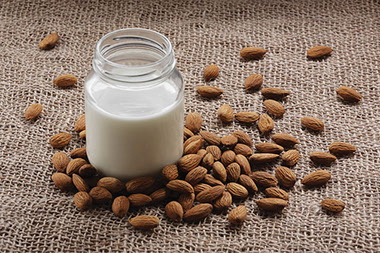
    Image of almond milk.

    Even if you can’t eat dairy, there are plenty of foods that can help you meet your recommended daily calcium intake.

    *  Calcium-fortified soy and almond milk

    *  Tofu

    *  Calcium-fortified orange juice

    *  Sardines

    *  Edamame

    *  Kale, collard greens, broccoli

    *  Figs

    *  White beans

    *  Okra

    © American Institute for Preventive Medicine