
Tag: care

  • A Burning Issue: How To Handle Household Burns

    SELF-CARE CORNER

    Image of a mother helping daughter with a burn on the arm.

    Accidental burns can happen just about anywhere in your home, and they’re not always caused by fire. Hot objects or liquids, friction, the sun, electricity, or certain chemicals can also cause burns.

    Each year, about a half-million people nationwide seek medical attention for burns. Household burns lead to nearly 7 of 10 admissions to burn centers. The good news is that the number of deaths from severe burns has dropped by more than half over the past 4 decades, in large part because of treatments developed through NIH-funded research.

    Burns result in skin or tissue damage. The severity of a burn depends on the area it covers and how deep the damage goes. First-degree burns affect only the thin top layer of skin. Second-degree burns include the thick lower layer of skin. A third-degree burn is the most serious; it penetrates the entire thickness of the skin, permanently destroying it and the tissue that’s underneath.

    You can care for most minor burns at home. If the burn is red and painful with mild swelling or little blistering, then it’s a first-degree or minor second-degree burn.

    See a doctor if the burn is dark red and looks glossy with a lot of blistering. These are signs of a deep second-degree burn. Get immediate treatment if the burned skin is dry and leathery, perhaps with white, brown, or black patches. These are signs of a third-degree burn.

    Burns can become infected with bacteria or other germs if protective layers of skin are lost. Burns can also lead to painful inflammation, as your immune system shifts into gear.

    First aid for burns

    For minor burns:

    *  Immerse in fresh, cool water or apply cool compresses for 10 to 15 minutes.

    *  Dry the area with a clean cloth. Cover with sterile gauze or a non-adhesive bandage.

    *  Don’t apply ointments or butter; these may cause infection.

    *  Don’t break blisters.

    *  Over-the-counter pain medications may help reduce inflammation and pain.

    Call emergency services (911) if:

    *  Burns cover a large area of the body

    *  Burns affect the entire thickness of skin

    *  The victim is an infant or elderly

    *  The burn was caused by electricity, which can lead to “invisible” burns

    © American Institute for Preventive Medicine

  • Cautions About Sinus Rinsing

    SELF-CARE CORNER

    Image of blue neti pot used to rinse nasal passages.

    Little teapots with long spouts have become a fixture in many homes for reasons that have nothing to do with tea.

    Called neti pots, they are used to rinse the nasal passages with a saline (salt-based) solution and have become a popular treatment for congested sinuses, colds and allergies, and for moistening nasal passages exposed to dry indoor air.

    The FDA has concerns about the risk of infection tied to the improper use of neti pots and other nasal rinsing devices. The agency is promoting safe practices for using all nasal rinsing devices, which include bulb syringes, squeeze bottles, and battery-operated pulsed water devices.

    These devices are generally safe and useful products, but they must be used and cleaned properly.

    Most important is the source of water that is used with nasal rinsing devices. Tap water that is not filtered, treated, or processed in specific ways is not safe for use as a nasal rinse.

    Some tap water contains low levels of organisms, such as bacteria and protozoa. These include amoebas, which may be safe to swallow because stomach acid kills them. But these “bugs” can stay alive in nasal passages and cause potentially serious infections, according to the CDC.

    The procedure for nasal rinsing may vary slightly by device, but generally involves these steps:

    *  Wash and dry hands. Check that the device is clean and completely dry. Wash the device with distilled, sterile, or boiled and cooled tap water. Then dry the inside with a paper towel or let it air dry between uses.

    *  Use the appropriate water to prepare the saline rinse, either with the prepared mixture supplied with the device, or one you make yourself with distilled or sterile water, which you can buy in stores. The label will state “distilled” or “sterile.” Boiled and cooled tap water-boiled for 3 to 5 minutes, then cooled until it is lukewarm may be used. Previously boiled water can be stored in a clean, closed container for use within 24 hours. Or use water passed through a filter with an absolute pore size of 1 micron or smaller, which traps potentially infectious organisms. CDC has information on selecting these filters, which you can buy online or from some hardware and discount stores.

    *  Lean over a sink, tilt your head sideways with your forehead and chin roughly level to avoid liquid flowing into your mouth.

    *  Breathe through your open mouth.  Insert the spout of the saline-filled container into your upper nostril so that the liquid drains through the lower nostril.

    *  Clear your nostrils, and then repeat the procedure, tilting your head sideways, on the other side. Some people like to do this procedure in the shower.

    Nasal rinsing can remove dirt, dust, pollen and other debris, as well as help to loosen thick mucus. It can also help relieve nasal symptoms of allergies, colds and flu.

    © American Institute for Preventive Medicine

  • Nail The Infection

    SELF-CARE CORNER

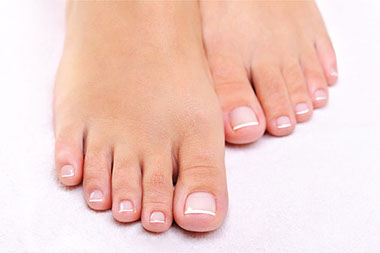
    Image of a women's feet.

    Despite the wealth of over-the-counter products available that claim to treat fungal nail infections (in the toenails and sometimes in the fingernails), the only way to cure an infection is to see a skin doctor (a dermatologist).

    Over-the-counter topical medications don’t penetrate the nail and therefore aren’t as effective as oral prescriptions. A dermatologist can prescribe the proper drugs to get rid of the fungi that are the problem in yellowing and misshapen nails.

    One of the best ways to deal with fungal nail infections is to prevent them from happening. The fungi love warm, damp environments around swimming pools and gym locker rooms-and inside your warm, sweaty socks.

    The best way to nail a nail infection is to keep your feet clean and dry and wear sandals in public shower areas.

    © American Institute for Preventive Medicine
  • Winter Itch

    SELF-CARE CORNER

    Image of a snowman.

    All winter flakes are not made of snow. Cold weather, with its low relative humidity, wreaks havoc on your skin, making it dry and flaky. Skin dries out if it’s deprived of moisture, and this dryness often aggravates itchiness, resulting in a condition commonly referred to as “winter itch.” During the winter the air is drier, and indoor heating further robs your skin of moisture. Fortunately, there are several ways that you can replenish the water content of your skin.

    Dr. Robyn Gmyrek, a dermatologist and director of the Skin and Laser Center at New York-Presbyterian Hospital/Columbia University Medical Center, suggests the following skin advice:

    *Moisturize daily.Petrolatum or cream-based moisturizers are far better than lotions for normal to dry skin. If you have sensitive skin, choose a moisturizer without fragrance or lanolin. After bathing, apply moisturizer directly to your wet skin to ensure that the moisturizer can help to trap surface moisture.

    *Limit the use of hot water and soap.If you have “winter itch,” take short lukewarm showers or baths with a non-irritating, non-detergent-based cleanser. Immediately afterward, apply a thick cream or a petroleum-jelly-type moisturizer. Gently pat skin dry.

    *Humidify.Dry air can pull the moisture from your skin. Room humidifiers can be very helpful. However, be sure to clean the unit and change the water according to the manufacturer’s instructions to reduce mold and fungi.

    *Protect yourself from the wind.Cover your face and use a petrolatum-based balm for your lips.

    *Protect your skin from the sun.Remember that winter sun can also be dangerous to the skin. Even in the winter months you should use a sunscreen with a sun-protection factor of 15 or greater if you will be outdoors for prolonged periods.

    *Avoid winter tanning.Tanning beds and artificial sunlamps are always damaging to your skin and increase your risk of skin cancer.

    *Take vitamin D supplements.During the summer months your natural vitamin D production increases due to daily sun exposure, but when winter rolls around that exposure decreases. Taking vitamin supplements can ensure that you are getting the recommended amounts of vitamin D all year.

    © American Institute for Preventive Medicine