Tag: caregivers

  • Caring For Family From Afar

    FAMILY LIFE

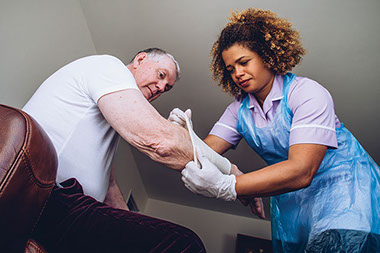
    Nurse helping patient at home.

    Anyone, anywhere can help care for a loved one. You don’t have to live in the same town, or even the same state. If you live far away from an older relative, you may wonder how you can help. Long-distance caregiving is possible.

    Before you start

    Does your loved one already have a primary caregiver? Talk to that person about how you can help. It’s usually best to coordinate your efforts with the person who sees your loved one most often.

    If they don’t yet have a caregiver but need one, you can help with that too. Talk to other family members and discuss the options. You may be able to help with finding and hiring a nurse or aide if family members can’t do it.

    Even if you can’t visit often, know that your visits are valuable. It’s time to not only catch up, but to take on some caregiving duties. Maybe you can give the primary caregiver a break while you are there. You can also find out what kinds of things you can do to help when you’re away.

    Options for helping out

    Some ideas for helping your long-distance loved one include:

    *  Helping them manage their finances or bill paying, which often can be done online

    *  Arranging for in-home care such as home health or nursing aides

    *  Ordering medical equipment that they need

    *  Making calls to the pharmacy for medication when they need it

    *  Researching skilled nursing or assisted living facilities

    *  Calling them often to check in and provide emotional support

    *  Contacting their insurance company if there are questions about coverage

    *  Keeping other family members informed about their health and needs

    *  Creating paperwork for an emergency that lists their health conditions and medicines they take

    Finding local resources

    There may be many resources close to home that can help your relative. You can get started online with these websites:

    *  Eldercare Locator:www.eldercare.acl.gov

    *  National Institute on Aging:www.nia.nih.gov

    *  Family Caregiver Alliance:www.caregiver.org

    Source: National Institute on Aging
    © American Institute for Preventive Medicine

  • Stress Relief For Caregivers

    Mature Health: Over Age 50

    Image of a caregiver helping a man in a wheelchair.

    If you’re the primary caregiver for a spouse, parent, or other relative, you face a tough challenge. Here’s what you can do to make the workload easier.

    *  Set up the sickroom on the main floor, so you don’t have to continually go up and down stairs.

    *  Purchase or rent equipment that will make caregiving easier. Examples include an electric hospital bed, an over-bed table, and a walker or wheelchair.

    *  Keep clean bed linens, towels, washcloths, hand lotion, drinking cups, and other supplies in or near the sickroom.

    *  Develop a daily schedule and stick to it.

    To reduce the stress of your ongoing responsibility:

    *  Delegate some tasks to family and friends.

    *  Investigate community services that provide transportation, deliver meals, and provide other kinds of help.

    *  Enlist the services of a home health care agency. The social service or discharge planning department of your hospital, Social Security Administration, local agency on aging, county public health department, or your physician, can refer you to an agency in your area.

    *  Plan to get out of the house to shop or socialize at least one day a week.

    *  Find out if the cost of hiring help to care for someone at home is covered by your medical insurance provider, Medicaid, or Medicare. The Veterans Administration may be able to provide financial assistance for veterans’ medical or nursing care.

    A Year of Health Hints book by the American Institute for Preventive Medicine. www.HealthyLife.com. All rights reserved.

    © American Institute for Preventive Medicine
  • Care For The Caregiver

    FAMILY LIFE

    Image of caregiver.

    Stress, anxiety, and burnout are never far from the doorsteps of millions of Americans who are caregivers as they often juggle the responsibilities of providing daily care for a loved one with dementia or another condition with the added demands of working, maintaining a household, or raising children.

    Too often caregivers don’t know how to ask for help, and friends and family members aren’t sure of how to lend a hand.

    “Caregivers will say ‘no’ when offered help because they worry it will reflect poorly on them or because they ‘don’t want to bother’ others. And some caregivers get so attached to their role that they just can’t let go,” said Nancy Alterman, a licensed clinical social worker with the New Jersey Institute for Successful Aging at the UMDNJ-School of Osteopathic Medicine.

    If you know a family member or close friend who is a caregiver, Alterman offers the following suggestions to help ease that person’s burden.

    *  Be sensitive about visiting by calling ahead to schedule a time that is convenient. But if the caregiver routinely declines offers of a visit, you may need to just show up with special foods or an easy activity like a puzzle.

    *  Avoid bringing a crowd, but visiting with at least one other person gives the caregiver a chance to go out with a friend, knowing that another trusted person is there for the patient’s needs.

    *  Instead of asking, “What can I do?” offer to grocery shop, go to the post office, do laundry or cook a meal that you can bring over.

    *  Be a good listener. Whether in person or by phone, sometimes just having a contact to the outside world is all the caregiver needs to help cope with that day’s burden.

    *  Be alert for signs of caregiver stress, such as denial, social withdrawal, sleeplessness, or lack of concentration.

    *  Offer to spend the night so the caregiver can get some rest. Lack of sleep can quickly lead to a deteriorating situation or a health crisis. Make sure the caregiver and the patient are discussing any sleep issues with their doctors.

    *  Research adult medical day services in your community and share that information with the caregiver. These medically supervised programs can actually help extend the time that the patient can remain at home.

    © American Institute for Preventive Medicine

  • Caregivers: Take Time For Yourself

    FAMILY LIFE

    Image of elderly female in wheechair with two caregivers.

    There’s no doubt: caregiving is a stressful job. If you help take care of an aging, ill, or disabled loved one, you are a caregiver. And although caregiving may take up a lot of your time, you need to make time for yourself too, says the Family Caregiving Alliance.

    If you’ve been trying to juggle caregiving with your other commitments, it’s time to take a moment and think about your own needs. If you keep doing things for others without taking time for yourself, your health and entire life could suffer. Caregivers of all ages can be prone to the following problems:

    *  Depression or anxiety

    *  High stress levels

    *  Poor quality sleep or not sleeping enough

    *  Unhealthy diet choices

    *  Lack of exercise

    *  Not getting needed health care for themselves

    *  Financial problems

    *  Feeling isolated and alone

    These factors together can create health and personal problems. Before you reach the point of burnout, try to find a way to get a break from caregiving. Think about what would relax you and help you recharge. Is it a lunch date with a friend? An aerobics or yoga class? A walk through the park? A soak in the tub? Whatever it is, you deserve the time to do it.

    How to find the time

    Not sure how to find time for yourself? Talk to others who can help out. Ask friends, neighbors, or family members to step in for just an hour or two so you can have a break. Or, if you can, have your loved one spend some time at an adult day care or respite center. If others have offered to help in any way, learn how to say, “Yes, that would be great,” and accept their offer. Many caregivers mistakenly think they need to do it all themselves – don’t!

    Many people feel guilty leaving their loved one for even a short while. But remember, you need to recharge yourself so you can be the best caregiver possible. You’re doing it for others just as much as for yourself.

    Talk to others

    Many caregiver support groups are available online and in local communities. Connecting with others who understand can go a long way in helping you feel better. The local Area Agency on Aging (AAA) is a good place to start. Some support groups are online, while others offer in-person meetings. Choose what is right for you.

    Remember:Taking time for you is not being selfish. It’s a necessity. You deserve some time to take care of your own needs. It will allow you to be the best you can be in all areas of your life.

    © American Institute for Preventive Medicine

  • How To Choose A Quality Hospice

    FAMILY LIFE

    Image of male nurse and elderly man on a laptop.

    When a loved one is diagnosed with a serious or life-limiting illness, the questions facing an individual or a family can be overwhelming. The National Hospice and Palliative Care Organization recommends that people learn more about hospice as an important option before they are faced with a medical crisis.

    Hospice is not a place but a kind of care for people who have a life-limiting illness and are making the choice to focus on quality and comfort if more conventional treatments have become burdensome.

    Hospices provide high-quality care that is tailored to your loved one’s needs and that supports family caregivers.

    Your doctor and other health care providers or your company’s EAP may recommend hospice providers in your area. You can also get a list of hospice providers and more information about hospice from the National Hospice and Palliative Care Organization atwww.nhpco.org.

    Important questions in choosing a quality hospice include:

    *  Is the hospice Medicare certified?

    *  What services should I expect from the hospice?

    *  How are services provided after hours?

    *  How and where does hospice provide short-term inpatient care?

    *  What services do volunteers offer?

    *  How long does it typically take the hospice to enroll someone once the request for services is made?

    When should hospice care begin?

    Every patient and family must decide that based upon their unique needs. Professionals encourage people to learn about care options long before they think they may need them.

    © American Institute for Preventive Medicine
  • Life After Stroke: 9 Tips For Caregivers

    MEDICAL NEWS

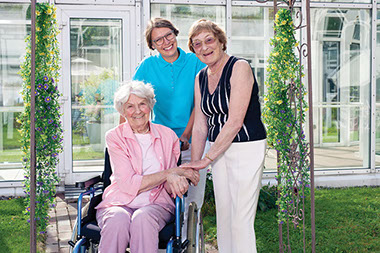
    Image of older women in wheelchair being helped by relative.

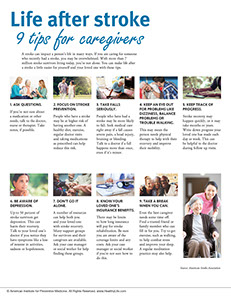
    A stroke can impact a person’s life in many ways. If you are caring for someone who recently had a stroke, you may be overwhelmed. With more than 7 million stroke survivors living today, you’re not alone. You can make life after a stroke a little easier for yourself and your loved one with these tips.

    1. Ask questions. If you’re not sure about a medication or other needs, talk to the doctor, nurse or therapist. Take notes, if possible.

    2. Focus on stroke prevention. People who have a stroke may be at higher risk of having another one. A healthy diet, exercise, regular doctor visits and taking medications as prescribed can help reduce this risk.

    3. Take falls seriously. People who have had a stroke may be more likely to fall. Seek medical care right away if a fall causes severe pain, a head injury, bruising or bleeding. Talk to a doctor if a fall happens more than once, even if it’s minor.

    4. Keep an eye out for problems like dizziness, balance problems or trouble walking. This may mean the person needs physical therapy to help with their recovery and improve their mobility.

    5. Keep track of progress. Stroke recovery may happen quickly, or it may take months or years. Write down progress your loved one has made each day or week. This can be helpful to the doctor during follow up visits.

    6. Be aware of depression. Up to 50 percent of stroke survivors get depression. This can harm their recovery. Talk to your loved one’s doctor if you notice they have symptoms like a loss of interest in activities, sadness or hopelessness.

    7. Don’t go it alone. A number of resources can help both you and your loved one with stroke recovery. Many support groups for survivors and their caregivers are available. Ask your case manager or social worker for help finding these groups.

    8. Know your loved one’s insurance benefits. There may be limits to how long insurance will pay for stroke rehabilitation. Be sure you are aware of the coverage limits and any costs. Ask your case manager or social worker if you’re not sure how to do this.

    9. Take a break when you can. Even the best caregiver needs some time off. Find a trusted friend or family member who can fill in for you. Try to get exercise, such as walking, to help combat stress and improve your sleep. A regular meditation practice may also help.

    Source: American Stroke Association

    © American Institute for Preventive Medicine

  • What Our Aging Parents Fear Most

    FAMILY LIFE

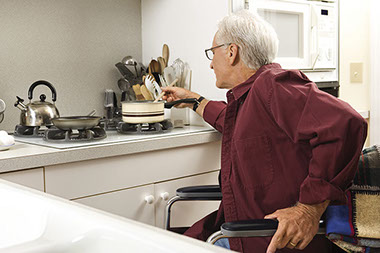
    Image of eldery man in wheel chair cooking at his stove.

    Seniors fear moving into a nursing home and losing their independence more than death, according to a new research study, Aging in Place in America, commissioned by Clarity and  The EAR Foundation.

    The study looked at the attitudes and anxieties of the nation’s elderly. The children of seniors also fear for their parents, with particular concern about their emotional and physical well-being should they have to enter a nursing home.

    One of the most significant findings of the study is that, when asked what they fear most, seniors rated loss of independence (26%) and moving out of their homes into a nursing home (13%) as their greatest fears. These two possibilities are a much higher concern than death, which was the greatest fear for only 3% of seniors surveyed.

    Other key findings include these:

    *  Most seniors want to age in place. That means they want to grow older without having to move from their homes. More than half are concerned about their ability to do so.

    *  Seniors cited three primary concerns that could jeopardize their ability to live independently: health problems, memory problems and inability to drive or get around.

    *  Many seniors said they are open to or would like to use new technologies that enable independence. More than half would consider the use of technology in their homes-specifically, sensors-to monitor their health and safety.

    *  Most Baby Boomers fear their parents will be mistreated in a nursing home and fear they will be sad. Almost two-thirds of Boomers provide some kind of help or support for their aging parents.

    “These findings tell us that, above all else, older Americans value their ability to live independently,” said Peter Bell, president of National Aging in Place Council. “As a society, we must find ways to help our parents and grandparents live their latter years at home.”

    © American Institute for Preventive Medicine

  • Balancing Work & Caregiving

    WORK LIFE

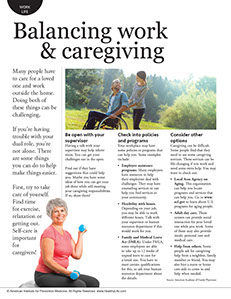
    Women pushing man in wheelchair through the lawn.

    Many people have to care for a loved one and work outside the home. Doing both of these things can be challenging. If you’re having trouble with your dual role, you’re not alone. There are some things you can do to help make things easier.

    First, try to take care of yourself. Find time for exercise, relaxation or getting out. Self-care is important for caregivers!

    Be open with your supervisor

    Having a talk with your supervisor may help relieve stress. You can get your challenges out in the open.

    Find out if they have suggestions that could help you. Maybe you have some ideas of how you can get your job done while still meeting your caregiving responsibilities. If so, share them!

    Check into policies and programs

    Your workplace may have some policies or programs that can help you. Some examples include:

    *Employee assistance programs.Many employers have resources to help their employees deal with challenges. They may have counseling services or can help you find services in your community.

    *Flexibility with hours.Depending on your job, you may be able to work different hours. Talk with your supervisor or human resources department if this would work for you.

    *Family and Medical Leave Act (FMLA).Under FMLA, some employees are able to take up to 12 weeks of unpaid leave to care for a loved one. You have to meet certain qualifications for this, so ask your human resources department about the details.

    Consider other options

    Caregiving can be difficult. Some people find that they need to use some caregiving services. These services can be life-changing if you work and need some extra help. You may want to check out:

    *Local Area Agency on Aging.This organization can help you locate programs and services that can help you. Go towww.acl.govto learn about U.S. programs for aging people.

    *Adult day care.These centers can provide social interaction for your loved one while you work. Some of them may also provide meals, personal care and medical care.

    *Help from others.Some people ask for caregiving help from a neighbor, family member or friend. You may also hire a nurse or home care aide to come in and help when needed.

    Source: American Academy of Family Physicians

    © American Institute for Preventive Medicine