Tag: cataracts

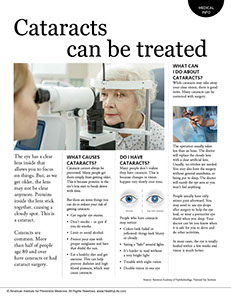
  • Cataracts Can Be Treated

    MEDICAL NEWS

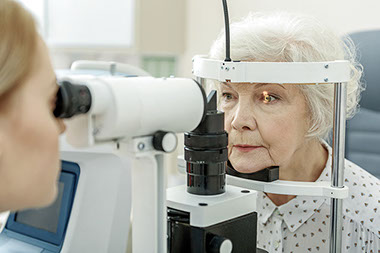
    Elderly women getting her eyes checked by a doctor.

    The eye has a clear lens inside that allows you to focus on things. But, as we get older, the lens may not be clear anymore. Proteins inside the lens stick together, causing a cloudy spot. This is a cataract.

    Cataracts are common. More than half of people age 80 and over have cataracts or had cataract surgery.

    What causes cataracts?

    Cataracts cannot always be prevented. Many people get them simply from getting older. This is because proteins in the eye’s lens start to break down with time.

    But there are some things you can do to reduce your risk of getting cataracts:

    *  Get regular eye exams.

    *  Don’t smoke – or quit if you do smoke.

    *  Limit or avoid alcohol.

    *  Protect your eyes with proper sunglasses and hats that shield the sun.

    *  Eat a healthy diet and get exercise. This can help prevent diabetes and high blood pressure, which may cause cataracts.

    Do I have cataracts?

    Many people don’t realize they have cataracts. This is because changes in vision happen very slowly over time.

    People who have cataracts may notice:

    *  Colors look faded or yellowed; things look blurry or cloudy

    *  Seeing a “halo” around lights

    *  It’s harder to read without a very bright light

    *  Trouble with night vision

    *  Double vision in one eye

    What can I do about cataracts?

    While cataracts may take away your clear vision, there is good news. Many cataracts can be corrected with surgery.

    The operation usually takes less than an hour. The doctor will replace the cloudy lens with a clear artificial lens. Usually, no stitches are needed. You may also have the surgery without general anesthesia, or being put to sleep. The doctor will numb the eye area so you won’t feel anything.

    People usually have only minor pain afterward. You may need to use eye drops after surgery to help the eye heal, or wear a protective eye shield when you sleep. Your doctor can let you know when it is safe for you to drive and do other activities.

    In most cases, the eye is totally healed within a few weeks and vision is much better.

    Sources: American Academy of Ophthalmology, National Eye Institute
    © American Institute for Preventive Medicine
  • Keeping An Eye Out For Cataracts

    SELF-CARE CORNER

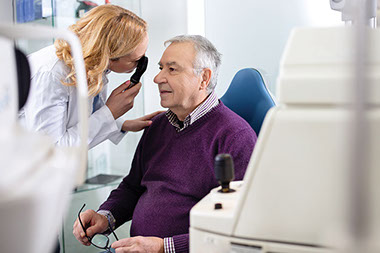
    Eye doctor examining patients eye.

    Most people will have cataracts by the age of 80. But they don’t have to mean loss of vision. They are treatable.

    What is a cataract?

    A normal lens inside the eye is clear. Cataracts happen when the proteins in the eye’s lens start to break down. Then they clump together. This causes cloudiness and problems with your vision.

    Cataracts may occur with normal aging. But they can also happen after an eye injury or if you had eye surgery.

    Signs of cataracts

    People often notice changes in vision when cataracts start to form. These changes include:

    *  Blurry or distorted vision

    *  Being sensitive to light

    *  Seeing a “halo” around lights

    *  Seeing double

    *  Trouble seeing at night or in dimly lit rooms

    *  Seeing colors as dull or yellow-tinted

    Prevention

    The best way to help prevent cataracts is with eye sun protection. Wear sunglasses that block out 100 percent of UV rays when you’re outside during the day. Not all sunglasses offer 100 percent UV protection. Check the packaging to be sure. Wear a wide-brimmed hat to keep sun off your face.

    Smoking increases the risk for cataracts, so quit smoking. Get help quitting if you need it.

    Finally, get a dilated eye exam regularly. Ask your eye care specialist or doctor how often you need one.

    Seeing a doctor

    If you think you might have cataracts, talk to a doctor. You may need an eye exam from an optometrist or ophthalmologist. During the exam, your eye care specialist can perform tests to look for cataracts.

    Treatment options

    If your doctor finds cataracts, don’t panic. There are ways to treat them.

    First, your doctor may recommend new glasses or contacts for mild symptoms. You may also find that using brighter lights or a magnifying lens is helpful for reading or working.

    If your cataracts are interfering with life, you may need surgery. Cataracts surgery involves putting a new artificial lens in the eye. It is a safe surgical procedure and works well for most people.

    Sources: American Academy of Ophthalmology, National Eye Institute

    © American Institute for Preventive Medicine