Tag: celebration

  • Tips For Healthy Celebration

    Healthylife® Weigh

    Part 6
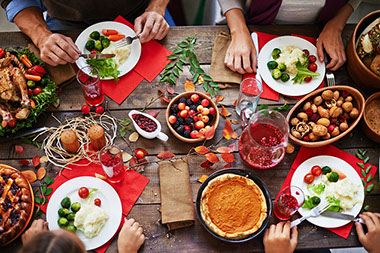
    Thanksgiving dinner and family eating at table.

    Happy times may also be triggers for overeating or making less healthy food choices. Holidays and other special occasions may also make it harder to fit in physical activity.

    Items that trip you up during a celebration:

    *  Drinks: soda, alcoholic beverages

    *  Foods: desserts, large helpings of “comfort foods”

    *  Gifts of candy, cookies, etc.

    *  Too many things to do and less time to prepare healthy meals

    *  Workplace parties and cookie exchanges

    *  More travel or a change of routine

    *  Events centered around large meals, or appetizers

    *  All-you-can-eat buffets on cruise ships or at resorts

    Approaches to Celebration

    There are many ways you can approach a celebration.

    1. Make choices that fit with your healthy eating goals. Choose this option most of the time.

    2. Make mostly healthy choices, but choose small treat foods. Choose small portions of these treats and eat them mindfully.

    3. Eat without restriction. Eat and drink what you would like without feeling guilty for choosing less healthy foods. Choose this option rarely and plan to make healthy choices the next day.

    If you have been making healthy choices for a while, you may notice your body’s negative response to certain unhealthy foods. Foods high in saturated fat seem to sit in your stomach longer and make you feel uncomfortable. Meals low in fiber may leave you constipated. Artificial sugars may give you a headache. Pay attention to this difference. It can help you choose less of these foods in the future.
    © American Institute for Preventive Medicine
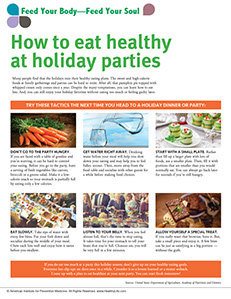
  • How To Eat Healthy At Holiday Parties

    HEALTHY EATING

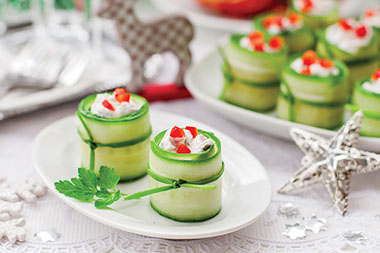
    Image of holiday treat on small plate.

    Many people find that the holidays ruin their healthy eating plans. The sweet and high-calorie foods at family gatherings and parties can be hard to resist. After all, that pumpkin pie topped with whipped cream only comes once a year. Despite the many temptations, you can learn how to eat less. And, you can still enjoy your holiday favorites without eating too much or feeling guilty later.

    Try these tactics the next time you head to a holiday dinner or party:

    Don’t go to the party hungry.If you are faced with a table of goodies and you’re starving, it can be hard to control your eating. Before you go to the party, have a serving of fresh vegetables like carrots, broccoli or a greens salad. Make it a low-calorie snack so your stomach is partially full by eating only a few calories.

    Get water right away.Drinking water before your meal will help you slow down your eating and may help you to feel fuller, sooner. Then, move away from the food table and socialize with other guests for a while before making food choices.

    Start with a small plate.Rather than fill up a larger plate with lots of foods, use a smaller plate. Then, fill it with portions that are smaller than you would normally eat. You can always go back later for seconds if you’re still hungry.

    Eat slowly.Take sips of water with every few bites. Put your fork down and socialize during the middle of your meal. Chew each bite well and enjoy how it tastes before you swallow.

    Listen to your belly.When you feel almost full, that’s the time to stop eating. It takes time for your stomach to tell your brain that you’re full. Chances are, you will be very full in a few minutes.

    Allow yourself a special treat. If you really want that brownie, have it. But, take a small piece and enjoy it. A few bites can be just as satisfying as a big portion – without the guilt.

    If you do eat too much at a party this holiday season, don’t give up on your healthy eating goals. Everyone has slip-ups on diets once in a while. Consider it as a lesson learned or a minor setback. Come up with a plan to eat healthier at your next party. You can start fresh tomorrow!

    Sources: United States Department of Agriculture, Academy of Nutrition and Dietetics

    © American Institute for Preventive Medicine