Tag: cervical

  • Cervical Cancer

    Women’s Health

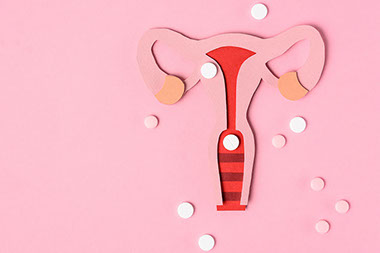
    Paper cut-out of cervix with white and pink pills.

    The cervix is the lower, narrow part of the uterus. Cancer of the cervix can occur at any age. It occurs most often in women who are over 30 years old. It is rare in women under the age of 20, but is also common in women in their 20s.

    Signs & Symptoms

    Screening tests, such as Pap tests and HPV (human papillomavirus) tests, are important because signs and symptoms are not often present in the early stages of the disease.

    Late Stage Symptoms

    *  Vaginal bleeding or spotting blood between menstrual periods or after menopause.

    *  Vaginal bleeding after sex, douching, or a pelvic exam.

    *  Vaginal bleeding that is not normal for you.

    *  Increased vaginal discharge.

    *  Pain in the pelvic area.

    *  Pain during sex.

    *  Blood in the urine.

    *  Signs of anemia (fatigue and dizziness).

    *  Poor appetite and weight loss.

    Causes, Risk Factors & Care

    The main risk factor is being infected with human papillomavirus (HPV). This is passed from one person to another during sex. There are many types of HPV. Certain high risk types cause most cervical cancers. Other types increase the risk for genital warts or other conditions that are not cancer. Not all women who are infected with HPV get cervical cancer and HPV is not present in all women who have cervical cancer either.

    The risk increases for persons who:

    *  Started having sex at an early age.

    *  Had or have sex with multiple sex partners. The more partners, the greater the risk.

    *  Had unprotected sex.

    *  Had or have sex with a partner who: has HPV, began having sex at a young age, and/or has or had many sexual partners.

    *  Not having routine Pap tests. These screen for abnormal cells that can turn into cancer. It can take several years for this to occur, but could happen in a short period of time, too. These changing cells can be treated so they don’t turn into cancer.

    *  Having a current or past sexually transmitted infection (STI), such as chlamydia. Having one kind of STI increases the risk of having another kind.

    *  Smoking.

    *  Long-term use of oral contraceptives.

    *  Being the daughter of a mother who took a drug known as DES during her pregnancy. (This drug was used from 1940 to 1970 to prevent miscarriages.)

    *  Taking drugs or having HIV/AIDS or any other condition that lowers the immune system.

    Prevention

    Two or three doses of HPV vaccine can help prevent the most common types of HPV that can cause cervical cancer and genital warts. The vaccines are advised for girls ages 11 to 12 years old, but can be given from age 9 years to age 26 years. Find out more about HPV vaccine fromcdc.gov/hpv.

    Treatment

    If found early, the cancer can be cured in most women. To find it early, have regular cervical cancer screenings. Get tested for human papillomavirus (HPV), chlamydia, and other sexually transmitted infections (STIs), as advised by your doctor.

    Treatment depends on what is found. The precancerous form of cervical cancer is called dysplasia. Mild cases of this can be monitored with more frequent Pap tests. Medical treatment can also be given. This includes laser therapy and removing part of the cervix. Surgery, radiation therapy, targeted therapy, immunotherapy, and/or chemotherapy also treat cervical cancer.

    If the cervical cancer has not spread and a woman wants to get pregnant in the future, just part of the cervix may be removed. If a woman does not want a future pregnancy, a hysterectomy may be chosen.

    Questions to Ask

    Self-Care / Prevention

    *  Have Pap tests and pelvic exams as often as your doctor advises.

    *  Use “Safer Sex” to help prevent HPV and other STIs.

    *  Get tested for HPV, as your doctor advises. Tell your partner(s) to get tested, too.

    *  Ask your doctor about getting the HPV vaccine.

    *  Don’t douche. If you do, don’t do this more than once a month.

    *  Don’t smoke or use tobacco. If you do, quit!

    If you have a low income, or do not have health insurance, you may be able to get a free or low-cost Pap test through the National Breast and Cervical Cancer Early Detection Program. To find out if you qualify, call 1-800-CDC-INFO (232-4636).

    Resources

    National Cancer Institute

    800.4.CANCER (422.6237)

    www.cancer.gov

    www.clinicaltrials.gov

    National Breast and Cervical Cancer Early Detection Program (NBCCEDP)

    www.cdc.gov/cancer/nbccedp

    National Cervical Cancer Coalition

    800.685.5531
    www.nccc-online.org

    Women's Self-Care book by the American Institute for Preventive Medicine. www.HealthyLife.com. All rights reserved.

    © American Institute for Preventive Medicine

  • Cervical Health

    Women’s Health

    Smiling women with laptop.

    Pap tests, pelvic exams, and a test for human papillomavirus (HPV) check for early signs of cervical cancer.

    If you are a female, start getting Pap tests at age 21 or within 3 years of the onset of sexual activity, whichever comes first. After that, get a Pap test at least every 3 years or as often as your doctor advises.

    If you are a female 30 to 65 years old, you may have an HPV test along with the Pap test. Talk to your doctor about which testing option, including how often, is right for you.

    Learn about cervical cancer from the Cancer Information Service at 800.4.CANCER (422.6237) andcancer.gov/types/cervical.

    Health at Home Lifetime book by the American Institute for Preventive Medicine. www.HealthyLife.com. All rights reserved.

    © American Institute for Preventive Medicine

  • Head/Neck/Spine Injuries

    First Aid

    Signs & Symptoms

    For a Severe Injury

    *  The scalp, neck, or back bleeds.

    *  It looks like the head, neck, or back is in an odd position.

    *  Pain is felt in the back, neck, and/or head. The pain can be severe.

    *  Stiff neck.

    *  Abdominal pain. Vomiting.

    *  Blood or fluid comes from the mouth, nose, or an ear.

    *  Loss of vision. Blurred or double vision. Pupils of uneven size.

    *  Inability to move any part of the body. Weakness in an arm or leg. Walking is difficult.

    *  New feelings of numbness occur in the legs, arms, shoulders, or any other part of the body.

    *  New loss of bladder or bowel control occurs.

    *  Confusion. Drowsiness. Personality changes.

    *  Convulsions.

    *  Loss of consciousness.

    Watch for signs and symptoms for the first 24 hours after the injury. Symptoms may not occur for as long as several weeks, though. Problems can occur even if no injury is seen on the outside.

    For a Whiplash Injury

    *  Neck pain and stiffness.

    *  Having a hard time raising the head off of a pillow.

    Causes

    Anything that puts too much pressure or force on the head, neck, or back can result in injury. Common causes are falls, accidents, and hard blows. A concussion occurs when the brain is shaken. A contusion occurs when the brain is bruised.

    Treatment

    If you suspect a head, neck, or back injury, you must keep the head, neck, and back perfectly still until EMS arrives. Any movement of the head, neck, or back could result in paralysis or death.

    Questions to Ask

    Self-Care / Prevention

    First Aid for a Severe Injury

    *  Do not move the person unless his or her life is in danger. If so, log roll the person, place tape across the forehead, and secure the person to a board to keep the head, neck, and back areas from moving at all.

    *  Call 9-1-1!

    *  CHECK for a response. If giving rescue breaths, do not tilt the head backward. Pull the lower jaw open instead.

    To Immobilize the Head, Neck, and/or Back

    *  Tell the person to lie still and not move his or her head, neck, back, etc.

    *  Log roll as listed above or place rolled towels, etc. on both sides of the neck and/or body. Tie in place, but don’t interfere with the person’s breathing. If necessary, use both of your hands, one on each side of the person’s head to keep the head from moving.

    *  Monitor for Bleeding and Shock. Keep the person warm with blankets, coats, etc.

    Move Someone You Suspect Has Injured His or Her Neck in a Diving or Other Water Accident

    Before emergency care arrives:

    *  Protect the neck and/or spine from bending or twisting. Place your hands on both sides of the neck. Keep it in place until help arrives.

    *  If the person is still in the water, help the person float until a rigid board can be slipped under the head and body, at least as far down as the buttocks.

    *  If no board is available, get several people to take the person out of the water. Support the head and body as one unit. Make sure the head does not rotate or bend in any way.

    First Aid For Traffic Accidents

    *  If the person was in a motorcycle accident, do not remove the helmet. Call 9-1-1 to do this.

    *  Don’t move the person. He or she may have a spinal injury. Call 9-1-1 to do this.

    First Aid for Minor Head Injuries

    *  Put an ice pack or bag of frozen vegetables in a cloth. Apply this to the injured area. Doing this helps reduce swelling and bruising. Change it every 15 to 20 minutes for 1 to 2 hours. Do not put ice directly on the skin. Cover an open, small cut with gauze and first- aid tape or an adhesive bandage.

    *  Once you know there is no serious head injury, do normal activities again. Avoid strenuous ones.

    *  Take an over-the-counter medicine for pain as directed.

    *  Don’t drink alcohol or take any other sedatives or sleeping pills.

    *  During the next 24 hours, monitor the person. While asleep, wake the person every 2 hours to check alertness. Ask something the person should know, such as a pet’s name, an address, etc. If the person can’t be roused or respond normally, get immediate medical care.

    First Aid for Bleeding from the Scalp

    *  To control bleeding, put pressure around the edges of the wound. Make a ring pad (shaped like a doughnut) out of long strips of cloth to apply pressure around the edges of the wound. If this doesn’t control bleeding, put direct pressure on the wound. Don’t poke your hand into the person’s brain, though.

    *  Don’t wash the wound or apply an antiseptic or any other fluid to it.

    *  If blood or pink-colored fluid is coming from the ear, nose, or mouth, let it drain. Do not try to stop its flow.

    If You Suspect a Whiplash Injury

    *  See your doctor, as soon as you can, to find out the extent of injury. If your arm or hand is numb, tell your doctor.

    *  For the first 24 hours, apply ice packs to the injured area for up to 20 minutes every hour.

    *  After 24 hours, use ice packs or heat, whichever works best, to relieve the pain. There are many ways to apply heat. Take a hot shower for 20 minutes a few times a day. Use a hot-water bottle, heating pad (set on low), or heat lamp directed to the neck for 10 minutes, several times a day. (Use caution not to burn the skin.)

    *  Wrap a folded towel around the neck to help hold the head in one position during the night.

    Concussion

    This is a mild traumatic brain injury (TBI) from a blow or jolt to the head. Signs and symptoms are:

    *  Altered level of alertness. May have brief fainting spell. Feeling confused, dazed, and/or dizzy.

    *  Can’t remember events right before or right after the injury.

    *  Nausea and vomiting.

    *  Headache.

    A concussion needs a medical assessment.

    Healthier at Home book by the American Institute for Preventive Medicine. www.HealthyLife.com. All rights reserved.

    © American Institute for Preventive Medicine