
Tag: Cervical Cancer

  • Prevention Is Key: Hpv & Cervical Cancer

    MEDICAL NEWS

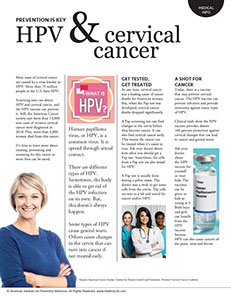
    Image of 4 female doctors.

    Most cases of cervical cancer are caused by a virus known as HPV. More than 79 million people in the U.S. have HPV.

    Screening tests can detect HPV and cervical cancer, and the HPV vaccine can prevent it. Still, the American Cancer society says more than 13,000 new cases of invasive cervical cancer were diagnosed in 2018. Plus, more than 4,000 women died from this cancer.

    It’s time to learn more about treating, preventing and screening for this cancer so more lives can be saved.

    What is HPV?

    Human papilloma virus, or HPV, is a common virus. It is spread through sexual contact.

    There are different types of HPV. Sometimes, the body is able to get rid of the HPV infection on its own. But, this doesn’t always happen.

    Some types of HPV cause genital warts. Others cause changes in the cervix that can turn into cancer if not treated early.

    Get tested, get treated

    At one time, cervical cancer was a leading cause of cancer deaths for American women. But, when the Pap test was developed, cervical cancer deaths dropped significantly.

    A Pap screening test can find changes in the cervix before they become cancer. It can also find cervical cancer early. This means the cancer can be treated when it’s easier to cure. Ask your doctor about how often you should get a Pap test. Sometimes, the cells from a Pap test are also tested for HPV.

    A Pap test is usually done during a pelvic exam. The doctor uses a swab to get some cells from the cervix. The cells are sent to a lab and tested for cancer and/or HPV.

    A shot for cancer

    Today, there is a vaccine that may prevent cervical cancer. The HPV vaccine can prevent infection and provide immunity against many types of HPV.

    Clinical trials show the HPV vaccine provides almost  100 percent protection against cervical changes that can lead to cancer and genital warts.

    Ask your doctor about the HPV vaccine for yourself or your kids. The vaccines can be given to kids as young as 9. Both boys and girls can benefit from the HPV vaccine because HPV can also cause cancers of the penis, anus and throat.

    Sources: American Cancer Society, Centers for Disease Control and Prevention, National Cervical Cancer Coalition
    © American Institute for Preventive Medicine

  • Cervical Cancer

    Women’s Health

    Paper cut-out of cervix with white and pink pills.

    The cervix is the lower, narrow part of the uterus. Cancer of the cervix can occur at any age. It occurs most often in women who are over 30 years old. It is rare in women under the age of 20, but is also common in women in their 20s.

    Signs & Symptoms

    Screening tests, such as Pap tests and HPV (human papillomavirus) tests, are important because signs and symptoms are not often present in the early stages of the disease.

    Late Stage Symptoms

    *  Vaginal bleeding or spotting blood between menstrual periods or after menopause.

    *  Vaginal bleeding after sex, douching, or a pelvic exam.

    *  Vaginal bleeding that is not normal for you.

    *  Increased vaginal discharge.

    *  Pain in the pelvic area.

    *  Pain during sex.

    *  Blood in the urine.

    *  Signs of anemia (fatigue and dizziness).

    *  Poor appetite and weight loss.

    Causes, Risk Factors & Care

    The main risk factor is being infected with human papillomavirus (HPV). This is passed from one person to another during sex. There are many types of HPV. Certain high risk types cause most cervical cancers. Other types increase the risk for genital warts or other conditions that are not cancer. Not all women who are infected with HPV get cervical cancer and HPV is not present in all women who have cervical cancer either.

    The risk increases for persons who:

    *  Started having sex at an early age.

    *  Had or have sex with multiple sex partners. The more partners, the greater the risk.

    *  Had unprotected sex.

    *  Had or have sex with a partner who: has HPV, began having sex at a young age, and/or has or had many sexual partners.

    *  Not having routine Pap tests. These screen for abnormal cells that can turn into cancer. It can take several years for this to occur, but could happen in a short period of time, too. These changing cells can be treated so they don’t turn into cancer.

    *  Having a current or past sexually transmitted infection (STI), such as chlamydia. Having one kind of STI increases the risk of having another kind.

    *  Smoking.

    *  Long-term use of oral contraceptives.

    *  Being the daughter of a mother who took a drug known as DES during her pregnancy. (This drug was used from 1940 to 1970 to prevent miscarriages.)

    *  Taking drugs or having HIV/AIDS or any other condition that lowers the immune system.

    Prevention

    Two or three doses of HPV vaccine can help prevent the most common types of HPV that can cause cervical cancer and genital warts. The vaccines are advised for girls ages 11 to 12 years old, but can be given from age 9 years to age 26 years. Find out more about HPV vaccine fromcdc.gov/hpv.

    Treatment

    If found early, the cancer can be cured in most women. To find it early, have regular cervical cancer screenings. Get tested for human papillomavirus (HPV), chlamydia, and other sexually transmitted infections (STIs), as advised by your doctor.

    Treatment depends on what is found. The precancerous form of cervical cancer is called dysplasia. Mild cases of this can be monitored with more frequent Pap tests. Medical treatment can also be given. This includes laser therapy and removing part of the cervix. Surgery, radiation therapy, targeted therapy, immunotherapy, and/or chemotherapy also treat cervical cancer.

    If the cervical cancer has not spread and a woman wants to get pregnant in the future, just part of the cervix may be removed. If a woman does not want a future pregnancy, a hysterectomy may be chosen.

    Questions to Ask

    Self-Care / Prevention

    *  Have Pap tests and pelvic exams as often as your doctor advises.

    *  Use “Safer Sex” to help prevent HPV and other STIs.

    *  Get tested for HPV, as your doctor advises. Tell your partner(s) to get tested, too.

    *  Ask your doctor about getting the HPV vaccine.

    *  Don’t douche. If you do, don’t do this more than once a month.

    *  Don’t smoke or use tobacco. If you do, quit!

    If you have a low income, or do not have health insurance, you may be able to get a free or low-cost Pap test through the National Breast and Cervical Cancer Early Detection Program. To find out if you qualify, call 1-800-CDC-INFO (232-4636).

    Resources

    National Cancer Institute

    800.4.CANCER (422.6237)

    www.cancer.gov

    www.clinicaltrials.gov

    National Breast and Cervical Cancer Early Detection Program (NBCCEDP)

    www.cdc.gov/cancer/nbccedp

    National Cervical Cancer Coalition

    800.685.5531

    www.nccc-online.org

    Women's Self-Care book by the American Institute for Preventive Medicine. www.HealthyLife.com. All rights reserved.

    © American Institute for Preventive Medicine

  • Cervical Health

    Women’s Health

    Smiling women with laptop.

    Pap tests, pelvic exams, and a test for human papillomavirus (HPV) check for early signs of cervical cancer.

    If you are a female, start getting Pap tests at age 21 or within 3 years of the onset of sexual activity, whichever comes first. After that, get a Pap test at least every 3 years or as often as your doctor advises.

    If you are a female 30 to 65 years old, you may have an HPV test along with the Pap test. Talk to your doctor about which testing option, including how often, is right for you.

    Learn about cervical cancer from the Cancer Information Service at 800.4.CANCER (422.6237) andcancer.gov/types/cervical.

    Health at Home Lifetime book by the American Institute for Preventive Medicine. www.HealthyLife.com. All rights reserved.

    © American Institute for Preventive Medicine
  • Pap Smear Needed Even With Hpv Vaccine

    MEDICAL NEWS

    Image of women talking with her doctor.

    HPV (human papillomavirus) vaccines that are often recommended to help prevent infections related to cervical and other cancers should not discourage women from also getting a Pap smear, UT Southwestern Medical Center cancer experts said.

    “Women should continue to be screened even if they have undergone HPV vaccination. The vaccine does not target all types of HPV that cause cancer. It is intended to reduce the risk of cancer, but has not been proven to eliminate the need for screening,” explains Dr. Jayanthi Lea.

    Unless you have a history of precancerous lesions, cancer, immune deficiency, or other risks, testing every three years between ages 21 and 65 is sufficient, Dr. Lea said. “There is also the option of combining a Pap test with HPV testing for women over age 30. Screening this way is typically performed every five years.”

    © American Institute for Preventive Medicine