Tag: challenge

  • Build Support At Work

    Healthylife® Weigh

    Part 4

    Employees talking over a coffee break.

    *  Find out about your company’s wellness program.

    – Participate in challenges, such as a step contest, offered through your wellness program. There may be rewards for participation or winning the challenge.

    – Join the wellness committee and participate in surveys that give you a chance to share your opinion. Let your company know what policies will help you be healthy. Your employer wants you to be healthy, as this helps their health care costs and helps you be productive at work.

    – Volunteer to be a wellness champion. Sharing your journey with others may help give your goals a bigger purpose.

    *  Organize walk times with coworkers at work. If you can, spend part of your lunch break going for a walk around the building or outside.

    *  If you are going out to eat with coworkers, suggest you go somewhere that offers healthy options.

    *  Celebrations at work should include healthy options and limit unhealthy options. Encourage the person who organizes these events to make healthier options available.

    *  Split meal prep with a coworker. Bring a healthy lunch or snack to share for the first half of the week. For the second half of the week, your coworker brings a healthy lunch or snack to share.
    © American Institute for Preventive Medicine

  • Dispute Unhelpful Thoughts

    Healthylife® Weigh

    Part 4

    Man thinking in front of black chalk board with arrows pointing.

    Thinking in all-or-nothing terms using words like “always,” “never,” and “every” can make it difficult to see options. Avoid thinking about people or situations using absolute terms. Logical thinking looks at more than one option. People can act in different ways. Situations can have many outcomes.

    Have you had any of the unhelpful thoughts below:

    *  Gaining weight and moving less is just part of getting older.

    *  Taking care of myself is selfish.

    *  I weigh less than those around me. At least I am doing better than they are.

    *  My spouse does the grocery shopping and cooking so I have very little control over what I eat.

    *  Eating healthy is too expensive.

    Question your unhelpful thoughts. The strategies on the following pages help to break down thoughts that you may be using as excuses not to change. If you notice you are thinking in absolutes, identify alternatives to your black and white thoughts.

    © American Institute for Preventive Medicine

  • Variety Bingo

    Healthylife® Weigh

    Part 2

    Veggie pizza.

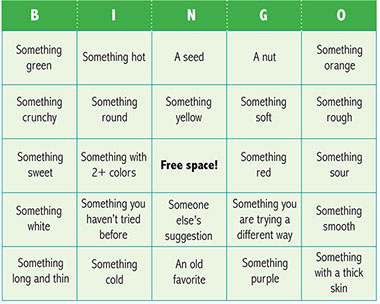
    This game is perfect for when you are making a salad, looking for pizza toppings, filling an omelet, or scoping out a buffet for healthy choices. Involve kids by having them identify different shapes, colors, textures, tastes, and experiences with their food.

    Game Rules

    1. Write down the options on pieces of paper and place them in a bowl.

    2. Have someone pull the pieces of paper out one at a time. Have them read out loud what’s on the paper.

    3. Have someone cross off the spaces that are read out loud.

    4. When someone gets an entire row, either across, down or diagonal, yell “Bingo!”

    5. Prepare a meal using the ingredients included in the Bingo! row.

    © American Institute for Preventive Medicine
  • A Bucket Of Ice

    MEDICAL NEWS

    Image of a bucket filled with ice.

    Have you taken the ice bucket challenge? What do you know about the disease you were raising funds for?

    Amyotrophic lateral sclerosis (ALS), sometimes called Lou Gehrig’s disease, is a rapidly progressive, fatal neurological disease that attacks the nerve cells responsible for controlling voluntary muscles.

    According to the National Institute of Neurological Disorders and Stroke, ALS attacks nerve cells that control muscles in the arms, legs, and face. Eventually use of limbs and speech stop. Voluntary movement is lost. And with that comes loss of the ability to breathe.

    There is no test to diagnose it. There is no cure. And no one knows who will get it and who does not. Ongoing research is looking for answers.

    Lou Gehrig was a baseball legend, the first baseman for the New York Yankees who developed the disease that ended his incredible career and his life.

    © American Institute for Preventive Medicine