Tag: checklist

  • Step-By-Step

    Weight Control

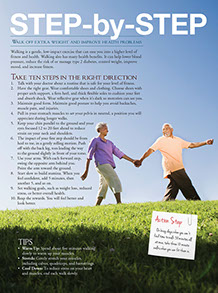
    Walk off extra weight and improve health problems.

    Walking is a gentle, low-impact exercise that can ease you into a higher level of fitness and health. Walking also has many health benefits. It can help lower blood pressure, reduce the risk of or manage type 2 diabetes, control weight, improve mood, and increase fitness.

    Take ten steps in the right direction:

    1.  Talk with your doctor about a routine that is safe for your level of fitness.

    2.  Have the right gear. Wear comfortable shoes and clothing. Choose shoes with proper arch support, a firm heel, and thick flexible soles to cushion your feet and absorb shock. Wear reflective gear when it’s dark so motorists can see you.

    3.  Maintain good form. Maintain good posture to help you avoid backaches, muscle pain, and injuries.

    4.  Pull in your stomach muscles to set your pelvis in neutral, a position you will appreciate during longer walks.

    5.  Keep your chin parallel to the ground and your eyes focused 12 to 20 feet ahead to reduce strain on your neck and shoulders.

    6.  The impact of your first step should be from heel to toe, in a gently rolling motion. Push off with the back leg, toes leading the way to the ground slightly in front of your torso.

    7.  Use your arms. With each forward step, swing the opposite arm behind you. Point the arm toward the ground.

    8.  Start slow to build stamina. When you feel confident, add 5 minutes, then another 5, and so on.

    9.  Set walking goals, such as weight loss, reduced stress, or better overall health.

    10. Reap the rewards. You will feel better and look better.

    Tips

    *  Warm Up: Spend about five minutes walking slowly to warm up your muscles.

    *  Stretch: Gently stretch your muscles, including calves, quadriceps, and hamstrings.

    *  Cool Down: To reduce stress on your heart and muscles, end each walk slowly.

    Action Step

    On busy days when you can’t find time to walk 30 minutes all at once, take three 10-minute walks when you can fit them in.
    Page from Ways to Well-Being book by the American Institute for Preventive Medicine. www.HealthyLife.com. All rights reserved.

    © American Institute for Preventive Medicine
  • Your Pre-Vacation Checklist

    Healthy Travel

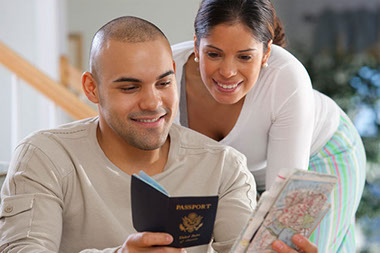
    Image of couple looking at passport and map.

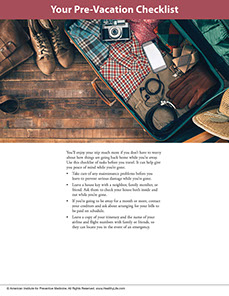
    You’ll enjoy your trip much more if you don’t have to worry about how things are going back home while you’re away. Use this checklist of tasks before you travel. It can help give you peace of mind while you’re gone.

    *  Take care of any maintenance problems before you leave to prevent serious damage while you’re gone.

    *  Leave a house key with a neighbor, family member, or friend. Ask them to check your house both inside and out while you’re gone.

    *  If you’re going to be away for a month or more, contact your creditors and ask about arranging for your bills to be paid on schedule.

    *  Leave a copy of your itinerary and the name of your airline and flight numbers with family or friends, so they can locate you in the event of an emergency.

    Page image from A Year of Health Hints book by the American Institute for Preventive Medicine. www.HealthyLife.com. All rights reserved.

    © American Institute for Preventive Medicine
  • Audit Your Home For Safety

    Home Safety

    Most accidents happen at home. If you think your house is “home, safe home,” take a look around. At first glance it may look orderly, but certain common trouble spots can lead to cuts, falls, burns, or other injuries. The following room-by-room checklist can alert you to accidents waiting to happen.

    Kitchen

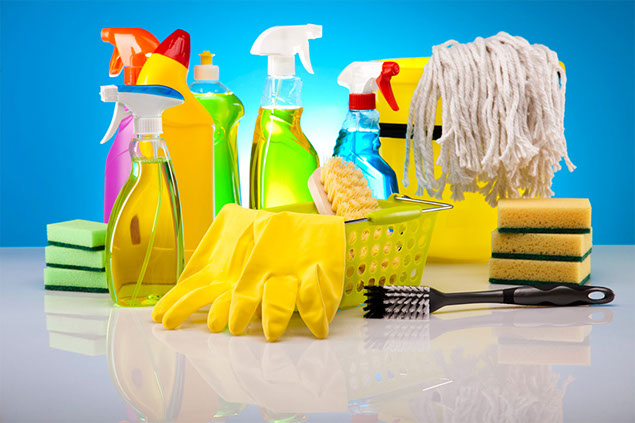
    *  Cleaners and dangerous chemicals should be stored out of children’s reach.

    *  Scissors, knives, ice picks, and other sharp tools should be stored separately from other utensils out of the reach of children.

    *  Towels, curtains, and other flammable materials should hang a safe distance from heat sources like the stove.

    *  Kitchen fans and stove ventilation exhausts should be clean and in good working order.

    *  Electrical cords should run a safe distance from the sink or range.

    *  Electrical outlets should not be overloaded.

    *  A sturdy step stool should be available to help reach high cabinets.

    *  Vinyl floors should be cleaned with nonskid wax.

    *  A nonskid floor mat should be in place in front of the sink.

    *  The kitchen should be well-lit.

    Bedroom

    *  Electrical cords should be tucked away from foot traffic and in good working order.

    *  Electrical outlets should not be overloaded.

    *  Electric blankets should not be covered by bedspreads or other blankets when in use.

    *  Carpeting should be secured to the floor.

    *  A night-light should be situated between the bed and the bathroom or hallway.

    *  The bedroom telephone should be easy to reach, even from the floor, if necessary.

    *  Ashtrays, irons, electric hair curlers, and other potential fire hazards should be located away from bedding, curtains, or other flammable material.

    *  Smoke detectors should be located near entrances to rooms.

    Bathroom

    *  Floor mats should have nonskid backing.

    *  Rubber mats or adhesive-backed strips should be in place in the bathtub or shower stall.

    *  A support bar should be securely installed in the bathtub or shower stall.

    *  Hair dryers, electric shavers, or other electric appliances should be kept away from water and unplugged when not in use.

    *  A light switch should be located near the bathroom entrance or entrances.

    Halls and Stairs

    *  Halls and stairs should be well-lit, with a light switch at each end of a stairway.

    *  If a staircase is dimly lit, the top and bottom steps should be marked with reflective tape.

    *  Sturdy hand rails should be securely installed on both sides of each stairway.

    *  Floor covering on stairs and in halls should be skid-proof or carpeted and not creased or frayed.

    *  Stairways should be clear of shoes, books, toys, tools, or other clutter.

    *  When young children are in the house, gates should block access to stairways.

    Basement and Garage

    *  To avoid confusion and misuse, all chemicals and cleaners should be kept in their original containers.

    *  Hazardous chemicals should be kept under lock and key or out of reach of children.

    *  Sharp or otherwise potentially hazardous tools should be in good working order.

    *  Gasoline and other flammable materials should be stored in airtight containers and away from heat sources (outside the home, if possible).

    *  To prevent suffocation, dispose of all plastic bags, or keep them out of reach of children.

    *  Don’t leave objects small enough to be swallowed within reach of children.

    *  Buy a radon test kit from your state department of health or department of environmental protection, or contact the National Radon Hotline at 1.800.767.7236 for information on radon testing. (Radon is an invisible gas that causes health problems if it builds up in homes and can’t escape.) If your home has high radon levels, hire a reliable radon expert to help you reduce levels of this gas in your home.

    Elsewhere around the House

    *  Outdoor porches and walkways should be kept clear of ice in winter weather.

    *  Window screens should be securely fastened, especially if small children are around.

    *  Take steps to remedy unsafe situations as soon as possible.

    A Year of Health Hints book by the American Institute for Preventive Medicine. www.HealthyLife.com. All rights reserved.

    © American Institute for Preventive Medicine
  • Be Safe – Prevent Falls Checklist

    Home Safety

    *  Do regular exercise to improve strength and balance.

    *  Ask your care team if conditions you have or medications you take raise your risk for falls. Ask how to lower the risk.

    *  Install handrails on both sides of the stairs.

    *  Keep stair areas well lit. Install a switch at the top and bottom of the stairs.

    *  Make sure that carpet on stairs is nailed down securely.

    *  Keep stairs clear of clutter.

    *  Install grab bars in the shower, tub, and toilet area.

    *  Use a shower bench that has rubber tips on the legs.

    *  Before getting in the tub, test the bath water. Make sure it is not too hot.

    *  Use a bath mat with suction cups or use nonslip adhesive strips in the tub/shower.

    *  Don’t use any loose area rugs.

    *  Keep lamp switches within easy reach.

    *  Arrange furniture so there is a clear path for walking.

    *  Test if furniture is sturdy enough to lean on.

    *  Clear away phone or electrical wires from walk paths.

    *  Use night lights.

    *  Only use step stools with handrails.

    *  Have snow and icy patches cleared from the sidewalk and steps.

    Note: Let your health care team know if you have had a fall.

    Other Home Safety Tips

    *  Keep emergency phone numbers posted.

    *  Stock first aid supplies.

    *  Never smoke in bed or when you feel drowsy. Better yet, don’t smoke at all!

    *  Install smoke alarms. Check them every 6 months. Keep a fire extinguisher in the kitchen and garage.

    *  Install carbon monoxide detectors in your home and garage.

    *  If you use a space heater, make sure it has an emergency shut off.

    *  Plan an escape route in case of fire.

    Health at Home Lifetime book by the American Institute for Preventive Medicine. www.HealthyLife.com. All rights reserved.

    © American Institute for Preventive Medicine
  • Home Safety Checklist

    Home Safety

    *  Keep your doors locked.

    *  Use a peephole in the front door.

    *  If you live alone, arrange for daily contact with a neighbor, relative, etc.

    *  Clearly post emergency numbers. Teach children how to call 9-1-1, etc. for help.

    *  Stock first aid supplies. In case of accidental poisoning, call the Poison Control Center (800.222.1222) for advice.

    *  Install smoke alarms and a carbon monoxide detector. Check them every 6 months. Keep a fire extinguisher handy.

    *  Never smoke in bed or when you feel drowsy. Better yet, don’t smoke at all!

    *  If you use a space heater, make sure it has an emergency shut off.

    *  Plan an escape route in case of fire. Practice it with all household members every couple of months.

    *  Keep flashlights handy.

    *  Use night lights.

    *  Keep stair areas well lit.

    *  Have snow and icy patches cleared from the sidewalk and steps.

    *  Be careful or stay home if it is icy or slippery outside.

    *  Monitor your medication use. Let your doctor know if medicine(s) affect your vision, balance, etc. If prescribed sedatives or tranquilizers, be careful when you take them. They can increase the risk of falls.

    *  Don’t get up too quickly after lying down, resting, or eating a meal. Low blood pressure can cause dizziness.

    *  Wear nonslip, snug-fitting shoes and slippers.

    *  Use safety mats or nonskid tape in your tub and shower. Install grab bars in the shower and tub, too.

    *  If you use a shower bench, use one with rubber tips on its legs.

    *  Before getting in the tub, test the bath water. Make sure it is not too hot.

    *  Never lock the bathroom door.

    *  Use a cane or walker, if necessary.

    *  Install handrails on both sides of the stairs. Keep clutter off stairs.

    *  Don’t use loose area rugs. See that carpet on stairs is nailed down securely.

    *  Arrange furniture so there is a clear path for walking. Test if furniture is sturdy enough to lean on.

    *  Clear away phone or electrical wires from walk paths.

    *  Use a step stool with a safety rail.

    *  Be alert to spills or wet floors.

    *  To pick up things, bend at your knees and keep your back straight. Don’t stoop.

    Healthier at Home book by the American Institute for Preventive Medicine. www.HealthyLife.com. All rights reserved.

    © American Institute for Preventive Medicine
  • Variety Bingo

    Healthylife® Weigh

    Part 2

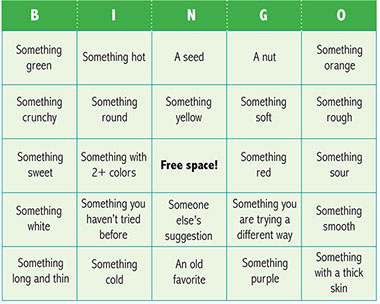
    Veggie pizza.

    This game is perfect for when you are making a salad, looking for pizza toppings, filling an omelet, or scoping out a buffet for healthy choices. Involve kids by having them identify different shapes, colors, textures, tastes, and experiences with their food.

    Game Rules

    1. Write down the options on pieces of paper and place them in a bowl.

    2. Have someone pull the pieces of paper out one at a time. Have them read out loud what’s on the paper.

    3. Have someone cross off the spaces that are read out loud.

    4. When someone gets an entire row, either across, down or diagonal, yell “Bingo!”

    5. Prepare a meal using the ingredients included in the Bingo! row.

    © American Institute for Preventive Medicine
  • Write A Grocery List

    Healthylife® Weigh

    Part 3

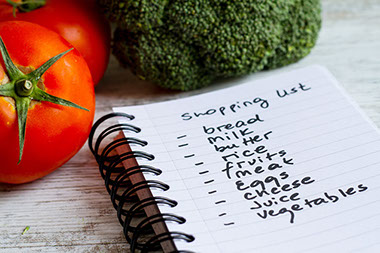
    Shopping list of groceries.

    1. Look at your weekly menu. Make a list of all of the ingredients you will need. Calculate how much you will need for the week. Example:

    *  2 oz. chicken breast x 5 meals = 10 oz. chicken breast

    *  2 cups greens x 3 meals = 6 cups greens

    2. What do you already have? Cross off what you don’t need to buy.

    3. On a fresh piece of paper, make a list of the ingredients you need to buy. Organize by section of the store to save time shopping.

    *  Fresh Fruits & Veggies

    *  Whole Grains (e.g., bread, pasta, rice, cereals), Beans & Lentils

    *  Meat/Poultry/Seafood/Tofu

    *  Misc. Aisles: Canned vegetables and fruits, nuts & seeds, dried fruit, oils

    *  Frozen Fruits & Veggies

    *  Dairy/Eggs

    Family Fun: Have your children help you write the grocery list each week. Practice math skills by adding the amounts you need for each item. Invite children to add a fruit or vegetable of their choice to the list. Have older children select a recipe and add ingredients to your list.

    © American Institute for Preventive Medicine

  • 4 Questions To Ask Before Having Surgery

    MEDICAL NEWS

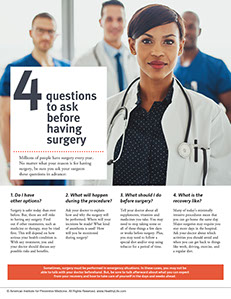
    Image of doctors.

    Millions of people have surgery every year. No matter what your reason is for having surgery, be sure you ask your surgeon these questions in advance:

    1.Do I have other options?Surgery is safer today than ever before. But, there are still risks to having any surgery. Find out if other treatments, such as medicine or therapy, may be tried first. This will depend on how serious your health condition is. With any treatment, you and your doctor should discuss any possible risks and benefits.

    2.What will happen during the procedure?Ask your doctor to explain how and why the surgery will be performed. Where will your incisions be made? What kind of anesthesia is used? How  will you be monitored  during surgery?

    3.What should I do before surgery?Tell your doctor about all supplements, vitamins and medicines you take. You may need to stop taking some or all of these things a few days or weeks before surgery. Plus, you may need to follow a special diet and/or stop using tobacco for a period of time.

    4.What is the recovery like?Many of today’s minimally invasive procedures mean that you can go home the same day. Major surgeries may require you stay more days in the hospital. Ask your doctor about which activities you should avoid and when you can get back to things like work, driving, exercise, and a regular diet.

    Sometimes, surgery must be performed in emergency situations. In these cases, you may not be able to talk with your doctor beforehand. But, be sure to talk afterward about what you can expect from your recovery and how to take care of yourself in the days and weeks ahead.

    © American Institute for Preventive Medicine

  • Preparing For A Vacation From Work

    WORK LIFE

    Image of family looking out of an airport window.

    To help make the most of your time off, be sure you’ve prepared for your absence at work. These steps can help you get ready for your well-deserved break:

    *Give people advance notice.As soon as you have plans, tell your supervisor and colleagues. If you have key clients or customers, be sure to tell them too.

    *Set up an out-of-office reply and voicemail.These basics let everyone know when you’ll get back with them. If possible, list a colleague’s name and number for urgent needs, but ask them first if this is okay.

    *Make a list of important tasks to complete before you leave.Then, stick to the list and make sure you get it done. This will help your colleagues and you’ll be able to rest easier on vacation.

    *Decide how you can be reached and let people know.If you don’t want phone calls or emails, let co-workers know. Some people want to take a complete break from work, while others like checking in. Or, you may tell people to call only if it’s urgent. It may depend on your job responsibilities and your preference.

    Traveling and spending

    In 2016, people in the U.S. spent $836.6 billion on domestic travel. This made up 84 percent of all travel expenditures. The money spent on travel in the U.S. directly supported over 7 million American jobs.

    Travelers spent $248.5 billion on food services. This accounted for 25 percent of travel expenses. It surpassed lodging expenses, which were 21.3 percent, or $210.8 billion, of total travel expenses.

    Source: U.S. Travel Association

    © American Institute for Preventive Medicine