Tag: chest

  • Bronchitis

    Respiratory conditions

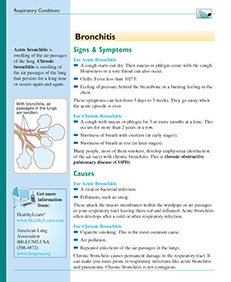
    Acute bronchitis is swelling of the air passages of the lung. Chronic bronchitis is swelling of the air passages of the lung that persists for a long time or occurs again and again.

    Acute Bronchitis

    Signs & Symptoms

    *  A cough starts out dry. Then mucus or phlegm come with the cough. Hoarseness or a sore throat can also occur.

    *  Chills. Fever less than 102ºF.

    *  Feeling of pressure behind the breastbone or a burning feeling in the chest.

    These symptoms can last from 3 days to 3 weeks. They go away when the acute episode is over.

    Causes

    *  A viral or bacterial infection.

    *  Pollutants, such as smog.

    These attack the mucus membranes within the windpipe or air passages in your respiratory tract leaving them red and inflamed. Acute bronchitis often develops after a cold or other respiratory infection.

    Treatment

    Most of the time, this type is caused by a virus and goes away without treatment. Sometimes, a doctor may prescribe:

    *  Bronchodilators. These medicines open up air passages in the lungs.

    *  An antibiotic if you smoke, are older than age 40, or if you have a condition or take medication that makes it hard for you to fight infections.

    Chronic Bronchitis

    Signs & Symptoms

    *  A cough with mucus or phlegm for 3 or more months at a time. This occurs for more than 2 years in a row.

    *  Shortness of breath with exertion (in early stages).

    *  Shortness of breath at rest (in later stages).

    Many people, most of them smokers, develop emphysema (destruction of the air sacs) with chronic bronchitis. This is chronic obstructive pulmonary disease (COPD).

    Causes

    *  Cigarette smoking. This is the most common cause.

    *  Air pollution.

    *  Repeated infections of the air passages in the lungs.

    Chronic bronchitis causes permanent damage to the respiratory tract. It can make you more prone to respiratory infections like acute bronchitis and pneumonia. Chronic bronchitis is not contagious.

    Treatment

    *  Not smoking. Avoiding secondhand smoke.

    *  Avoiding or reducing exposure to air pollution, chemical irritants, and cold, wet weather.

    *  Medical treatment as needed, for airway infections and heart problems.

    *  Oxygen, as prescribed.

    Questions to Ask

    Self-Care / Prevention

    *  Don’t smoke. Avoid secondhand smoke.

    *  Reduce your exposure to air pollution. Use air conditioning, air filters, and a mouth and nose filter mask if you have to. Stay indoors during episodes of heavy air pollution.

    *  Rest. Drink plenty of liquids.

    *  Breathe air from a cool-mist vaporizer. Bacteria grows in vaporizers, so clean your unit after each use. Breathing in mist with bacteria can make bronchitis worse. Use distilled (not tap) water in the vaporizer.

    *  Take an over-the-counter medicine for fever, pain, and/or inflammation as directed.

    *  Instead of cough suppressants, use expectorants.

    *  Use bronchodilators and/or take antibiotics as prescribed by your doctor.

    Resources
    American Lung Association

    800.LUNG.USA (586.4872)

    www.lungusa.org

    Healthier at Home book by the American Institute for Preventive Medicine. www.HealthyLife.com. All rights reserved.

    © American Institute for Preventive Medicine
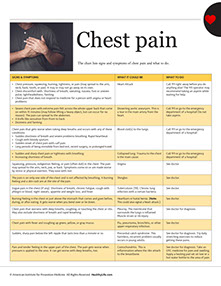
  • Chest Pain

    Heart & Circulation Problems

    Heart Attack

    Signs & Symptoms

    *  Chest pressure, squeezing, burning, tightness, or pain (may spread to the arm, neck, back, tooth, or jaw).

    *  Chest discomfort with: Shortness of breath; sweating; nausea; fast or uneven pulse; lightheadedness; fainting.

    *  Chest pain that does not respond to medicine for a person with angina or heart problems.

    What To Do

    Call 9-1-1!

    Dissecting Aortic Aneurysm

    This is a tear in the main artery from the heart.

    Signs & Symptoms

    *  Severe chest pain with extreme pain felt across the upper back (not just on one side) that came on within 15 minutes without an injury, back strain, etc. The pain can spread to the abdomen.

    *  A knife-like sensation from front to back.

    *  Dizziness and fainting.

    What To Do

    Call 9-1-1 or go to the emergency department of a hospital! Do not take aspirin.

    Blood clot(s) to the lungs

    Signs & Symptoms

    Chest pain that gets worse when taking deep breaths and occurs with any of these conditions:

    *  Sudden shortness of breath and severe problems breathing.

    *  Rapid heartbeat.

    *  Cough with bloody sputum.

    *  Sudden onset of chest pain with calf pain.

    *  Long periods of being immobile from bed rest, recent surgery, or prolonged travel.

    What To Do

    Call 9-1-1 or go to the emergency department of a hospital!

    Collapsed Lung

    Trauma to the chest is the main cause.

    Signs & Symptoms

    *  Sudden and sharp chest pain or tightness with breathing.

    *  Increasing shortness of breath.

    What To Do

    Call 9-1-1 or go to the emergency department of a hospital!

    Angina

    Signs & Symptoms

    Squeezing, pressure, indigestion feeling, or pain (often dull) in the chest. The pain may spread to the arm, neck, jaw, or back. Symptoms come on or are made worse by stress or physical exertion. They ease with rest.

    What To Do

    SeeAngina.

    Shingles

    Signs & Symptoms

    The pain is on only one side of the chest and is not affected by breathing. A burning feeling and a skin rash are at the site of the pain.

    What To Do

    SeeShingles.

    Tuberculosis (TB)

    Chronic lung infection with a certain bacteria.

    Signs & Symptoms

    Vague pain in the chest (if any). Shortness of breath; chronic fatigue; cough with phlegm or blood; night sweats; appetite and weight loss; and fever.

    What To Do

    See doctor.

    Heartburn or Hiatal Hernia

    {Note: This could also signal a heart attack.}

    Signs & Symptoms

    Burning feeling in the chest or just above the stomach that comes and goes before, during, or after eating. It gets worse when you bend over or lie down.

    What To Do

    SeeHeart Attack,Heartburn & Indigestion,Hiatal Hernia, andPeptic Ulcers

    Pleurisy

    The membrane that surrounds the lungs is inflamed. Muscle strain or rib injury.

    Signs & Symptoms

    Chest pain that worsens with deep breaths, coughing, or touching the chest or ribs.

    What To Do

    See doctor for diagnosis.

    Flu, Pneumonia, Bronchitis, or Other Upper Respiratory Infection

    Signs & Symptoms

    Chest pain with fever and coughing up green, yellow, or gray mucus.

    What To Do

    See doctor.

    Precordial Catch Syndrome

    This harmless, recurrent problem usually occurs in young adults.

    Signs & Symptoms

    Sudden, sharp pain below the left nipple that lasts less than a minute or so.

    What To Do

    See doctor for diagnosis. Try daily stretching exercises to reduce getting these pains.

    Costochondritis

    This is inflammation where the ribs attach to the breastbone.

    Signs & Symptoms

    Pain and tender feeling in the upper part of the chest. The pain gets worse when pressure is applied to the area. It can get worse with deep breaths, too.

    What To Do

    See doctor for diagnosis. Take an OTC medicine for pain and swelling. Apply a heating pad set on low or a hot water bottle to the area of pain.

    Healthier at Home book by the American Institute for Preventive Medicine. www.HealthyLife.com. All rights reserved.

    © American Institute for Preventive Medicine