Tag: choices

  • Make Your Food Sustainable

    HEALTHY EATING

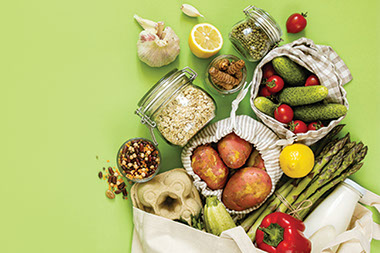
    Variety of food items on green table.

    A sustainable food system is one that provides health and food security both now and in the future.

    Food may be grown, processed, distributed, and prepared in ways that protect, or do not protect, the future ability to produce food. As a consumer, you can make choices that increase the demand for sustainable food.

    Sustainable food systems

    The term food system refers to the elements and activities that relate to the food you eat. This includes agriculture, production, processing, distribution, preparation, and consumption of food.

    A sustainable food system encompasses three pillars:

    *Environmental:A sustainable food system protects natural resources through efficient use of land, water, forest, and fisheries.

    *Economic:A sustainable food system protects and improves livelihoods and requires responsible and efficient governance.

    *Social:A sustainable food system supports the resilience of the community and enhances social well-being.

    Why it matters

    If any aspect of a food system degrades the ability to continue to produce nutritious food, that practice is considered unsustainable.

    For example, some farming techniques may deplete the health of the soil. Over time the soil may be less able to support healthy crops, making the practice unsustainable.

    In addition, a sustainable food system ensures no one goes hungry, now or in future generations.

    What you can do

    Much of the work to make food systems sustainable requires top-down regulation and innovation. However, there are things you can do to support sustainability efforts:

    *  Grow some of your own food.

    *  Purchase from local growers.

    *  Cook at home.

    *  Compost food scraps.

    *  Reduce food waste.

    *  Volunteer with non-profit organizations that are working to fight hunger.
    © American Institute for Preventive Medicine
  • Eat Out Without Filling Out

    Nutrition

    Order wisely and remember portion control.

    In today’s busy world, more and more meals are being eaten away from home. With some advanced planning, self-control and wise choices, dining out can still be a pleasant and healthy experience. Before you go to a restaurant, check out its menu and nutrition information online. Choose a place to eat that offers healthy options. If you can’t preplan, opt for foods lower in calories and high in nutrients.

    Go for it.

    *  Green leafy salads and veggies

    *  Chicken, turkey, fish, and lean meats. Choose ones that are broiled, grilled, steamed, poached, roasted, or baked

    *  Pasta dishes with red, marinara or primavera sauce

    *  Foods made with yogurt, broth, or mustard sauces

    *  Apple slices or fruit parfaits instead of French fries

    Avoid it.

    *  Anything creamy, fried, crispy, breaded, battered, or au gratin (with cheese)

    *  Sauces or soups with lots of butter, cream, or cheese

    *  Thick or creamy salad dressings

    *  Most casserole dishes

    *  Value, deluxe, or supersized meals

    *  Double and triple-decker burgers or 12-ounce steaks

    Healthy Eating Out Tips

    *  Split a meal or ask for a take-out box and pack it up before you dig in. Most restaurant meals are generous to a fault.

    *  Even at dinner, ask for a lunch-sized portion.

    *  Drink water or low-fat milk. Soda and other sugary drinks are wasted calories.

    *  Limit alcohol. Choose wine over mixed cocktails that have added calories.

    *  If you have dessert, order fresh fruit. Or share a dessert with someone.

    *  Have it your way. Ask that foods be prepared without added fats and salt.

    Action Step

    If your eyes are craving dessert, wait at least 15 minutes after you finish your meal. This allows your body to decide if it is actually still hungry.

    Page from Ways to Well-Being book by the American Institute for Preventive Medicine. www.HealthyLife.com. All rights reserved.

    © American Institute for Preventive Medicine

  • Nine Tips For Healthier Fast-Food Meals

    Nutrition

    Image of restaurant neon sign.

    Fortunately for the millions of Americans who eat at fast-food restaurants each day, choices are no longer limited to burgers, fries, and shakes. Most chains offer fruits, salads, baked potatoes, soups, and whole wheat products in addition to traditional choices. Here are some suggestions for more nutritious fast-food meals.

    *  Read nutrition information on the fast food restaurant’s Web site, brochures in the restaurant, or on the package.

    *  Avoid fried foods. Choose baked or broiled ones instead. If you order fried food, remove the breading (it sops up most of the grease).

    *  Order pizza with mushrooms, onions, tomatoes, and peppers instead of pepperoni and sausage.

    *  Avoid mayonnaise-laced salads. Instead, opt for fresh, unadorned fruits and vegetables. Use low-fat or fat-free salad dressings.

    *  Steer clear of bacon bits, croutons, rich salad dressings, and fried noodles.

    *  Use high-sodium condiments like mustard or pickles sparingly. And do not add salt to fast food. It doesn’t need it.

    *  Ask for low-fat milk, fruit juice, or plain water instead of soft drinks.

    *  Use skim or low-fat milk instead of cream or nondairy creamer in your coffee or tea.

    *  Avoid high-fat, calorie-rich pastries and dessert. They offer very little nutrients. Opt for fruit cups and apple slices.

    Page from A Year of Health Hints book by the American Institute for Preventive Medicine. www.HealthyLife.com. All rights reserved.

    © American Institute for Preventive Medicine
  • Rethink Your Drink

    Weight Control

    Avoid liquids that fill you up and out.

    That grande (16 oz.) peppermint chocolate mocha you grabbed before work might have perked you up, but it added 400 calories to your diet. With another 250 calories from the 20 oz. cola you drank with lunch, and the 300 calories from the two 12 oz. beers that helped you unwind after work, it’s no wonder you’re having trouble maintaining or losing weight. Your drinks alone account for about 1,000 calories of what should be a 1,500 (women) or 2,000 (men) calorie daily diet.

    Sweet tea guzzlers, don’t smirk. One 32 oz. drink from McDonald’s contains 280 calories. And a Long Island iced tea packs a whopping 532 calories in one 16 oz. bottle.

    Did You Know?

    Having two 12-ounce regular sodas a day could add 30 pounds of weight in a year. Having water instead of these sodas can help you shed 30 pounds a year!

    Healthy Drinking Tips

    *  Drink coffee black with a small amount of nonfat milk or unsweetened soy milk.

    *  Give your water some flavor with a squeeze of lemon, lime, or orange. Or, add a fresh strawberry or slice of cucumber or melon. Herbs such as ginger, cinnamon, or mint can also add flavor.

    *  Opt for caffeine-free herbal teas.

    *  Get the added benefit of antioxidants with fresh or low-sodium canned vegetable juices.

    *  Make homemade smoothies using fresh or frozen fruits and vegetables, protein powder, and soy or rice milk.

    *  Mix one part fruit juice to three parts water or sparkling water.

    *  Drink wine in moderation. It has about 125 calories per 4-5 ounces.

    *  If beer is your alcohol of choice, try “lite” beer, but check out the calories per serving. Some light beers have almost as many calories as regular beer. Limit beer to one or two per day.

    *  Nix the cocktails with high-calorie mixers, such as soda, juice, and cream.

    *  Save the sports drinks for high intensity workouts as they have about 100 calories per 8 oz. serving. Lower the calories by mixing 4 oz. of water with 4 oz. of the sports drink.

    Do diet drinks make a difference?

    Ideally, diet soft drinks help keep calories down, but research shows that people who drink diet sodas tend to be heavier than those who pass on carbonated drinks altogether. Why? Diet drinkers give themselves permission to eat more food.

    Action Step

    Every day, drink plenty of water and other refreshing low-calorie beverages, such as unsweetened iced tea with lemon.

    Page from Ways to Well-Being book by the American Institute for Preventive Medicine. www.HealthyLife.com. All rights reserved.

    © American Institute for Preventive Medicine
  • Choose Benefit Options With Both Cost And Care In Mind

    Medical Care

    Wooden blocks with medical icons.

    *  Signing up for the same plan as the one you have is easy, but spending time to find out about all options could be worth it. Ask your employer for written materials for your options or how to access the information online.

    *  Estimate what your costs for the coming year will be using each option. Your company’s or insurance company’s website may have tools to help you do this.

    *  Consider a flexible spending account (FSA) to help pay for health care expenses. It also offers tax advantages. To determine how much to put into an FSA, add up out-of-pocket costs you expect to pay for the coming year. These include co-pays, deductibles, cost for eyeglasses, contact lenses, etc.

    *  The best deal may not be the cheapest plan, but the one that gives the best price for the benefits you are most likely to use.

    *  Find out if you can lower your health care premium costs by taking part in certain wellness and disease management programs offered through work.

    A Year of Health Hints book by the American Institute for Preventive Medicine. www.HealthyLife.com. All rights reserved.

    © American Institute for Preventive Medicine
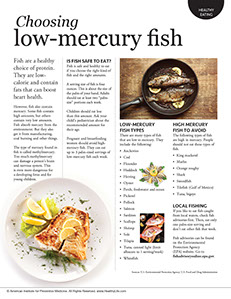
  • Choosing Low-Mercury Fish

    HEALTHY EATING

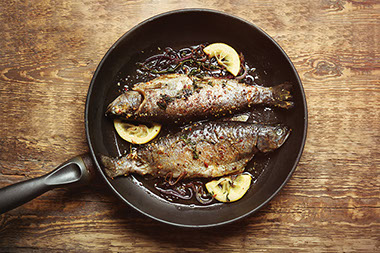
    Fish in frying pan.

    Fish are a healthy choice of protein. They are low-calorie and contain fats that can boost heart health.

    However, fish also contain mercury. Some fish contain high amounts, but others contain very low amounts. Fish absorb mercury from the environment. But they also get it from manufacturing, coal burning and other things.

    The type of mercury found in fish is called methylmercury. Too much methylmercury can damage a person’s brain and nervous system. This is even more dangerous for a developing fetus and for young children.

    Is fish safe to eat?

    Fish is safe and healthy to eat if you choose the right kind of fish and the right amounts. A serving size of fish is four ounces. This is about the size of the palm of your hand. Adults should eat at least two “palm-size” portions each week.

    Children should eat less than this amount. Ask your child’s pediatrician about the recommended amount for their age.

    Pregnant and breastfeeding women should avoid high-mercury fish. They can eat up to 3 palm-sized servings of low-mercury fish each week.

    Low-mercury fish types

    There are many types of fish that are low in mercury. They include the following:

    *  Anchovies

    *  Cod

    *  Flounder

    *  Haddock

    *  Herring

    *  Oyster

    *  Perch, freshwater and ocean

    *  Pickerel

    *  Pollock

    *  Salmon

    *  Sardines

    *  Scallops

    *  Shrimp

    *  Sole

    *  Tilapia

    *  Tuna, canned light (limit albacore to 1 serving/week)

    *  Whitefish

    High mercury fish to avoid

    The following types of fish are high in mercury. People should not eat these types of fish.

    *  King mackerel

    *  Marlin

    *  Orange roughy

    *  Shark

    *  Swordfish

    *  Tilefish (Gulf of Mexico)

    *  Tuna, bigeye

    Local fishing

    If you like to eat fish caught from local waters, check fish advisories first. Then, eat only one palm-size serving and don’t eat other fish that week.

    Fish advisories can be found on the Environmental Protection Agency (EPA) website. Go tofishadvisoryonline.epa.gov.

    Sources: U.S. Environmental Protection Agency, U.S. Food and Drug Administration

    © American Institute for Preventive Medicine
  • Helping Kids Make Health Decisions

    FAMILY LIFE

    Couple with young daughter.

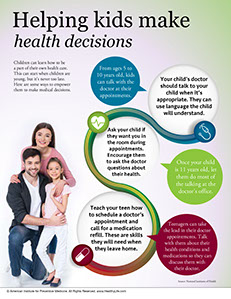
    Children can learn how to be a part of their own health care. This can start when children are young, but it’s never too late. Here are some ways to empower them to make medical decisions.

    From ages 5 to 10 years old, kids can talk with the doctor at their appointments.

    Your child’s doctor should talk to your child when it’s appropriate. They can use language the child will understand.

    Once your child is 11 years old, let them do most of the talking at the doctor’s office.

    Ask your child if they want you in the room during appointments. Encourage them to ask the doctor questions about their health.

    Teenagers can take the lead in their doctor appointments. Talk with them about their health conditions and medications so they can discuss them with their doctor.

    Teach your teen how to schedule a doctor’s appointment and call for a medication refill. These are skills they will need when they leave home.

    © American Institute for Preventive Medicine
  • Choose A Variety Of Foods

    Healthylife® Weigh

    Part 2

    Group of happy friends preparing food.

    No one food has all the nutrients needed to sustain life and promote well-being. You need to eat a variety of foods to get all of the nutrients your body needs. Some foods provide more nutrients than others. Food can be a source of pleasure, but its main purpose is to provide nutrients that your body cannot make.

    Choose foods that are nutrient dense. This means they give you a lot of nutrients per calorie. Examples are:

    *  Fruits and vegetables

    *  Whole grains

    *  Fat-free or low-fat dairy foods and drinks

    *  Seafood, lean meats, and eggs

    *  Beans, nuts, and seeds

    Some foods contain ingredients that may harm you or are difficult for your body to digest. Limit foods and beverages high in saturated fat, added sugars, or sodium. To do this, choose fewer of these foods:

    *  Sugar-sweetened drinks and desserts

    *  Refined grains (bread, chips, and crackers)

    *  Red meat and high-fat dairy and cheese

    *  Highly processed meats and cheeses

    Everything you eat or drink does not have to be nutrient dense. One meal won’t make or break your health. The trends in your diet are more important.

    © American Institute for Preventive Medicine
  • Coffee And Tea

    Healthylife® Weigh

    Part 3

    Herbal tea.

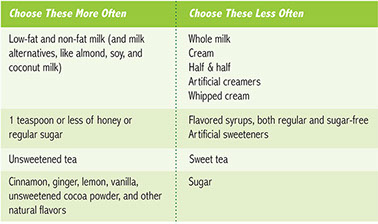
    Coffee and tea drinks made with added ingredients can be a major source of sugar and saturated fat in your diet. The calories can also add up, pushing you over what your body needs for the day and not leaving enough room for nutrient-dense foods. Without anything added, coffee and tea drinks have fewer than 5 calories.

    Example chart of what to choose and not choose.

    If your favorite coffee or tea drink has more add-ins from the column on the right, save this drink for a special treat. Or, start to gradually cut back on how much of these you add to your drink. You can get used to new tastes. You may even like the new version better!

    Different teas can have a lot of natural flavor and sweetness. Experiment with lemon, chai, chamomile, fruit, and herbal teas.

    © American Institute for Preventive Medicine

  • Eating At A Restaurant

    Healthylife® Weigh

    Part 3

    Two people eating at a restaurant.

    Use the same guidelines for choosing food at the grocery store to help you make healthy choices at a restaurant. Compared to preparing food at home, you have less control over what is in your food, how it is prepared, and how much you are served. However, you DO have some control. Here are a few tips to help you follow your eating goals when you eat out:

    1. Choose a restaurant that offers healthy options.

    *  If you are dining with a group, offer to make the reservation.

    *  Read reviews to learn about experiences other people have had at the restaurant.

    *  Avoid all-you-can-eat buffets or anything that is offered in an “endless” supply.

    2. Look up menus ahead of time. Many restaurants, especially fast-food restaurants and other chain restaurants, offer nutrition information online for items on their menu.

    3. Look for clues in the menu. Menus can offer information about what is in the food and how it is made.

    *  Look for meat, poultry, and seafood that has been baked, broiled, steamed, poached, or grilled. Avoid fried choices. Or, ask if a fried food can be prepared with one of these healthier cooking methods.

    *  Pictures, if on the menu, can show you the size of the food groups on the plate. If you need more vegetables to meet your daily needs, ask for an extra serving or order a side salad.

    *  Choose from the “heart healthy” section of the menu, if available. These choices are usually lower in saturated fat and sodium.

    4. Ask for changes to an item, if needed. Menu items can usually be modified by the restaurant. Use the menu to learn what the restaurant has in the kitchen. Mix and match to create a meal that fits your goals. *Be kind and tip your wait staff generously if you are asking for a lot of changes to your order!

    5. Follow your healthy eating plan during the day. Skipping meals or ignoring hunger earlier in the day can lead to overeating or choosing foods higher in sugar, saturated fat, and salt at the restaurant.

    6. Choose your portion. Order your meal as a half-size order or split a meal with a friend. Take some of your food home for another meal.

    7. Set yourself up to be successful. Decline the bread basket, politely. If you are with a group that wants the basket on the table, keep it at the other end to avoid grabbing a piece out of habit. Or, share a piece.

    8. Limit alcohol. This can be a big source of added calories. Stick with one glass of wine or one beer. Or, avoid alcohol altogether.

    Most importantly, enjoy yourself!

    Restaurants can be places to try new foods and flavors and make wonderful memories with family and friends. Take your time. Use your napkin between bites and sip your water often. Engage in conversation. Appreciate the restaurant’s décor and the courtesy of the staff.

    © American Institute for Preventive Medicine