Tag: cigarettes

  • E-Cigarettes & Your Health

    Healthylife® QuitWell™

    Part 1
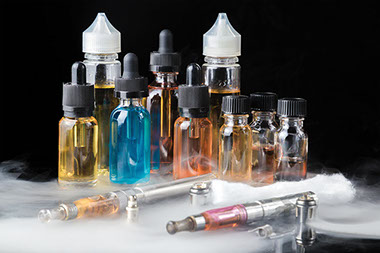
    Variety of vape equipment.

    Electronic cigarettes, or e-cigarettes, are battery-powered nicotine delivery systems. They have a cartridge that contains a liquid, an atomizer to heat the liquid, a power source, and a mouthpiece. The liquid contains a chemical mix of nicotine, propylene glycol, glycerin, and flavorings. The heat source and atomizer turn the liquid into a vapor, and the mouthpiece delivers the vapor to your lungs. That’s why it’s also called vaping.
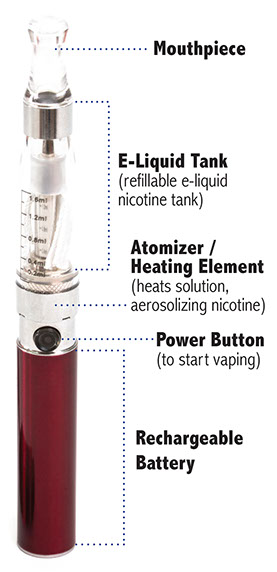
    Chart showing the different parts of an e-cigarette.

    E-cigarettes go by lots of other names: vapes, vape pens, mods, hookah pens, e-hookahs, e-cigs, e-juice, e-liquid, smoke juice, juuls, and more. While some are made to look like regular cigarettes, others look more like pens or flash drives. Some larger devices look very different and bear little resemblance to cigarettes at all. There are hundreds of different e-cigarettes on the market.

    E-cigarettes don’t contain tobacco and don’t produce smoke. Those are the only good things you can say about e-cigs! Most still contain nicotine, and all have toxic chemicals. Like cigarettes, e-cigarettes are harmful to your lungs and addictive. Nobody has invented a healthy e-cigarette yet!

    The FDA regulates the production of e-cigarettes by licensed manufacturers, but there are many unlicensed cartridges being sold from pop-up shops or on the street. These black-market cartridges can contain additional dangerous additives like solvents or pesticides. These products should be avoided at all times.

    Can they hurt if they’re not “real” cigarettes?

    It may seem like e-cigarettes are a safer option because they don’t contain tobacco or because they are available with different amounts of nicotine. Even though they do not have tobacco, e-cigarettes still contain addictive nicotine and toxic chemicals just like “real” cigarettes. Heating these chemicals and inhaling the vapor brings dangerous substances into your body. Some of these can cause cancer. Some of these may cause serious lung injury.

    In the summer of 2019, the rapid rise of hospitalizations and deaths among e-cigarette users prompted emergency action by the Centers for Disease Control & Prevention (CDC) and many state governments. While many health issues from smoking cigarettes do not show up until many years of use, serious lung illness and death has occurred in relatively young, short-term users of e-cigarettes. Long-term problems are still unknown, as e-cigarettes are new and researchers do not know what will happen to the body after 20 or 30 years of usage.

    If you use e-cigarettes and have any of the following symptoms, ask your healthcare provider to check for lung injury. Vaping-associated pulmonary illness is very serious and can be deadly.

    *   Cough, shortness of breath, or chest pain

    *   Nausea, vomiting, or diarrhea

    *   Fatigue, fever, or abdominal pain

    “Fun-flavored” Danger: E-Cigarettes and Teens

    E-cigarettes have quickly become popular with teenagers, partly due to e-juice that comes in “fun” flavors like cinnamon roll and bubble gum. These flavors, the myth that vaping is harmless, and the lack of lasting odors, create the perfect storm for teens who want to experiment or “fit in” without the stigma of smoking cigarettes. What they don’t realize is the danger of addiction and health problems.

    Can E-Cigarettes Help You Quit Regular Cigarettes?

    Some people have used e-cigarettes to cut back on the amount of nicotine they smoke until they are ready to quit entirely. The FDA has not approved this method of quitting, as there is no evidence that it leads to long-term cessation. Some studies have shown that adults who used vaping to quit cigarettes were more likely to relapse.

    Nicotine is a highly addictive substance that can damage the cardiovascular system. The narrowing of coronary arteries and breakdown of heart tissue can increase the risk for hypertension, increase inflammation in the body, and complicate existing heart conditions. If you previously smoked cigarettes, the heart is already damaged and additional use of nicotine could worsen this damage. Continued nicotine use also complicates diabetes management and associated conditions, such as eye health, risk for stroke, weight management and circulation problems.

    If you are using an e-cigarette to quit smoking, it is important to reduce the amount of nicotine you are consuming and plan to quit using the device completely. Continuing to use an e-cigarette will increase your risk of returning to regular cigarettes, along with all the problems that come with the e-cigarette itself.

    Relying on the e-cigarette as a way to cope with stress, as entertainment when bored, or to mimic smoking while driving in the car, does not change much about your smoking habit. Without making changes to your routines or learning to cope with challenges, it may make it easy to have a cigarette when the e-cigarette is unavailable, needs a re-fill, or a cigarette is offered.

    If you are looking for a way to step down nicotine safely and feel a little better when quitting, the QuitWell™ program recommends FDA-approved options in addition to support:

    *Nicotine Replacement Therapy (NRT):FDA approved, can safely be used by most people, available in a patch, gum, lozenge, nasal spray, or inhaler

    *Pharmaceutical Aid (e.g. Chantix, Zyban):Requires a prescription from your doctor, does not contain nicotine
    © American Institute for Preventive Medicine

  • Money Talks

    Healthylife® QuitWell™

    Part 1

    Image of 2 piggy banks.

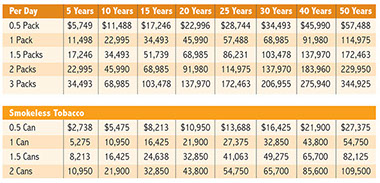
    In 2020, the average price of a pack of cigarettes in the United States was $6.30. In some states, the average price was over $10 per pack. A pack-a-day smoker in those states spends $70 per week on cigarettes. That could buy a week’s worth of groceries, two to three tanks of gas, or pay a month’s utility bill. Over months and years, the possibilities go even further.

    A can of chewing tobacco costs an average of nearly $3. A two can-a-week habit costs over $300 per year. A can-a-day habit costs nearly $1,100 per year. Think of all the things you could do with the money instead of dipping or chewing. It adds up.

    Find out how much money you will save when you quit. The chart below is based on U.S. averages.

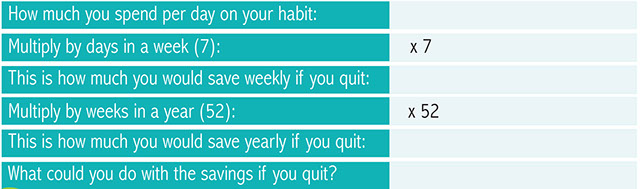
    Calculate Your Savings from Quitting:

    © American Institute for Preventive Medicine
  • Relaxation Techniques

    Healthylife® QuitWell™

    Part 4

    A couple resting on sofa with their dog.

    We will teach you four skills to relax:

    *Relaxation Reflex:Getting rid of muscle tension.

    *Mental Imagery:Thinking of calm, restful places.

    *Deep Natural Breathing:Feeling relaxed by breathing in more oxygen.

    *Spend Time with Animals:Feeling relaxed, happy and secure.

    These relaxation strategies are not designed to take your stress away. Done correctly, they will help you calm your body and mind so that you can think more logically, see major problems as manageable challenges, and get through a tough day.

    If something helps you-even a little-add it to your quitting tool kit. Remember, you will probably need a lot of strategies to be successful in the long run. One strategy may work on Monday morning, but you’ll need another tool on Friday afternoon!

    © American Institute for Preventive Medicine
  • Creative Imagination 2

    SleepWell® Program

    Week 4

    Image of women sitting outside in nature, thinking.

    This tool allows you to rehearse an event or thought in your mind so that you are better prepared to deal with it when it occurs.

    Identify an upcoming event or challenge. Picture other people there, what you do, what you say, and how you react to challenges you know are likely to arise. Mentally practice your feelings and actions to increase your confidence. Identify and address gaps in your plan.

    You can also use creative imagination to save thoughts for later. Take stressful thoughts out of your present mind to reduce anxiety and help you feel calmer. Try these techniques:

    *  Imagine your stressful thoughts in a fishbowl or behind thick glass. You can see the thought floating around but you cannot touch it or hear anything that is going on behind the glass.

    *  Imagine your thought is in a bubble floating away in the wind. The bubble dances in the breeze and eventually blows away.

    *  Imagine your thoughts are a baseball. Then imagine whacking that ball high into the sky, far away.

    *  Imagine your worries falling into the depths of the ocean.

    *  Imagine putting your ideas on a shelf to think about later.

    Make it Real

    Write your worries on an index card and put them in a shoebox. Put the box on a shelf, in the back of the closet, or in a drawer.

    Say this: “I can retrieve these thoughts later, but now it is time to sleep.”

    © American Institute for Preventive Medicine

  • Fill In The Void

    Healthylife® QuitWell™

    Part 4

    Hand squeezing a stress ball.

    Hands:

    To take the place of holding a cigarette or e-cigarette, try holding one of these:

    *  A paper clip

    *  A hand grip or stress ball

    *  A rubber band

    *  A hair tie

    *  A pen or pencil

    Mouth:

    These can be placed in your mouth instead of tobacco:

    *  Toothpicks

    *  Coffee stirrers or cocktail twisters

    *  Sugarless gum or candy

    *  Sugarless breath mints

    *  Cinnamon sticks

    *  Crunchy vegetables (e.g. carrots or celery sticks)

    Mind:

    Make use of the gaps of time when you used to use tobacco. You might:

    *  Play cards

    *  Sketch an idea or make a list

    *  Do yard work

    *  Crochet or learn a new skill that uses your hands

    *  Stretch or exercise

    *  Write a letter or send an email

    *  Read

    *  Learn the words to a new song-or how to play it on an instrument

    *  Wash and wax your car or motorcycle

    © American Institute for Preventive Medicine
  • Move Your Body

    Healthylife® QuitWell™

    Part 5

    Couple outside stretching.

    All physical activity has benefits for the body and mind. View exercise as a break from your day. Use this time to focus on the present, instead of past or future problems and worries. What are your favorite ways to be physically active?

    Physical activity can help you quit and stay quit. It can also improve your energy level, ability to learn, and focus.

    Emotional Health

    Exercise releases endorphins and increases levels of serotonin and dopamine in the brain. These brain chemicals help create feelings of happiness and euphoria. You may start to feel these benefits after just a few minutes of moderate exercise. This leads to a happiness buzz and overall mood boost!

    Stress Management

    Norepinephrine is a chemical that can moderate the brain’s response to stress. Exercise helps to increase that chemical. Exercise can decrease worry and tension. These may be triggers for you to smoke, dip, or vape. Exercise also enhances the mind’s ability to deal with daily stressors. Managing stressors can reduce urges to reach for your old habit. The calming effect of exercise can last at least four hours after the exercise is over.

    Physical Health

    Exercise helps strengthen your muscles and bones. This helps you have good posture and keeps your joints and body more aligned. Exercise strengthens your heart muscle so your heart is more efficient. This also helps reduce your risk of having a heart attack or blood clot. Exercise can also help lower your blood pressure. Your ability to breathe also improves, especially as you reduce and eliminate smoking. Exercise improves the circulation of immune cells in your blood that fight off viruses and bacteria. Exercise also helps combat damage done to cells, tissues, and organs.

    Recommendation: Be physically active for at least 2 ½ hours (150 minutes) per week. You can do this for 10, 15, 20, or 30 minutes at a time. Consult your doctor before beginning an exercise routine if you:

    *  Have a chronic health problem, such as heart disease or diabetes.

    *  Have high blood pressure.

    *  Feel faint or dizzy when you try to exercise.

    *  Have an injury or bone or joint problems, such as arthritis, that have been or could become aggravated by exercise.

    Reduce Sit-Time

    Find ways to move more throughout the day.

    *  Set an alarm on your watch or phone to get up every hour, if sitting.

    *  Stretch and walk for a few minutes to get more oxygen flowing through your body.

    *  Drink water regularly so you need to use the bathroom every few hours.

    *  Get up during commercial breaks on TV to tidy up a room or dust.

    *  Walk outside for a few minutes. Take a deep breath of fresh air.

    *  Walk to get lunch.

    Move in Different Ways

    All exercise and movement help give you the benefits. Finding activities you like doing and that you will keep doing is important for long-term success.

    Cardiovascular (cardio) training uses large movements that involve multiple muscle groups, such as your legs, buttocks, and abdominals, all at once. Popular aerobic activities are brisk walking, running, cycling, swimming, and dancing.

    Resistance training uses body weight or weights to build muscle. Move slowly through exercises, breathing regularly. Squats, lunges, push-ups, calf raises, and bicep curls are basic resistance movements.

    Stretching helps your body be more flexible. This helps you prevent injury during exercise and everyday activities. Stretching can also help you relax.

    © American Institute for Preventive Medicine

  • Secondhand Smoke

    Healthylife® QuitWell™

    Part 1

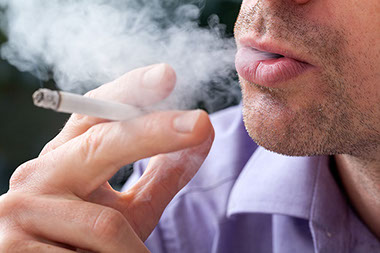
    Image of cigarette and smoke.

    Secondhand smoke is the smoke that occurs when a cigarette, pipe, or cigar is lit. The secondhand smoke going into the room from the end of a burning cigarette is not filtered. People breathing in secondhand smoke are breathing in this smoke, as well as what the smoker blows into the room. Secondhand smoke puts non-smoking bystanders (maybe your loved ones) at risk for the same health problems as the smoker.

    Some of the toxins found in secondhand smoke are tar, nicotine, carbon monoxide, carbon dioxide, methane, nitrogen dioxide, cadmium, benzpyrene, ammonia, hydrogen cyanide, acetone, pyridine, and formaldehyde. Although secondhand smoke becomes mixed with the air, there are safety risks for both the smoker and non-smokers, as well as pets who breathe these vapors in.

    Infants & Children

    Children of smokers are at a higher risk for respiratory infections, tonsillitis, pharyngitis, and middle ear infections. Asthma can become more severe. Children of smokers are also much more likely to start smoking.

    Pets

    Your beloved fur ball can develop serious health problems, including nose and lung cancers, from secondhand smoke. Secondhand smoke can also cause respiratory illness in cats and dogs and make skin conditions worse. Thirdhand smoke, or the smoke residue that settles on surfaces, can be especially damaging to cats. When cats lick their fur to clean themselves, they lick the toxins from smoke. This makes cats more than twice as likely to develop malignant lymphoma, a type of cancer.

    Protect Your Loved Ones

    To protect others from secondhand smoke, avoid smoking in enclosed spaces that you share with others, like your house or car. If you are going to smoke, go outside and make sure windows are closed to the house near the area you are smoking. Avoid using a “smoking room” in the house or smoking in an attached garage-smoke will still get into the rest of the house.

    © American Institute for Preventive Medicine
  • Review & Prepare 4

    SleepWell® Program

    Week 1

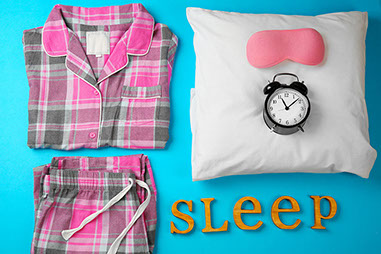
    Image of sleeping mask, pillow, clock, and pajamas.

    Complete the following.

    *  Why I am concerned about my sleep?

    *  What I think is the biggest challenge with my sleep: (e.g. not being able to fall asleep or stay asleep, waking up often, not feeling refreshed when I wake up)?

    *  Could any medical issues or medications be causing my sleep problems? (If you answered yes to this question, talk with your doctor about your sleep issues.)

    © American Institute for Preventive Medicine
  • Time Management

    Systematic Stress Management Program

    Step 6: Time Management

    Step 6: Time Management Section

    Introduction

    Does Time Get the Best of You?

    Defining Your Life Goals

    Activity Worksheet

    Activity Log

    Time Management Techniques

    Action Plan for Improving Time Usage

    Procrastination Quiz

    How Do I Procrastinate?

    One Dozen Ways to Overcome Procrastination

    Should You Delegate?

    Delegation Caddy

    Read the following suggestions on how to manage your time more effectively. Concentrate on correcting those areas that waste the most time for you.

    Decreasing Time Wasters

    1. Learn to say “no.”

    This technique helps to prioritize the people and tasks in your life. Lower priority people and tasks require a “no” response. Use assertiveness. Learn to say “no” to unwanted interruptions, invitations, and requests.

    2. Put perfectionism in its proper place.

    Perfectionism is often a poor use of time. Not everything requires perfection. High priority items require more perfection than low priority items. By demanding perfection of yourself and others, you may be wasting time in unnecessary effort.

    3. Avoid or manage interruptions.

    Interruptions are one of the biggest time wasters. Common time wasters are emails, instant messages (IMs), text messages, phone calls, and uninvited guests. Follow these guidelines and gain some control over daily interruptions.

    Technology Tools

    *  Make and return calls and send and return emails, Instant Messages (IMs), and texts at times that allow the most efficient use of your time.

    *  Screen calls. Send them to voicemail, as needed.

    *  Keep IMs work-related and brief. Keep email responses to four sentences or less.

    *  Monitor lengths of calls. Limit chit chat.

    *  Use “do not disturb” technology, as needed.

    *  Send and accept personal calls, texts, etc. on non-work times.

    Uninvited Visitors

    *  Close your door.

    *  Face desk away from office traffic.

    *  Establish quiet time – no guests.

    *  Plan regular visiting time.

    *  Remain standing when a visitor is present.

    *  Don’t add to chatter.

    *  Let the visitor know how you honestly feel about interruptions.

    4. Delegate when possible.

    Try assigning some low priority tasks to others. This can free up your time for more important things. Delegation is also a good option for tasks that do not require perfection.

    5. Remember: Handle each piece of paper or mail only once.

    Immediately make your decisions about what attention it requires. Don’t stack papers that you will look at again and again. Deal with emails efficiently, too. Delete ones you do not need. Unsubscribe to mailing lists not relevant to your work or that you do not read. Use your email server’s “Tools” menu to create “Action” and “Archive” folders, labels, and filters to organize emails. Set aside specific times to read and respond to emails.

    6. Transform commuting and waiting time.

    Listen to books, language programs, and education materials on audio cassettes while commuting, exercising, or waiting in line.

    7. Have assigned places and systems for routine items and tasks.

    Always store keys, purse, briefcase, tools, and utensils in the same place. Often used clothing and grooming items also need a special place. This reduces the time wasted searching for routine items.

    Increase Productive Activities

    1. Think of the 80/20 Principle.

    Carefully choose where you will concentrate your efforts. The 80/20 principle states that 80% of the most valuable results come from 20% of the tasks you do. Concentrate your working time on just these important tasks. Avoid the trivial.

    2. Distinguish between activity and productivity.

    Are you wasting time on busy work (activity) that may not lead to a goal or are you spending time productively in a way that will produce results? Concentrate on productive time. Ask yourself often, “Am I just keeping busy or am I really being productive?”

    3. Ask the question: “What is the best use of my time right now?”

    Ask this question when you are uncertain about your use of time. Use this question to get you back on track in the following situations:

    *  after an interruption

    *  when distracted

    *  when procrastinating

    *  when you run out of steam

    4. Make a “To Do” list.

    Make this list every day! Write it down! Keep it at your fingertips! Having a list of activities that can be checked off is gratifying. It also gives you some idea of progress. Don’t list routine items, such as brushing teeth and commuting to work. However, do allow time for these activities.

    5. Follow the ABC Priority System.

    Categorize your activities under A, B, C priorities with “A” being the top priority. Focus your energies on completing the A’s. Perhaps B’s and C’s could be delegated to others. Some C’s may never even have to be done.

    6. Avoid over-commitment.

    This can be caused by inflexible scheduling or over-booking. Know your personal limits and time frames and have realistic expectations.

    7. Schedule quiet time.

    Establish a regular quiet time for yourself. Inform key interrupters and don’t take telephone calls. Allow yourself quiet time to restore your energy.

    8. Balance quiet time and activity time.

    Too much quiet time can reduce the productivity of those around you. They may depend upon your input – emotional and otherwise. Ask your co-workers/family if your quiet time is a problem for them.

    Page from the Systematic Stress Management book by the American Institute for Preventive Medicine. www.HealthyLife.com. All rights reserved.

    © American Institute for Preventive Medicine

    Step 1: Understanding Stress

    Step 3: Type A & B Behavior Patterns

    Step 5: Thinking Differently

    Step 7: Communication & Stress

    Step 2: Stress Management at Work

    Step 4: Biofeedback Training & Relaxation

    Step 6: Time Management

    Steps to Systematic Stress Management™

    RELATED ARTICLES

    © American Institute for Preventive Medicine  –  All Rights Reserved.Disclaimer|www.HealthyLife.com
  • Food & Drink Tips

    Healthylife® QuitWell™

    Part 2

    Image of a dish filled with healthy snacks.

    What you eat or drink and how you eat or drink can influence your urges for tobacco products. By working on quitting, you are taking an important step to manage what goes into your body.

    *  Drink at least 8 glasses of low-sugar, natural liquids per day: water, herbal tea, sparkling water. This will make you feel less hungry and give your body the water it needs to function. Water is important for clearing toxins from the body.

    *  Eat small, nutrient-dense meals and snacks throughout the day. This will help your blood sugar and energy stay steady and avoid feeling too tired during the day. You will also get the fuel your body needs.

    *  Eat protein as part of all meals and most snacks: lean meats, fish, poultry, low-fat cheese, nut butters, nuts, and seeds. These foods are full of nutrients and help give you even energy throughout the day. They are also filling, so you will find you don’t reach for as many snacks.

    *  Eat plenty of vegetables, fruits, and salads. These foods are filling, vitamin-rich, and low in calories.

    *  Eat foods high in calcium, such as dairy or calcium-fortified juice. Smoking can add to your chances of having brittle bones, so extra calcium may be needed.

    *  Avoid high sugar foods. Look at food labels to spot added sugars. “Sweets” are not the only culprit! Cutting out added sugar helps prevent your blood sugar from going too high or too low. Low blood sugar can trigger an urge.

    *  Cut down on coffee, tea, colas, and other caffeinated drinks. These drinks are often tied to a smoking habit. Cutting out caffeine, even temporarily, while you are quitting, can help reduce urges.

    *  Avoid alcohol. Alcohol causes blood sugar to rise. Your habit may also be linked to drinking habits. Alcohol can lessen your desire to quit in the moment.

    *  After eating, brush your teeth and rinse with mouthwash. The minty fresh taste in your mouth won’t go well with tobacco. It also helps scramble your old routine, if you smoked after a meal.

    © American Institute for Preventive Medicine