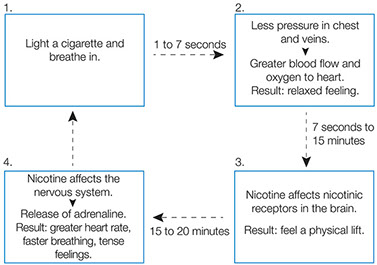
Many people use tobacco to manage stress-and return to old habits in times of stress. If you currently use tobacco/nicotine products to manage stress, it is very likely your mind will go there in times of stress in the future. If you have quit, having a plan for when stress increases will help you from returning to tobacco/nicotine.
What is stress?
Stress is normal and can be a healthy, productive force in your life. Stress can have a good or bad effect on you depending on:
* The type of stress
* The amount of stress
* How well you deal with stress
“Good” stress can help you pay attention, stay focused, feel challenged, stay interested, and complete tasks.
“Bad” stress or chronic stress is intense stress over a long period of time. You may not be able to manage this stress as you would like. You tend to stay tense and don’t or can’t relax after things are once again under control. In our modern world, there are many things that can “push your buttons” and stress can become a way of life.
When we have too much stress to manage, our bodies can be more prone to illness-heart disease, cancer, ulcers, asthma, and colitis.
The stress response is the way your body and mind react to change. Our bodies have an inborn “fight or flight” response to a stressor:
* Heart rate and breathing speed up
* Blood pressure rises
* Blood moves away from the internal organs to the muscles
* Muscles tense
* Sweating occurs
* Blood sugar (glucose) increase which gives the muscles and brain a lift
Create Your Stress Strategy
1. Explore what causes you stress and how you react to these stressors.
2. Identify stressors that can be reduced.
3. Learn tools to reduce the feeling of stress, even with the same trigger.
4. Learn ways to manage the stress that remains.
Know Your Stressors
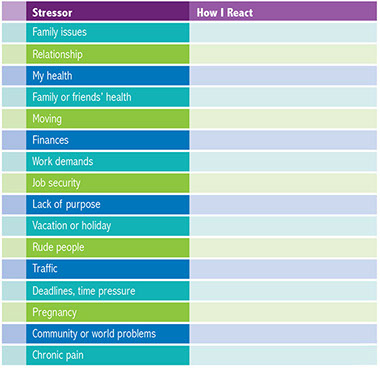
Everyone reacts differently to stress. In order to manage stress, you need to find out the source of your stress and how you react to it.
1. Look at the list that follows and think about stressors in your life. Check off any that apply to you right now or that are common stressors for you. Knowing your stressors will help you better prepare for triggers.
2. In the space next to each, write how you react to these stressors. What do you do? How do you feel?