Tag: cigarettes

  • Take Small Steps To Get Started

    Healthylife® QuitWell™

    Part 3

    Close up of hands, breaking a cigarette in half.

    Taking small steps can help build confidence. Seeing the “wins” right away can show you how strong and capable of change you are. The activities in this section may not feel very exciting, but they are small on purpose. Once you get going, taking bigger steps will feel easier and you will be more successful with them.

    These activities can also help you learn more about what causes your urges and what you do without thinking. These activities can start weakening your old habits and strengthening new, healthy habits.

    © American Institute for Preventive Medicine

  • Buddy System

    Healthylife® QuitWell™

    Part 3

    Image of 3 friends talking over tea and coffee.

    Who could support you in your effort to quit? Having someone to hold you accountable-and who you want to share success with-can be a powerful part of your quit plan. Support from others can help:

    *  Motivate you and lift you up when you stumble.

    *  Hold you accountable.

    *  Give you new ideas and inspiration-especially if they have gone through quitting themselves.

    *  Make activities more fun, like taking a walk together instead of a smoke break.

    Start With One Person

    1. Choose a buddy-someone you will talk to daily. This person should be someone you trust and who you can be completely honest with.

    2. Let them know what you are trying to do.

    3. Ask them if they would be willing to support you. If they are, thank them!

    4. Let them know how to help you. This may change over time.

    5. Share your feelings and actions truthfully with your buddy. If you don’t, you are losing out on the benefits of an accountability buddy.

    6. Thank this person often. Let them know the impact they are having on your lifestyle change.

    Involving Others

    Even when someone wants to help you, they may not know how. You have probably experienced this already, like when someone gives you cliché advice or says “just one won’t hurt.”

    Be specific when you tell others how to help you. These are suggestions for those people who want to help you. Read over the list and choose the ones you think will be most helpful. Write these down and show your list to the people who want to help.

    © American Institute for Preventive Medicine

  • Identify Your Strengths

    Healthylife® QuitWell™

    Part 2

    Image of smiling women.

    *  What are you really good at?

    *  What have you overcome in your life?

    *  How do you help others?

    *  How do you take care of yourself?

    Trust that the things that make you strong will continue to be there during your quit attempt. Repeat after me: “I am strong.” Say it again. And again. Say it out loud to add some ‘oomph’ to your statement. Continue to repeat as needed!

    © American Institute for Preventive Medicine

  • Review & Prepare

    Healthylife® QuitWell™

    Part 2

    Image of no smoking sign.

    In this section, you were guided to understand the barriers you face with quitting. By carefully reading, thinking about each part, and answering questions along the way, you are getting yourself ready for success.

    *  How have you prepared yourself to quit? Write the steps you have taken, mentally and physically, to get to this point.

    *  Look back at your list of barriers. Do any of them feel more manageable now?

    *  Which of your strengths do you think will come in handy for quitting? Be confident in what you know you are good at and what makes you a strong person.

    © American Institute for Preventive Medicine

  • The Big Picture

    Healthylife® QuitWell™

    Part 1

    Women crushing cigarette in hand.

    A tobacco/nicotine addiction has a degree of control over you, your time, the places you can go, and your experiences. Smoking steals your breath and your appearance over time. It also dims the world around you by dulling your senses of smell and taste.

    Imagine taking a vacation to somewhere you’ve always dreamed of seeing. Now imagine being too out of breath to enjoy a hike, standing outside on the deck to smoke while your traveling companions enjoy a shipboard show, stopping to smoke when you’d rather be in the water swimming or paddle boarding. Imagine not being able to fully enjoy your dream vacation.

    *  How does your current habit affect your life?

    *  What could you enjoy more if you left tobacco/nicotine behind?

    *  Relationships, career goals, financial goals, and other areas of life can also be affected. What other “big picture” goals do you have in your life right now?

    *  How would cutting back or quitting support these goals?

    Keep working hard on your other goals-you may find that seeing yourself succeed helps you feel more ready to tackle quitting.

    © American Institute for Preventive Medicine

  • Buy Smaller Amounts

    Healthylife® QuitWell™

    Part 3

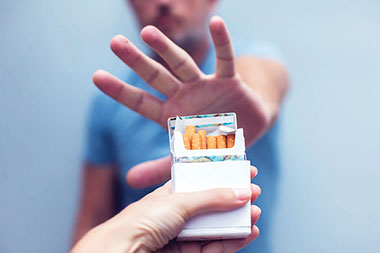
    A hand offering cigarettes and another hand rejected them.

    If you smoke, buy cigarettes one pack at a time, not by the carton. If you dip, buy one can at a time. If you vape, smoke cigars, or use another form of tobacco/nicotine, buy the smallest quantity available. If you vape, buy a lower concentration of nicotine or fewer cartridges. This makes your habit less convenient (more trips to the store) and it will be helpful to have less at home when you are ready to be completely done.

    Note for e-cigarettes: Start by stepping down to the next lowest concentration. If you’re using 18 mg cartridges, switch to 12 mg, and so on, until you’re down to 0 mg.

    While you’re cutting back:

    *  Focus on keeping your inhaling as consistent as possible. It might be tempting to inhale more forcefully to get a bigger nicotine hit.

    *  Avoid taking more hits than you did on higher doses of nicotine.

    © American Institute for Preventive Medicine

  • Keep What Is Truly Calming

    Healthylife® QuitWell™

    Part 4

    Image of smiling man.

    Removing tobacco/nicotine doesn’t mean your entire strategy for managing stress has to go away. Many things you are doing ARE healthy and genuinely calming to your body and mind.

    Reasons why you may feel calmer after taking a smoke break at work:

    *  Getting away from your work area

    *  Getting away from the people that you work with (that may be contributing to your stress)

    *  Fresh air/being outside

    *  Movement-walking from place to place or pacing around outside

    *  Deep breathing as you inhale

    *  Looking off into the distance, versus looking at something right in front of you or at a screen

    *  Talking to co-workers outside of the office (maybe even venting a bit!)

    *  More open space, especially if you work in a crowded, noisy environment

    Why else do you feel taking a smoke break is calming for you?

    Modified smoke break strategy ideas:

    *  Plan to step away from your work for 5-10 minutes.

    *  Walk to a drinking fountain or bathroom far away from your desk to get in extra movement.

    How can you practice taking a tobacco-free break today or tomorrow?

    © American Institute for Preventive Medicine

  • Review & Prepare 2

    Healthylife® QuitWell™

    Part 3

    Image of older women.

    Summary of Small Steps You Can Take:

    *  Keep tracking your habit.

    *  Wait 5 minutes when you have an urge to use.

    *  Buy your cigarettes by the pack (not the carton), your chewing tobacco by the can, or a lower concentration of e-cigarette cartridge.

    *  Store tobacco/nicotine products in a different place then usual.

    *  Set up a buddy system. Write goals in S.M.A.R.T. ways.

    *  Add to your list of “pros” for quitting. Star what is important to you.

    Change Is Your Choice

    The decision to make changes is up to you. You can decide which changes you want to make, how long it takes you to make them, and who you will tell. Answer the following:

    *  What do I want to do? Am I willing to do this?

    *  What am I going to do right now (within the next hour)?

    *  How will today be different for me?

    © American Institute for Preventive Medicine

  • Time Management 2

    Healthylife® QuitWell™

    Part 2

    Clock sitting on top of keyboard.

    Deciding to make a change and taking the steps to succeed will take some of your time. It’s an investment that will pay off down the road-it is worth it to take the time to plan and execute change.

    First, think of “time” management as “me” management. Time continues on, no matter how much we want it to slow down or speed up sometimes. The one thing you can work on is how you manage yourself given the time that you have.

    Look at how you currently spend your time. Get a piece of paper and write down how you spend each half hour of your day. A lot of this time may be sleeping or working, but there are probably blocks of time you have some flexibility (even if they are small).

    Think of quitting as a high-priority project that you would schedule into your day. Identify two 15-minute blocks of time that you could spend planning your day and what you are going to do when you have an urge. Try to make at least one of these blocks of time early in the day, as this will set the tone for the rest of your day.

    If you are having trouble finding a 15-minute block of time, look for the ‘low-hanging fruit’ in your day- time you spend doing things that are relatively mindless and don’t take a lot of thought. This could be when you are usually looking at your phone, watching TV, or walking the dog. Your dog will still need a walk, but this could be time you think through what you want the rest of your day to look like.

    Think about tomorrow-when can you spend 15 minutes reviewing the guide or thinking through your goals?

    © American Institute for Preventive Medicine

  • Balance Of Choice

    Healthylife® Weigh

    Part 1

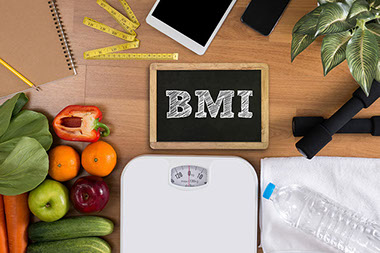
    Dumbbells, scale, towel, fruit, BMI body mass index formula rate formula in a board.

    Learn what is pulling you toward your goal and what is holding you back. All thoughts and feelings are valid. Is your goal more important to you than the challenges to achieve it? Are you pursuing this goal just because someone said you “should” do it? If you think of something later, come back to this to add another point.

    Benefits – “Pros” vs Costs-“Cons”

    Making a change.

    Pro Example: I will have more energy.

    Con Example: I won’t be able to have sweets as often as I do now.

    Not changing.

    Pro Example: I can keep all of my current habits.

    Con Example: I could keep putting on more weight.

    © American Institute for Preventive Medicine