Tag: circulation

  • Reduce Flight Risks

    Healthy Travel

    Don’t let motion and a long flight ruin your trip.

    Flying can trigger more than anxiety in airplane travelers. Sitting for hours in narrow, cramped seats can cause a decrease in blood flow and poor circulation in the legs. These problems can lead to “economy-class syndrome” which refers to a deep vein thrombosis – a blood clot in the leg. Even if you sit in first class or business class, there are things you can do to help avoid this problem. If your seatmates stare, suggest they join you!

    Image of flying airplane.

    Airplane aerobics:

    *  Tense your feet for five seconds, then relax them. Repeat with each muscle group, including your calves, thighs, buttocks, shoulders, neck, forearms, and hands.

    *  Drop your head forward. Then move it slowly to the right, to the back, then to the left and the front again.

    *  Raise both shoulders. Move them back, then down, and then forward in a circular motion.

    *  Reach toward the ceiling with your right arm and stretch. Repeat with your left arm.

    *  Flex and extend your feet. Spread and then point your toes up and down.

    *  Get up and walk at least once every hour.

    *  Focus on your breathing. Inhale and exhale slowly and deeply. It’ll help you get enough oxygen into your blood so you don’t feel fatigued.

    To deal with motion sickness:

    *  Reserve a seat over one of the wings, if you can.

    *  Avoid sitting in the tail section, which is usually the bumpiest.

    *  Get plenty of rest before you fly.

    *  Avoid drinking alcohol before or during travel.

    *  Take a motion sickness medication, such as Dramamine, 30 minutes before your plane takes off.

    *  Open overhead vents and direct air at your face.

    *  Don’t read while traveling and don’t focus on any other stationary object.

    *  Breathe slowly and deeply.

    Action Step

    Wear loose-fitting clothes, socks, and shoes. If you have cardiovascular disease, talk to your doctor about wearing compression stockings and other advice before you take long flights or travel long distances by car or train.
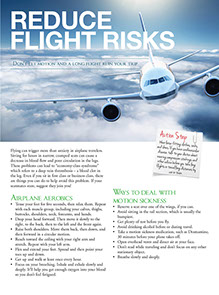
    Page image from Ways to Well-Being book by the American Institute for Preventive Medicine. www.HealthyLife.com. All rights reserved.

    © American Institute for Preventive Medicine
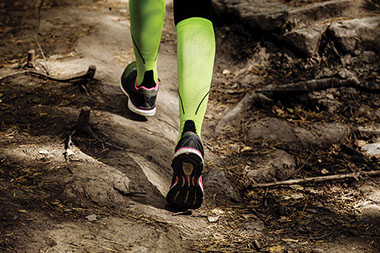
  • Compression Socks: A Fitness Friend?

    BE FIT

    Close up of running legs wearing compression socks.

    Some athletes use compression socks during their exercise or sports activities. They look like tights, knee-high socks or sleeves that go over the calves.

    Compression socks are not new. They have been used for years to help with leg pain, swelling, blood clots and varicose veins. They work by gently squeezing the legs to help move blood upward.

    But do they help with exercise performance?

    Lack of evidence for exercise performance

    While compression socks aren’t usually harmful, they’re not proven to be helpful for exercise. Studies have not found that compression socks help a person’s athletic ability.

    Still, there may be some benefit to using them if your doctor says it’s okay. Some evidence suggests that compression socks may help slightly with exercise recovery. A review of several small studies found that for some people, compression socks could help with muscle soreness. But, because these results haven’t been proven in large studies, it’s too early to say whether they will work for most people.

    Some people enjoy the feeling of pressure on the legs. They may feel that it helps them exercise longer. If that’s the case, compression socks can be a good way to help you stay active.

    Using compression socks

    If you’re interested in compression socks, ask your doctor about them. They can help with:

    *  Legs that feel achy or heavy

    *  Swelling in the feet or legs from standing or sitting for long hours

    *  Pain from varicose veins

    *  Preventing blood clots, especially after surgery or for people who can’t move around easily. This could be after an injury or for people who have an illness that requires them to be in bed for long periods.

    Some compression socks are tighter than others. Your doctor can give you a prescription for them, or you may purchase them online. Ask your doctor how long you should wear them, and what to do if you find the socks uncomfortable.

    Sources: British Journal of Sports Medicine, Journal of Sports Science and Medicine, U.S. National Library of Medicine

    © American Institute for Preventive Medicine
  • Foot Health Matters With Diabetes

    SELF-CARE CORNER

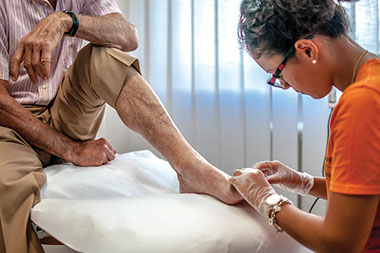
    Patient having his foot examined by a doctor.

    People with diabetes have a higher risk of getting certain foot problems. This usually happens because diabetes can cause nerve damage in the feet. This is known as diabetic neuropathy, which can lead to tingling, burning or weakness in your feet.

    Why does neuropathy matter?

    Diabetic neuropathy isn’t just painful. It also means that you may not feel things like cuts, injuries or heat or cold on your feet. Your feet could get hurt or burned and you wouldn’t know it. Then, with reduced blood flow, your body may not be able to heal the skin very well.

    Keeping skin healthy

    Wash, dry and moisturize the skin on your feet every day. Also, check for problems. Here’s how:

    *  After bathing, dry your feet gently with a towel.

    *  Look for corns, calluses, blisters or cuts. If you notice any of these, call your health care provider. Don’t try to remove corns or calluses yourself.

    *  If your skin looks healthy, you can moisturize. Apply a skin cream to dry areas.

    *  Don’t apply cream between your toes. This can cause fungus to grow. Keep the area between toes clean and dry.

    *  If you can’t trim your toenails easily, have this done by a podiatrist or other health provider.

    Good shoes are your friend

    Poorly fit shoes can cause sores, or ulcers, on your feet. These can lead to infection. Even if you don’t feel pain, see your doctor about any sores on your feet. You should also stay off your feet until your doctor says it’s ok. Don’t walk in your bare feet because this can put your feet at risk.

    You can avoid many foot ulcers by getting comfortable, supportive shoes. A podiatrist or foot specialist may help you find a pair that fits your feet well without rubbing. Wearing socks that wick moisture, such as wool socks, can also help. Wearing wet socks or shoes can lead to fungal infections.

    Helpful ways to avoid foot problems with diabetes:

    1.  Go to regular checkups.

    2.  See your doctor if you have any foot injuries or skin changes on your feet.

    3.  Follow your diabetes plan to keep blood sugar under control.

    4.  Check your feet every day.

    Source: American Diabetes Association

    © American Institute for Preventive Medicine
  • Get Moving To Boost Your Immunity

    BE FIT

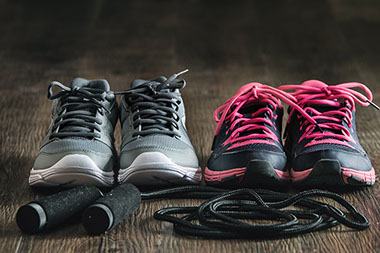
    Two pairs of shoes and a jump rope.

    Exercise provides so many health benefits. Recent research now adds strengthening the immune system to the list. Here are three ways exercise can help fight infections and prevent you from getting sick.

    *  Regular bouts of moderate to high-intensity exercise reduce inflammation in the body. Lower levels of inflammation are linked to a decreased risk of chronic diseases such as heart disease, cancer, and diabetes.

    *  Exercise supports the healthy bacteria in the digestive tract. These bacteria, called the microbiome, make up about 70% of your immune system.

    *  Consistent physical activity may prevent the decline in immune function that is common as people age. Being active keeps the body’s defense system in peak condition.

    © American Institute for Preventive Medicine
  • What To Do About Varicose Veins

    SELF-CARE CORNER

    Doctor and patient talking.

    Do you have bulging veins on your legs? The veins may be blue, purple or red in color. If so, you may have varicose veins.

    What are varicose veins?

    Your heart is always pumping blood out to your organs. Then, the blood goes back to the heart through the veins. Veins have special valves that push the blood back toward the heart.

    Sometimes these valves stop working correctly. This may happen if valves get weaker over time. Then the blood pools in the vein, unable to move. Blood that is pooling in a vein may cause the bulge or bump of a varicose vein.

    Not just cosmetic

    Some people don’t like the look of varicose veins. But they can also cause other problems. Varicose veins may itch or cause pain, swelling or heaviness in the legs.

    They can also continue to weaken the vein over time. This can cause skin changes like open sores or hard, thick areas of skin.

    Medical options

    Ask your doctor about medical procedures that can help. Options may include:

    *  Lasers that heat the vein and close it off

    *  Injections that seal the vein closed

    *  Surgery to remove the vein if non-invasive options don’t work

    Helping at home

    If varicose veins bother you, there are some things you can do.

    *  First, work toward a healthy weight. Being overweight puts more pressure on the veins.

    *  Be active. Exercise gets your blood pumping. This helps move blood out of the veins.

    *  Ask your doctor about compression stockings. These can help relieve pain and heaviness for some people. These are available at drug stores and online without a prescription if your doctor gives you the okay to wear them.

    *  Put your legs up. When possible, keep your legs up above your heart.

    *  Don’t wear clothes that are very tight around the waist or upper thighs.

    Source: National Heart, Lung and Blood Institute, National Institutes of Health

    © American Institute for Preventive Medicine

  • What To Know About Blood Clots

    SELF-CARE CORNER

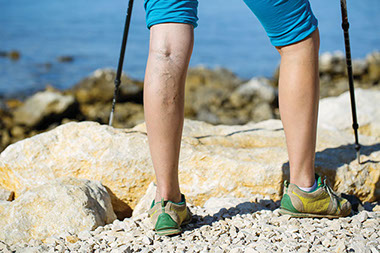
    Veins on the back of a women's leg.

    Healthy blood is designed to clot. When blood clots, it prevents heavy bleeding. But, if a clot happens inside a vein, it can be dangerous. This is called a deep vein thrombosis (DVT). Sometimes, the blood clot may move through the body and get stuck in the lungs. This is called a pulmonary embolism (PE).

    Up to 100,000 Americans die from a DVT or PE every year. These clots kill more people than breast cancer, car collisions, and HIV/AIDS combined.

    Signs of a clot

    Signs of a DVT or PE include:

    *  Swelling, tenderness, redness or warmth in one area of the body

    *  Chest heaviness or pain

    *  Sweating

    *  Feeling out of breath

    *  Weakness or fainting

    *  Fast heart beat

    *  Feeling of impending doom

    Know your risk

    Certain things make you more likely to get a blood clot. They include:

    *  Recent surgery or an injury

    *  Being in bed for long periods

    *  Not moving a certain body part, such as a broken leg

    *  Sitting for a long time, including during travel

    *  Higher levels of estrogen from birth control pills, pregnancy or hormone replacement therapy

    *  Medical conditions, such as cancer, Crohn’s disease, ulcerative colitis, heart disease, blood clotting disorders or lung disease

    *  Obesity

    *  Smoking

    *  History of atrial fibrillation (A-fib)

    Reduce your risk

    Talk about your risk with your doctor. You can lower your risk of getting a blood clot by:

    *  Getting up from sitting at least every two hours

    *  Moving around after surgery or being in bed for a long time

    *  Moving legs and feet while on plane trips

    *  Wearing loose-fitting clothes while sitting for a long time

    *  Exercising regularly

    *  Wearing compression stockings if recommended by your doctor

    What to do?

    If you think you or a loved one might have a blood clot, see a doctor right away. A blood clot can be treated if it’s caught early. Sometimes, doctors use medicines that dissolve the clot. Other times, doctors will perform surgery to remove the clot.

    Sources: American Society of Hematology, Centers for Disease Control and Prevention

    © American Institute for Preventive Medicine
  • Fitness In Flight

    Healthy Travel

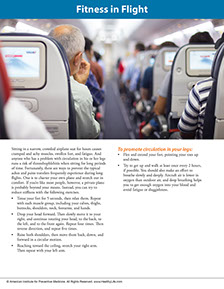
    Passengers aboard an airplane.

    Sitting in a narrow, crowded airplane seat for hours causes cramped and achy muscles, swollen feet, and fatigue. And anyone who has a problem with circulation in his or her legs runs a risk of thrombophlebitis when sitting for long periods of time. Fortunately, there are ways to prevent the typical aches and pains travelers frequently experience during long flights. One is to charter your own plane and stretch out in comfort. If you’re like most people, however, a private plane is probably beyond your means. Instead, you can try to reduce stiffness with the following exercises.

    *  Tense your feet for 5 seconds, then relax them. Repeat with each muscle group, including your calves, thighs, buttocks, shoulders, neck, forearms, and hands.

    *  Drop your head forward. Then slowly move it to your right, and continue rotating your head, to the back, to the left, and to the front again. Repeat four times. Then reverse direction, and repeat five times.

    *  Raise both shoulders, then move them back, down, and forward in a circular motion.

    *  Reaching toward the ceiling, stretch your right arm. Then repeat with your left arm.

    To promote circulation in your legs:

    *  Flex and extend your feet, pointing your toes up and down.

    *  Try to get up and walk at least once every 2 hours, if possible. You should also make an effort to breathe slowly and deeply. Aircraft air is lower in oxygen than outdoor air, and deep breathing helps you to get enough oxygen into your blood and avoid fatigue or sluggishness.

    Page image from A Year of Health Hints book by the American Institute for Preventive Medicine. www.HealthyLife.com. All rights reserved.

    © American Institute for Preventive Medicine
  • Cold Hands & Feet

    Skin Conditions

    Signs & Symptoms

    *  Fingers or toes turn pale white or blue, then red, in response to cold temperatures.

    *  Pain when the fingers or toes turn white.

    *  Tingling or numbness in the hands or feet.

    Causes

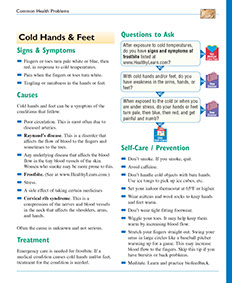
    Often the cause is unknown and not serious. Cold hands and feet can be a symptom of the conditions that follow.

    *  Poor circulation. This is most often due to diseased arteries.

    *  Raynaud’s disease. This is a disorder that affects the flow of blood to the fingers and sometimes to the toes.

    *  Any underlying disease that affects the blood flow in the tiny blood vessels of the skin. Women who smoke may be more prone to this.

    *  Frostbite.

    *  Stress.

    *  A side effect of taking certain medicines

    *  Cervical rib syndrome. This is a compression of the nerves and blood vessels in the neck that affects the shoulders, arms, and hands.

    Treatment

    Emergency care is needed for frostbite. If a medical condition causes cold hands and/or feet, treatment for the condition is needed.

    Questions to Ask

    Self-Care / Prevention

    *  Don’t smoke. If you smoke, quit.

    *  Avoid caffeine.

    *  Don’t handle cold objects with bare hands. Use ice tongs to pick up ice cubes, etc.

    *  Set your indoor thermostat at 65ºF or higher.

    *  Wear mittens and wool socks to keep hands and feet warm.

    *  Don’t wear tight-fitting footwear.

    *  Wiggle your toes. It may help keep them warm by increasing blood flow.

    *  Stretch your fingers straight out. Swing your arms in large circles like a baseball pitcher warming up for a game. This may increase blood flow to the fingers. Skip this tip if you have bursitis or back problems.

    *  Meditate. Learn and practice biofeedback.

    Healthier at Home book by the American Institute for Preventive Medicine. www.HealthyLife.com. All rights reserved.

    © American Institute for Preventive Medicine

  • Love Your Heart

    Heart & Circulation Problems

    Heart shape plate with heart healthy foods.

    Show your heart some love with heart-healthy habits. Eating a healthy diet, maintaining a healthy weight, getting regular activity, avoiding smoke, and managing stress can all help keep your ticker on track.

    And, did you know that having a strong support system lowers your stress level, keeping your heart happy and healthy? So share a meal or enjoy a walk with a friend.

    You’ll love how you feel when you take care of your heart.

    Health at Home Lifetime book by the American Institute for Preventive Medicine. www.HealthyLife.com. All rights reserved.

    © American Institute for Preventive Medicine
  • Peripheral Artery Disease

    Heart & Circulation Problems

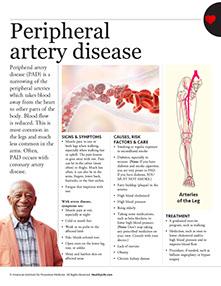
    Peripheral artery disease (PAD) occurs when blood vessels outside of the heart become too narrow to supply enough oxygen to the limbs. Blood flow is reduced. This is most common in the legs and much less common in the arms. Often, PAD occurs with coronary artery disease.

    Signs & Symptoms

    *  Muscle pain in one or both legs when walking, especially when walking fast or uphill. The pain lessens or goes away with rest. Pain can be in the calves (most often) or thighs. Much less often, it can also be in the arms, fingers, lower back, buttocks, or the foot arches.

    *  Fatigue that improves with rest

    With severe disease, symptoms are:

    *  Muscle pain at rest, especially at night

    *  Cold or numb feet

    *  Weak or no pulse in the affected limb

    *  Pale, bluish-colored toes

    *  Open sores on the lower leg, toes, or ankles

    *  Shiny and hairless skin on affected areas

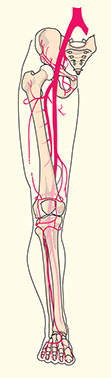
    Illustration of arteries of the leg.

    Arteries of the Leg

    Causes, Risk Factors & Care

    *  Smoking

    *  Diabetes, especially in women. {Note: If you have diabetes and smoke cigarettes, you are very prone to peripheral vascular disease. If you have diabetes, YOU MUST NOT SMOKE.}

    *  Fatty buildup (plaque) in the arteries High cholesterol

    *  High blood pressure

    *  Being elderly

    *  Taking some medications, such as beta- blockers, to lower high blood pressure. {Note: Don’t stop taking any prescribed medicines on your own. Consult with your doctor.}

    *  Agent Orange exposure

    Treatment for peripheral artery disease includes:

    *  A graduated exercise program, such as walking.

    *  Medicines, such as ones to lower cholesterol and/or high blood pressure and to improve blood flow

    *  Surgery, if needed, such as balloon angioplasty or bypass surgery

    Prevention

    *  Don’t smoke. If you smoke, quit.

    *  Do regular exercise.

    *  Get to and/or stay at a healthy weight.

    *  Follow a diet low in saturated fat and cholesterol.

    Self-Care

    *  Follow measures under “Prevention” in this topic.

    *  Follow a graduated walking program as advised by your doctor.

    *  Take medicines as prescribed.

    *  Take good care of your feet:

    – Check the feet daily.

    – Don’t walk barefoot.

    – Wear comfortable, roomy shoes. Avoid sandals and high heels.

    – Cut toenails straight across. Do not cut nails close to the skin.

    – Use an antifungal foot powder to avoid athlete’s foot.

    When to Seek Medical Care

    Contact Doctor When:

    *  You have any pain, redness, or a leg or foot wound and you have a history of diabetes or peripheral vascular disease.

    *  The pain, redness, and swelling extend up the ankle to the leg.

    *  The skin of your foot has turned grayish to black in color.

    *  Repeated muscle pain occurs in a leg when you walk and it goes away with rest.

    *  Leg pain occurs when you are at rest.

    Get Immediate Care When:

    You have all of these problems:

    *  Sudden onset of pain

    *  Rapid skin color changes: white, red, blue, grayish, or black

    *  You cannot feel sensation in your foot for the first time.

    Health at Home Lifetime book by the American Institute for Preventive Medicine. www.HealthyLife.com. All rights reserved.

    © American Institute for Preventive Medicine