Women’s Health
Varicose veins may occur in almost any part of the body. They are most often seen in the back of the calf or on the inside of the leg between the groin and the ankle.
Signs & Symptoms
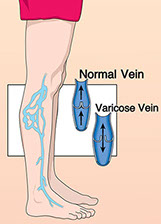
* Swollen and twisted veins look blue and are close to the surface of the skin.
* Veins bulge and feel heavy.
* The legs and feet can swell.
* The skin can itch.
Causes & Risk Factors
* Obesity.
* Pregnancy.
* Hormonal changes at menopause.
* Activities or hobbies that require standing or lifting heavy objects for long periods of time.
* A family history of varicose veins.
* Often wearing clothing that is tight around the upper thighs.
* Body positions that restrict lower leg blood flow for long periods of time. One example is sitting in an airplane, especially in the economy class section, on a long flight.
* Past vein diseases, such as thrombophlebitis. This is inflammation of a vein before a blood clot forms.
Treatment
Medical treatment is not required for most varicose veins unless problems result. These include a deep vein blood clot or severe bleeding, which can be caused by an injury to the vein. Problems can occur without an injury, as well. An X-ray of the vein (venogram) or a special ultrasound can tell if there are any problems.
Medical Treatment
* Surgery can remove all or part of the vein.
* Sclerotherapy. This uses a chemical injection into the vein, causing it to close up.
* Laser therapy. This causes the vein to fade away.
Questions to Ask
Self-Care / Prevention
* Don’t cross your legs when sitting.
* Exercise regularly. Walking is a good choice. It improves leg strength and vein strength.
* Maintain a healthy weight. Lose weight if you are overweight.
* Don’t stand for long periods of time.
* If your job or hobby requires you to stand, shift your weight from one leg to the other every few minutes. Just wiggling your toes can help, too.
* Wear elastic support stockings or support hose, as advised by your doctor.
* Don’t wear clothing or undergarments that are tight or constrict your waist, groin, or legs.
* Eat high-fiber foods, like bran cereals, whole-grain breads, and fresh fruits and vegetables, to promote regularity. Constipation may be a factor in varicose veins.
* Elevate your legs when resting.
* Exercise your legs. From a sitting position, rotate your feet at the ankles, turning them first clockwise, then counterclockwise, using a circular motion. Next, extend your legs forward and point your toes to the ceiling then to the floor. Next, lift your feet off the floor and gently bend your legs back and forth at the knees.
* Get up and move about every 35 to 45 minutes when traveling by air or even when sitting in an all-day conference. Opt for an aisle seat in such situations.
* Stop and take short walks at least every 45 minutes when taking long car rides.
Resources
American Academy of Dermatology
866.503.SKIN (503.7546)
American College of Phlebology
© American Institute for Preventive Medicine