Tag: clean

  • Reduce Indoor Air Pollution For A Healthier Home

    Home Safety

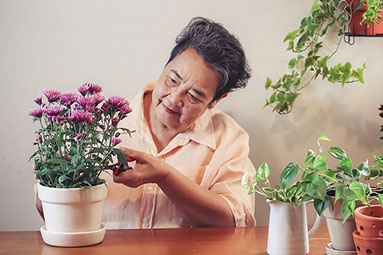
    Women tending to her plants.

    *  Do not smoke. Do not allow smoking in your house.

    *  Open windows as much as you can to let fresh outdoor air in.

    *  Live clean and green. Use baking soda, vinegar, plain soap, etc. and/or 100 percent biodegradable products that do not have chlorine, phosphates, and dyes. Paint with zero-or low volatile organic (VOC) compound paints. Use products with the EPA’s “Design for the Environment (DfE)” on the label. Find out more fromepa.gov/dfe.

    *  Have green houseplants, such as Boston ferns and spider plants. These absorb indoor air pollutants.

    *  Choose energy-efficient products, such as ones with an ENERGY STAR. Find out about these fromenergystar.gov.

    *  To help eliminate gases, odors, chemicals and particles, put an air filter or electronic air cleaner on your furnace. Or use a portable air purifier and/or a vacuum that has a HEPA filter.

    *  To limit mold growth, keep your house clean, dry, and well ventilated.

    A Year of Health Hints book by the American Institute for Preventive Medicine. www.HealthyLife.com. All rights reserved.

    © American Institute for Preventive Medicine

  • Fishhook Removal

    First Aid

    A fishhook can nick or cut the skin, get stuck in the skin near its surface, or get deeply embedded in the skin. First aid treats most fishhook accidents.

    Questions to Ask

    Self-Care / First Aid

    For a Fishhook Deeply Embedded in the Skin

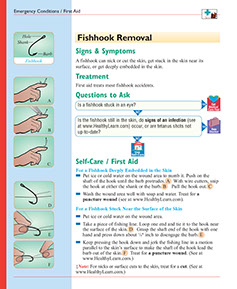
    *  Put ice or cold water on the wound area to numb it. Push on the shaft of the hook until the barb protrudes. See image A. With wire cutters, snip the hook at either the shank or the barb. See image B. Pull the hook out. See image C.

    *  Wash the wound area well with soap and water. Treat for a puncture wound.

    For a Fishhook Stuck Near the Surface of the Skin

    *  Put ice or cold water on the wound area.

    *  Take a piece of fishing line. Loop one end and tie it to the hook near the surface of the skin. See image D. Grasp the shaft end of the hook with one hand and press down about 1/8th inch to disengage the barb. See image E.

    *  Keep pressing the hook down and jerk the fishing line in a motion parallel to the skin’s surface to make the shaft of the hook lead the barb out of the skin. See image F. Treat for a puncture wound.

    {Note: For nicks or surface cuts to the skin, treat for a cut.

    Healthier at Home book by the American Institute for Preventive Medicine. www.HealthyLife.com. All rights reserved.

    © American Institute for Preventive Medicine

  • Splinters

    Skin Conditions

    Signs & Symptoms

    *  An opening near the skin where the splinter entered.

    *  Pain may not be felt and the splinter may or may not be visible.

    *  Bleeding, swelling, and/or pain at the wound area, especially for splinters stuck deep under the skin.

    Causes

    Splinters are pieces of wood, glass, metal, or other matter that lodge under the skin.

    Treatment

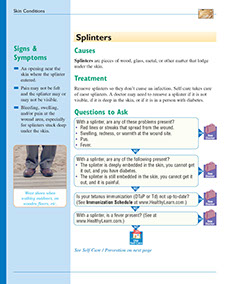
    Remove splinters so they don’t cause an infection. Self-care takes care of most splinters. A doctor may need to remove a splinter if it is not visible, if it is deep in the skin, or if it is in a person with diabetes.

    Questions to Ask

    Self-Care / Prevention

    To Prevent Getting Splinters

    *  Wear shoes out-of-doors at all times and whenever you walk on unfinished floors.

    *  Sand, varnish, and/or paint handrails to keep from getting splinters in the hands.

    *  Clean up all broken glass and metal shavings around the house. Be careful when you handle broken glass.

    *  Wear hard-soled shoes when glass has been broken.

    *  Wear work gloves when you handle plants with thorns, sharp tips, or spines.

    To Remove a Splinter

    *  Wash your hands, but don’t let the area around a wooden splinter get wet. A wooden splinter that gets wet will swell. This will make it harder to remove.

    *  Sterilize tweezers. Place the tips in a flame. Wipe off the blackness on the tips with sterile gauze if you use a lit match for the flame.

    *  Use the tweezers to gently pull the part of the splinter that sticks out through the skin. It should slide right out. If necessary, use a magnifying glass to help you see close up.

    *  If the splinter is buried under the skin, sterilize a needle and gently slit the skin over one end of the splinter. Then, use the needle to lift that end and pull the splinter out with the tweezers.

    – Check to see that all of the splinter has been removed. If not, repeat the above step.

    – If you still can’t get the splinter out, soak the skin around the splinter in a solution made with 1 tablespoon of baking soda mixed in 1 cup of warm water. Do this 2 times a day. After a few days, the splinter may work its way out.

    – Once the splinter is removed, clean the wound by washing it with soap and water. Blot it dry with a clean cloth or sterile gauze pad. Apply a sterile bandage.

    – To remove a large number of close-to-the- surface splinters, such as cactus spines, apply a layer of hair removing wax or white glue, such as Elmer’s, to the skin. Let it dry for 5 minutes. Gently peel it off by lifting the edges of the dried wax, gel, or glue with tweezers. The splinter(s) should come up with it.

    – Contact your doctor if you still have the splinter(s) after using self-care measures. Also, see that your tetanus immunizations are up-to-date.

    Healthier at Home book by the American Institute for Preventive Medicine. www.HealthyLife.com. All rights reserved.

    © American Institute for Preventive Medicine

  • Make Your Kitchen A Healthy Eating Zone

    Healthylife® Weigh

    Part 4

    Three generation family eating dinner at home.

    You walk into the kitchen and see a box of cereal sitting out. You fill your cereal bowl and eye the leftover pie next to a bag of chips on the counter. It’s been a long day and you deserve a treat, right? When you are hungry, tired, bored, or stressed, food choices can be influenced by what is around you.

    First, learn about your kitchen. Your kitchen may be a place where you socialize with family and friends. It may be a place where you cook or pack lunches for children. Or, you have to walk through the kitchen to get to other rooms.

    *  How many times do you walk into your kitchen each day? If you aren’t sure, keep track for a day.

    *  List a few reasons you go into your kitchen.

    *  Without opening any doors (pantry, fridge, etc.), what foods can you see?

    *  If you were to select a snack right now, what would you choose? Why did you choose this snack?

    The kitchen can be one of your biggest allies in managing your weight. A kitchen can also be a battle zone that trips up your goals.

    © American Institute for Preventive Medicine

  • Keep Clean And Carry On

    HEALTHY EATING

    Image of green re-usable bag with fruit.

    Reusable grocery totes are popular. They’re an eco-friendly choice to carry groceries. But only 15% of Americans regularly wash their tote bags, thus creating a breeding zone for harmful bacteria, according to a survey by the Home Food Safety program. For example, juices from raw meat or germs from unclean objects can come in contact with bread or produce. And each year 48 million Americans get food poisoning from food-borne germs.

    You can prevent getting sick, says the Academy of Nutrition and Dietetics:

    *  Wash your grocery tote often, either in the washing machine or by hand with hot, soapy water. Turn it inside out.

    *  Clean all areas where you place your totes, such as the kitchen counter or kitchen table.

    *  Store totes in a clean, dry location. Avoid leaving empty totes in the trunk of your car.

    *  Wrap meat, poultry, and fish in plastic bags at the grocery store before putting them in your tote. Use one tote for raw meats, poultry and seafoods. Use a different one for ready-to-eat foods.

    © American Institute for Preventive Medicine

  • Prevent Clothes Dryer Fires

    WELL-BEING

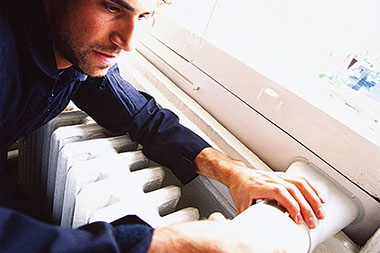
    Image of a man cleaning dryer duct.

    Built-up lint blocks air flow in your clothes dryer, which leads to high heat and a potential fire. Thousands of fires occur each year, according to the U.S. Fire Administration.

    Take these simple steps to keep your home safe:

    *  Clean the lint screen every time you use the dryer.

    *  If you use fabric softener, wash the screen in warm soapy water periodically to get rid of film build-up that restricts air flow.

    *  Make sure the lint screen has no tears (otherwise lint gets into the duct system and restricts air flow).

    *  Inspect the duct, dampers, and access covers for damage every 3 months. Clean all removable parts. Vacuum the duct to remove excess lint build-up.

    Don’t dry items that have been cleaned or soaked in gasoline, dry cleaning solvents, vegetable or cooking oil, machine oil, or other chemicals such as mop heads, which can be explosive when heated.

    © American Institute for Preventive Medicine

  • Wash Away The 5 Most Common Handwashing Myths

    WELL-BEING

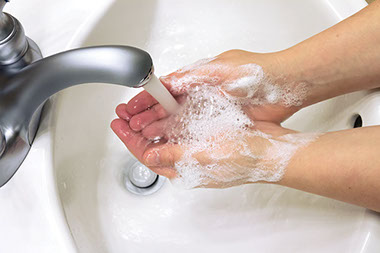
    Image of hands being washed with water and soup.

    Think you know how to wash your hands? Think again. A 2013 study in the Journal of Environmental Health showed that only 5% of people properly wash their hands on a daily basis. Cintas Corporation and Henry the Hand Foundation have teamed up to dispel the  5 most common handwashing myths.

    Keeping hands clean is one of the most important ways to avoid getting sick and spreading germs. Researchers at the NIH found that people touch their faces on average 3.6 times per hour. So handwashing is the answer. Test your knowledge about the best way to clean your hands.

    1. It doesn’t matter how long I wash my hands as long as I use soap – FALSE

    The next time you’re in the restroom and washing your hands, think of the chorus of your favorite song. Studies show that you should scrub your hands with soap for a minimum of 15-30 seconds in order to effectively remove germs.

    2. Hand sanitizers can replace washing your hands with soap and water – FALSE

    Washing hands with soap and water is the best and most effective way to reduce the number of microbes and germs on hands. Although alcohol-based (at least 60%) hand sanitizers can quickly reduce the number of germs on hands in some situations, they are not as effective as soap and water when it comes to removing and inactivating dangerous gastrointestinal illness-causing germs.

    3. The hotter the water you use for handwashing, the better – FALSE

    Studies show that water temperature does not affect germ removal. In fact, there is no research to prove that higher temperatures improve handwashing at all. Hotter water can also dry out skin, which leaves your skin more susceptible to germs and can make handwashing painful. It is best to wash your hands with the temperature that you find comfortable.

    4. You don’t have to dry your hands after washing them – FALSE

    Studies show that germs can be more easily transferred to and from wet hands, which is why drying hands is essential to staving off bacteria after handwashing.

    5. Hand dryers are more hygienic than paper towels – FALSE

    Researchers found that paper towels are superior to air dryers and can help remove bacteria, unlike air dryers, which can increase bacteria counts. Because air dryers have been shown to spread bacteria between 3 and 6 feet from the device, paper towels are also far less likely to contaminate other restroom users.

    © American Institute for Preventive Medicine