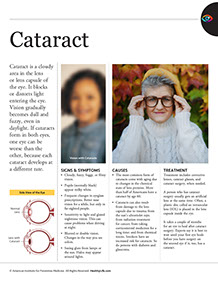
A cataract is a cloudy area in the lens or lens capsule of the eye. A cataract blocks or distorts light entering the eye. Vision gradually becomes dull and fuzzy, even in daylight. Most of the time, cataracts occur in both eyes, but only one eye may be affected. If they form in both eyes, one eye can be worse than the other, because each cataract develops at a different rate.
Signs & Symptoms
* Cloudy, fuzzy, foggy, or filmy vision.
* Pupils (normally black) appear milky white.
* Frequent changes in eyeglass prescriptions. Better near vision for a while, but only in far-sighted people.
* Sensitivity to light and glazed nighttime vision. This can cause problems when driving at night.
* Blurred or double vision. Changes in the way you see colors.
* Seeing glare from lamps or the sun. Halos may appear around lights.
Causes
* The most common form of cataracts come with aging due to changes in the chemical state of lens proteins. More than half of Americans age 65 and older have a cataract.
* Cataracts can also result from damage to the lens capsule due to trauma; from ionizing radiation or infrared rays; from taking corticosteroid medicines for a long time; and from chemical toxins. Smokers have an increased risk for cataracts. So do persons with diabetes and glaucoma.
Treatment
Treatment includes eye exams, corrective lenses, cataract glasses, and cataract surgery, when needed.
A person who has cataract surgery usually gets an artificial lens at the same time. A plastic disc called an intraocular lens (IOL) is placed in the lens capsule inside the eye.
It takes a couple of months for an eye to heal after cataract surgery. Experts say it is best to wait until your first eye heals before you have surgery on the second eye if it, too, has a cataract.
Questions to Ask
Self-Care / Prevention
To Help Prevent Cataracts
* Limit exposing your eyes to X-rays, microwaves, and infrared radiation.
* Avoid overexposure to sunlight. While outdoors, wear sunglasses with UV block and wear a hat with a brim.
* Wear glasses or goggles that protect your eyes whenever you use strong chemicals, power tools, or other instruments that could result in eye injury.
* Don’t smoke. Avoid heavy drinking.
* Keep other illnesses, such as diabetes, under control.
* Eat foods high in beta-carotene and/or vitamin C, which may help to prevent or delay cataracts. Examples are carrots, cantaloupes, oranges, and broccoli.
To Treat Cataracts
* Be careful about driving at night. Let someone else drive if you can’t see well.
* Wear sunglasses with UV block.
* When indoors, don’t have lighting too bright or pointed directly at you. Install dimmer switches so you can lower the light level. Use table lamps, not ceiling fixtures.
* Use soft, white (not clear) light bulbs.
* Arrange to have light reflect off walls and ceilings.
* Read large print items. Use magnifying glasses, if needed.
* Schedule eye exams as advised by your doctor.
* Wear your prescribed glasses.
Resources
National Eye Institute (NEI)
www.nei.nih.gov